Nature
 PUBLISHED




What you'll discover in this article
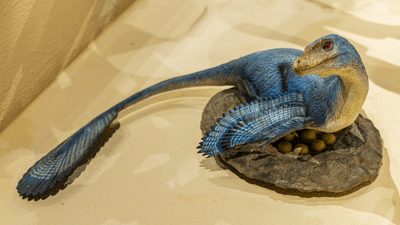
- A fossil site in Montana has yielded well-preserved fossils of a dinosaur known as Troodon that we once only knew from a single tooth.
- With specimens representing the dinosaur from embryo to adult, scientists have been able to identify patterns in its growth.
- As well as bones, the fossil site yielded eggs and nests, providing "a rare and unprecedented opportunity for studying the evolution and behavior of dinosaurs close to the origin of birds," say the study authors.
Specimen MOR 246-11 is a very precious fossil. The mineralized remains of one dinosaur’s failure to make it out of the egg represent a rare window into the early development of one of palaeontology’s most enigmatic dinosaurs.
It’s known as Troodon, or Troodon formosus, and is a great example of how complicated taxonomy can get when working with ancient remains. The dinosaur was named from a single tooth found in 1856, which – as you can imagine – is a tricky diagnostic for identifying sparse remains.
We needed more fossils. Luckily, Western Montana’s Two Medicine Formation answered the call.
Dating back 82 to 74 million years to the Late Cretaceous, the formation represents the fossilized sediments of lakes and streams at a time when the Rocky Mountains were just forming. It’s celebrated for its exceptional preservation of rare dinosaur remains, including the odd embryo still encased in its egg.
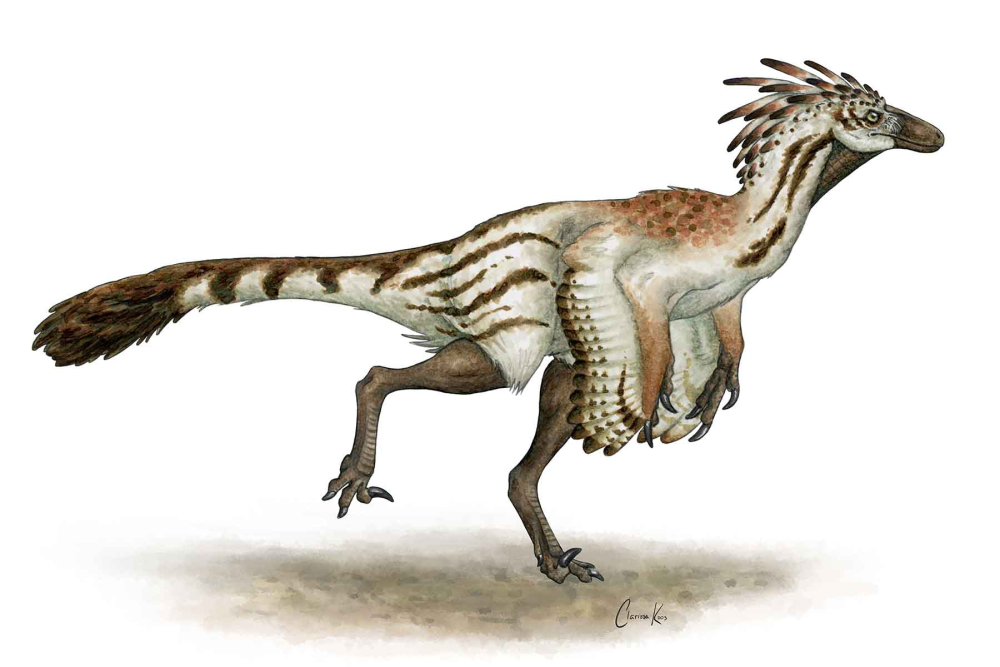
Far from just teeth, the fossil bed has provided a fresh collection of fossils attributed to Troodon. Exciting news for a dinosaur that’s historically been light on skeletal remains, and it gets better.
The fossils represent Troodon across various stages of its lifespan. This enabled palaeontologists to study changes in its skeletal remains from embryo to adulthood, revealing how it developed over time.
The resulting study marks the first in a series of publications that will describe the entire skeleton of Troodon in detail. For now, we’re focusing on patterns of growth seen in the hip and leg bones, but there are descriptions of the axial column, forelimbs, and skull in the works.
The analysis of the Two Medicine Formation fossils revealed a pattern of growth that occurred at consistent stages, suggesting that environmental factors had a limited influence on these dinosaurs’ growth. Adults also had more robust bones and shorter limb proportions compared to the young, which could tell us a little bit about how they behaved in life.
I could see that young would be more apt to run away from dangers or threats, while adults better prepared for confrontations or larger prey.
Dr David Varricchio
“Young might be a bit more agile, light on their feet relative to adults,” said Dr David Varricchio, a professor at Montana State University, to IFLScience.
“Adults would be more muscular. I could see that young would be more apt to run away from dangers or threats, while adults better prepared for confrontations or larger prey.”
It’s an exciting time for a dinosaur once shrouded in so much mystery. We know it was a member of the bird-like Troodontids, small bipedal dinosaurs similar to Velociraptor. They had an impressive claw on the second toe and large brains, as suggested by analyses of their cranial remains.
More fossils means more opportunities to dive into the behavioral biology of these mysterious murder birds, and it seems like we've got plenty to look forward to.
“The sample of troodontid fossils from the Two Medicine Formation, both bones and nests, has provided a rare and unprecedented opportunity for studying the evolution and behavior of dinosaurs close to the origin of birds,” said Varricchio and North Carolina State University doctoral student Heath Caldwell in a release emailed to IFLScience.
“We hope that this study will serve as a key resource for future researchers when they are interpreting other fossils. Ongoing work will further investigate the anatomy and variation in other parts of the Troodon skeleton, which will serve as a baseline for future research on this unique group of animals.”
See you at the next instalment.
The study is published in the journal PLOS One.