Nature
 PUBLISHED




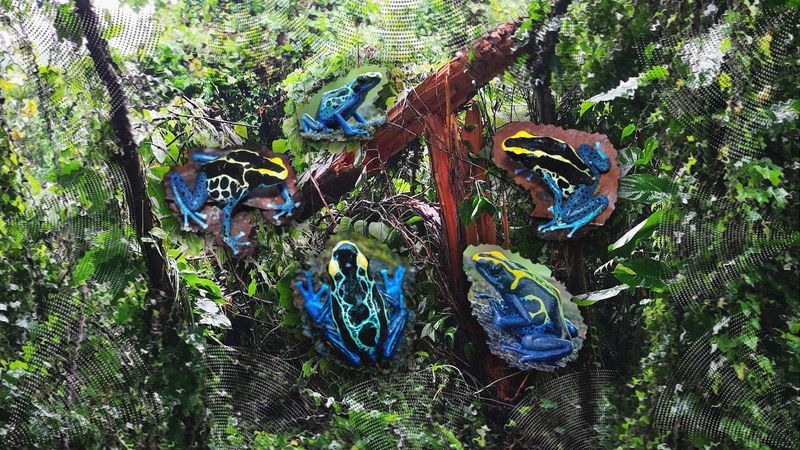
Poison dart frogs are some of nature's most colorful amphibians, with their classic coloration serving as a warning to those that might want to gobble a few frog-based snacks. Recently, new species in the Ranitomeya genus have been surveyed, leading to a new species with copper colored limbs and a blue striped body. Now, another new species is joining the poison dart frog party.
The new species has been discovered in the Jurua River basin in the western Brazilian Amazon. Due to its remoteness, this area is incredibly hard to reach and study. The Ranitomeya genus consisted of 16 species and until now, had not had a new species added for over 10 years. This is largely due to confusion around how the individual species look and the variation that is common within species, as well as the inaccessibility of the area.
In total, the team collected 26 individuals of the new species, five tadpoles, and recorded the advertisement calls of seven male frogs.

DNA was extracted from the frogs and the tadpoles and combined with phylogenetic analysis to determine if this was a new species. These results confirmed that it was, and the species has been given the name Ranitomeya aetherea. The word “ aetherea” comes from the Latin meaning “heavenly,” after the sky blue color of the dorsal side of the frogs. “In addition, we attribute this name to one’s feeling of enchantment and delicacy when encountering these frogs, as if they were from outside this world,” explain the authors.
The new species is characterized by having three parallel light blue stripes down its back, copper colored limbs with brown spots, and a head slightly wider than it is long. The team found that the species is most active in the early mornings and late afternoons, though when it rains, it is more active during the day. It is found in areas with bananeira brava plants and fallen palm leaves. Currently, the species is only found in one small area, but the team recognizes that the Jurua River area is poorly studied overall, and more frogs could be found if the area is better explored.
The paper is published in PLOS ONE.

 1
1