Nature
 PUBLISHED


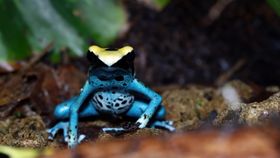


Beginning life in a big pool of cannibals is a tough gig, but that’s the reality for tadpoles of the dyeing poison dart frog Dendrobates tinctorius. The unconventional creche sees tadpoles Battle Royale it out to make it to adulthood, but research has found several factors can influence an individual’s odds of survival.
Fights to the death usually go better for bigger individuals, and the same is true for tadpoles trying to survive in the perilous ponds they’re placed into by their fathers. The small bodies of water that house D. tinctorius juveniles in the tropics have scarce resources (hence all the cannibalism), but muscle isn’t the only deciding factor in staying alive.
Intraspecies aggression like cannibalism frees up resources, but it can also reduce your genetic material's ability to spread (also known as inclusive fitness) if you’re wiping out your close relatives in the process. As such, some animals have evolved to avoid kin when on a killing spree.
To see if this was the case for D. tinctorius, researchers on a new study published in Behavioral Ecology created a tadpole battle arena that would enable them to identify how size and genetic relatedness altered the tadpoles’ aggression.
“Before you eat someone, you have to attack them first,” said the authors, who were looking to observe aggression in the tadpoles rather than letting them devour one another.
By pitting full-sibling, half-sibling, and unrelated tadpoles against one another, they could observe the role that size and relatedness played. They found that the most aggressive tadpoles were the biggest individuals in non-sibling fights, and that siblings attacked each other comparatively less often.
“We find that aggression depends on both size and relatedness: when set in pairs, large tadpoles are half as aggressive towards their smaller siblings than to [non-siblings],” summarized the authors.
“It looks like belonging to the same family provides some protection against aggression, though no one is ever truly safe.”
The victors who survive to full metamorphosis will eventually crawl out of the Pool of Death to inhabit the wetter corners of French Guiana and parts of Brazil. The dyeing poison dart frog has vibrant coloration as an adult, warning of the highly toxic poison that’s found on its skin.
As its name suggests, this effective defense mechanism has been harnessed by humans to lace darts used for hunting. Quite fitting that a creature that begins life in a pool of violence should later become a literal weapon.
[H/T: Phys.org]