Nature
 PUBLISHED


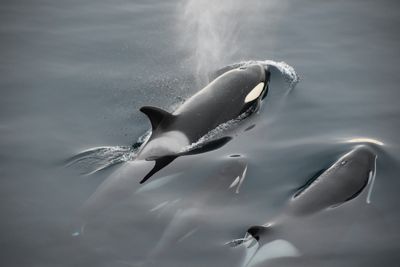


In the waters off Washington State, a mother orca has been seen pushing her dead newborn calf, seemingly in mourning. It isn’t the first time this grieving behavior has been documented in this killer whale pod, a population that’s imperiled with an uncertain future.
The Center for Whale Research was alerted to the situation in Rosario Strait on Friday morning, September 12. Upon approaching the orca that afternoon, researchers confirmed an orca known as Alki, or J36, was pushing a deceased neonate with an umbilical cord still attached.
“Based on the size of the calf, we estimate that the calf was either full term or near full term. It is unclear if this was a stillbirth or if the calf died shortly after birth. Based on when we last observed J36, this calf would have been born within the last 3 days,” CWR said in a social media post.
Since then, however, the trend has been downward. The whales have shown no signs of recovery, with only 74 individuals remaining as of December 2020. The main suspects in their decline are pollution, ocean noise, and a lack of consistently available salmon to prey upon.
Tragedies like this are not new for J-pod. In December 2024, another female, Tahlequah (J35), was seen carrying her dead calf, J61. Tahlequah had captured worldwide attention in 2018 for a similar display of behavior, carrying her calf for 17 days across more than 1,610 kilometers (1,000 miles) of ocean.
The unusual behavior is often interpreted as mourning, or at least something akin to mourning. Orcas are known to be highly intelligent and deeply social animals, prone to stress and depression when their tightly knit family bonds are disrupted. For Southern Resident killer whales, every birth is vital to the survival of their dwindling population, and every death is a devastating blow.
Similar behavior has been noted in other highly intelligent species. Chimpanzees have been recorded holding onto the remains of their deceased offspring for months, refusing to let go. It’s also known that elephants will sometimes sniff, pick up, and even bury the remains of their dead, releasing cries as they do.
It’s all too easy to anthropomorphize behavior like this, but it raises profound questions about how some animals process loss, life, and death.