Nature
 PUBLISHED


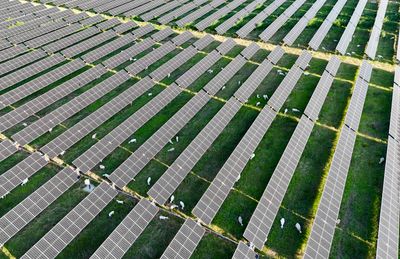


Over 6,000 sheep are planned to be unleashed onto eight solar plants in Texas, acting as wooly gardeners by nibbling away at vegetation over more than 10,100 acres (4,087 hectares) of land. This will be the largest solar grazing agreement in the US to date, says renewable energy operator Enel North America, who are partnering with Texas Solar Sheep LLC to carry out the “record-breaking” plan, with some sheep already being deployed.
The sheep can enjoy lounging in the shade of the solar panels on hot days. In return, they reduce the need for herbicides and fossil fuel-powered mowers to control vegetation, their manure fertilizes the soil, and they can carry wildflower seeds in their wool that grow in their hoofprints. They also improve soil health – Enel has already tried out solar grazing in Minnesota, and reports that some of their sites had improvements in organic matter of over 200 percent.
"By prioritizing sheep grazing for land management, we demonstrate how solar and agriculture can coexist while ensuring optimal performance of our solar facilities. Additionally, our sheep grazing commitment supports ecosystem services and the local economy," said Marcus Krembs, head of external relations and sustainability at Enel North America, in a statement.
Agrivoltaics is the practice of using land for both solar energy and agriculture at the same time. “Solar grazing is at the forefront of a booming agrivoltaics industry, and we are seeing more and more leaders in the solar industry investing in long-lasting partnerships with farmers and creating new opportunities for American agriculture," added Kevin Richardson, Outreach Director at the American Solar Grazing Association.
This approach to land use has several benefits. For one, letting sheep snack on vegetation is cheaper and less likely to damage the solar panels than mowing (and they won’t chew on the wires, unlike mischievous goats): “This saves us money. It’s an efficient way to do this. It’s great for the environment, but it also helps our bottom line. And so it’s a win-win for us,” Jesse Puckett, director of sustainability projects and community affairs at Enel, told Fast Company.
“I think we recognize the fact that, as an industry, we have this amazing opportunity to do things a little bit different,” Puckett added to Canary Media.
As for the family-owned and operated Texas Solar Sheep, some of their herd are sold for meat. “We really operate just like a regular ranch,” JR Howard, co-owner of the company, told Fast Company. “The only difference is that we have solar panels.”
Enel explained that solar grazing can provide a new revenue stream for sheep herders. The booming demand for solar grazing is “the greatest opportunity for the sheep industry in my lifetime,” Howard told Canary Media.