Nature
 PUBLISHED
 2
2


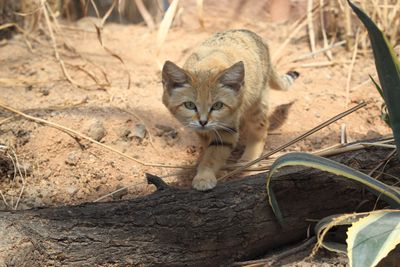


Aww, the small boys of the cat world. While lions and tigers might be the ones everyone remembers, there are a number of small feline species that only crop up every now and then. From fishing cats to Pampas cats, these furry felines are more than meets the eye. In the case of the sand cat, they are more than meets the ears too.
The sand cat (Felis margarita) is a pretty small creature with a body length of only around 45 to 57 centimeters (18 to 22.5 inches). However, the tail can be half as long again, adding another 28 to 35 centimeters (11 to 14 inches). These petite pussy cats only weigh 1 to 3 kilograms (3 to 7 pounds).
Small they might be, but perfectly adapted they certainly are. Mainly nocturnal, these cats hunt by using their sharp hearing to detect any prey. They are the only felid to live exclusively in desert habitats. They prefer sandy deserts where they can catch small rodents as their prey, especially spiny mice, gerbils, jirds, and jerboas. They will also take small birds, hare leverets, and occasionally reptiles. In the Sahara desert they are known to kill sand vipers, sometimes burying their prey to return to at a later time.
Sand cats are largely solitary, but they do come together to breed. To help with this, they have a distinct mating call that sounds like the barking of a dog or a seal. The loud noise complements their excellent hearing, making them able to find each other across a desert landscape.
The sand cat has something of a patchy distribution, and while records show individuals in North America and parts of Asia, getting a true idea of total range is tricky. What we do know is that sand cats prefer true desert habitats from Morocco, across the Arabian peninsula, and into countries like Pakistan, Kazakhstan, and Syria.
Sand cats are expert diggers and will make their own burrows and dig prey animals out of the sand. They have long dense hairs that cover the soles of their paws, protecting them from the hot desert sand. This also means they leave very little in the way of footprints, making these elusive felines even harder for scientists to track.