Nature
 PUBLISHED
 1
1


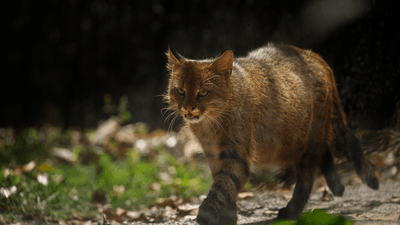


A rare cat prowls the grasslands and mountain regions of South America, easily identified to those in the know by the three black lines on its front leg. If you spot that sign, then congratulations! You, my friend, are looking at a Pampas cat.
These felines are very small, typically weighing a little less than a regular domestic cat, but don’t be fooled. Pampas cats, also known as colocolos, pack a lot of attitude.
Pampas cats exhibit something known as piloerection (heads out of the gutter, please), in which the fur along their back and tail sticks up during a confrontation. You may see a muted version when Mr Scrumbles gets upset with the mailman, but it’s quite the display of aggression on wild Pampas cats.
These cats exhibit remarkable variation – a reflection of the numerous environments they’re found in across their wide range. It was only recently that scientists started to investigate whether these differences are significant enough to constitute different species, and it’s now thought there could be as many as five different Pampas cat species.
You’re unlikely to bump into them, mind. Pampas cats occupy some of South America’s most extreme environments, including high up in the Andes – well beyond a comfortable altitude for human breathing. They’re adapted to tolerate the extremes of temperature, too, often found hunting in the desert.
Unfortunately, this plasticity hasn’t protected the cats from the habitat degradation and conflict with humans. Retaliatory killings are a significant risk because, despite their elusive nature, Pampas cats won’t pass up an easy meal like a coop full of chickens.
Conservation groups like the Small Wild Cat Conservation Foundation are working hard to raise awareness for Pampas cats and reduce conflict with humans. And while many remain near threatened, there have been some comeback success stories.
One of the world’s most endangered small cats is the Muñoa’s Pampas cat (Leopardus munoai) that roams the grasslands of northeast Argentina. Concern was growing for the population following a decade of no sightings or signs of activity. Then, in 2023, the news arrived that a Muñoa’s Pampas cat had been detected in Great Iberá Park, composed of Iberá National and Provincial Parks.
Knowing when a species is extinct is tricky enough without having to factor in the incredible camouflage, range, and secretive skills of wild cats. It’s perhaps unsurprising, then, that species feared extinct are rediscovered. Just look at the rockstar return of Thailand’s flat-headed cat.