Nature
 PUBLISHED
 1
1


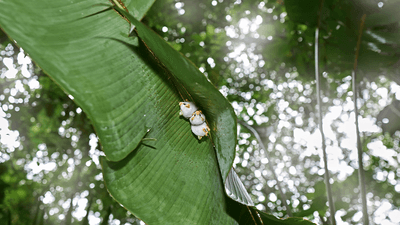


Sometimes the differences between related species are just as impressive as the animals themselves. Take the bats, for instance. From the truly enormous hammerhead bat that slurps up fruits, to bats found doing the deed without penetration, the world's only flying mammals have enormous species breadth. In the rainforest of Honduras, for example, you’ll find a teeny tiny collection of Honduran white bats building their own tent.
Where does the Honduran white bat live?
The Honduran white bat has the scientific name Ectophylla alba and is listed by the IUCN Red List as Near Threatened. They have an average length of just 3.7 to 4.7 centimeters (1.5-1.9 inches) and weigh only around 6 grams (0.2 ounces) according to the Rainforest Alliance. They are found only in Central America in Honduras, Costa Rica, Nicaragua, and Panama.
The Honduran white bat is a part of the family Phyllostomidae that contains 17 species, eight of which exclusively roost in tents made of leaves.
To make a tent, the bats find suitable leaves – belonging to plants in the genus Heliconia – to alter, so they overhang to create the perfect home for a family of white fluffy bats to hang out and hide from predators.
The bats roost in groups of two to 15 individuals, usually a mother and offspring as well as unrelated adults. They nibble the edges of the leaves so that they fall perfectly. The sunlight through the living leaves of these plants makes the bats appear green, further camouflaging them against predators.
What does the Honduran white bat eat?
As might be expected from their name, these tiny bats are fluffy and white – but they are not albinos. Instead, they have bright orange-yellow faces, legs, and wings. They are picky eaters and consume pretty much only figs from the Ficus colubrinae species. The fig peel contains a yellow carotenoid pigment called lutein, which is likely responsible for the yellow color, suggests Bat Conservation International.

A study from 2019 showed that males with better body condition had brighter yellow noses, suggesting that there is sexual dichromatism within this bat species. Unfortunately, given their very specialist diet and roost preferences, conservationists are worried that the species will suffer from habitat loss more acutely if their food and shelter sources are affected.