Nature
 PUBLISHED


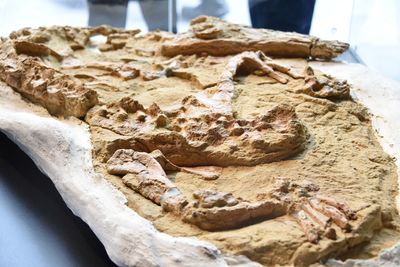


The fossilized remains of a marine crocodile that is up to 12 million years old have been discovered. The fossilized croc is the youngest known specimen of this species to be discovered so far.
The discovery was recently unveiled by a joint team consisting of researchers with Peru’s Geological, Mining and Metallurgical Institute and the Colegio La Unión. The fossil is an articulated and almost complete skeleton of a young gharial – fish-eating – crocodile that was nearly 3 meters (10 feet) long.
The specimen, which has reportedly been dated to between 10 and 12 million years ago, was originally discovered in 2023 in the Ocucaje desert, in Ica, which is about 190 miles (350 kilometers) south from Peru’s capital, Lima.
"This is the first time we found a juvenile of this species, that is to say, it had not reached its maximum size yet. It died before that," vertebrate paleontologist Mario Gamarra explained during a news conference.
According to statement from the Peruvian governing body of national paleontology, once fully grown, these crocodiles could reach lengths of up to 9 meters (29.5 feet).
"They had an elongated snout and their diet was entirely piscivorous, feeding on fish," Gamarra added. The paleontologist explained that the closest current relative to this animal would likely be the Indian gharial, which has an extremely long and thin snout.
The Ocucaje desert is known for being rich with fossils. At least 55 new species of marine vertebrates have been found in the area as of 2023. Previous excavations have discovered the remains of four-legged dwarf whales, dolphins, and sharks, as well as other species from the Miocene period 5 to 23 million years ago.
In 2023, paleontologists unveiled what may be the region’s most spectacular extinct inhabitant: an enormous manatee-like whale - Perucetus colossus – that is considered to be the heaviest animal to have ever existed.
It seems the new gharial crocodile is just the latest example of a remarkable discovery to come from this long-lost marine environment.