Nature
 PUBLISHED


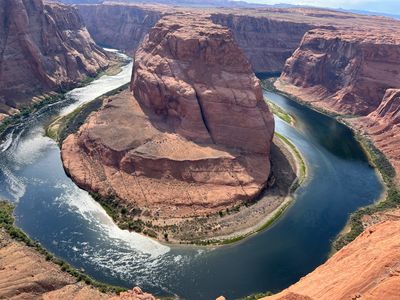


On Monday (August 12), two people were struck by lightning in Glen Canyon National Recreation Area, Arizona.
In a statement released on Tuesday, the National Park Service (NPS) revealed that two female visitors, aged 22 and 23 and hailing from the Netherlands and Australia, had “sustained injuries” while standing near the rim of Horseshoe Bend. Both were flown to St. George Regional Hospital in Utah by Classic Air Medical helicopters, however, no update on their condition has been provided.
The incident happened just before 4 pm during a severe storm, reports the Page Police Department.
The area was temporarily evacuated so that two helicopters could land, and the victims were treated at the scene before being airlifted to hospital.
Lightning strikes the United States about 25 million times a year, killing around 20 people and severely injuring hundreds more. With a peak temperature of 27,760°C (50,000°F) – that’s nearly five times hotter than the surface of the Sun – it is hardly surprising that lightning can cause so much damage to the human body. It is therefore imperative to take precautions when out and about during a storm.
In Glen Canyon National Recreation Area, which straddles Arizona and Utah, the NPS warns that thunderstorms “are most frequent and severe during the monsoon season, which is typically mid-June through September in Arizona and July through September in Utah”.
As such, “visitors are advised to use caution while visiting exposed outdoor areas and be aware of changing weather conditions.”
“If you hear thunder, you are at risk of getting struck by lightning and should immediately seek shelter in a vehicle or building.”

 1
1