Nature
 PUBLISHED
 1
1





It’s a funny thing, but the word “cloud” actually originally referred to a big lump of rock. It’s hard to think of a harder reverse in terms of definition – something quintessentially heavy coming, over time, to mean something lighter than air.
But as it turns out, it’s very fitting – because clouds are, in fact, far far heavier than you probably think.
Collecting clues
How much a cloud weighs comes, as anything does, down to two factors: what it’s made of, and how big it is. Now, you might think that first one is easy – clouds are water, right? Well, not exactly.
Despite what we’re taught about the water cycle in grade school, “clouds are actually mostly made from air,” explained Rob Thompson, a postdoctoral research scientist in Meteorology at the University of Reading, in a 2020 article for The Conversation. Of course, there’s a bunch of water in there too, but compared to the air, it’s barely negligible – something like one part water to four million parts air, in a cumulus cloud.
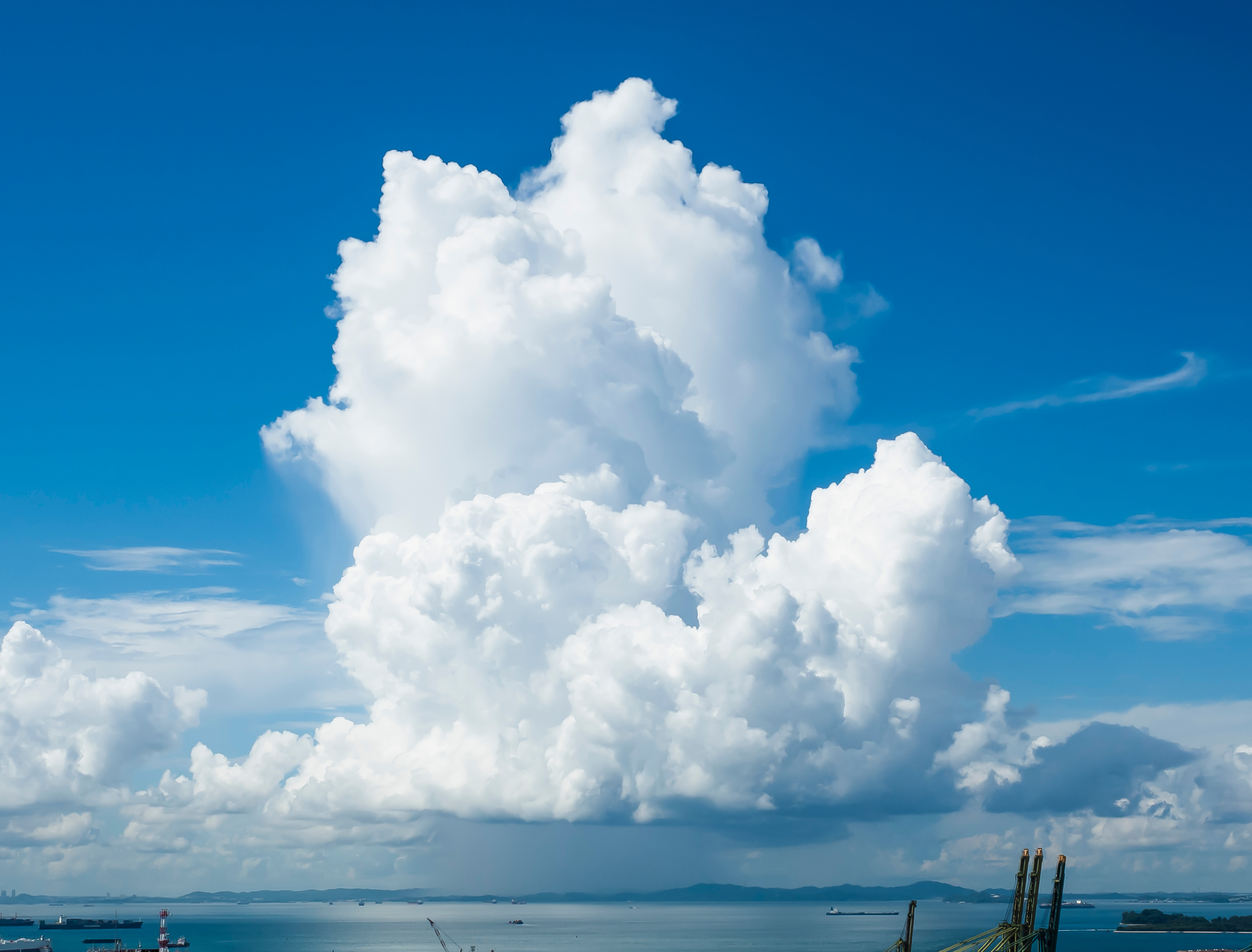
Oh – and that’s another thing we have to reckon with: what kind of cloud are we talkin’, exactly? There’s quite a few to choose from. Low to the ground, we have the Super-Mario -esque cumulus clouds, the stratocumulus clouds which fill the sky with dark, separated fluff, the thick, sheet-like stratus clouds, and the thunderstorm-bringing “King of Clouds”, the cumulonimbus.
Higher up in the atmosphere – above 6,500 feet but below 20,000 – we have mid-level clouds: nimbostratus, the featureless grey sheets that fill the sky and pelt rain down for hours; altostratus, which are notable really only as a harbinger of warmer weather on the horizon; and altocumulus, which looks like endless thin cotton wool, except when they’re altocumulus castellanus when they vaguely resemble – the clue is in the name– castles.

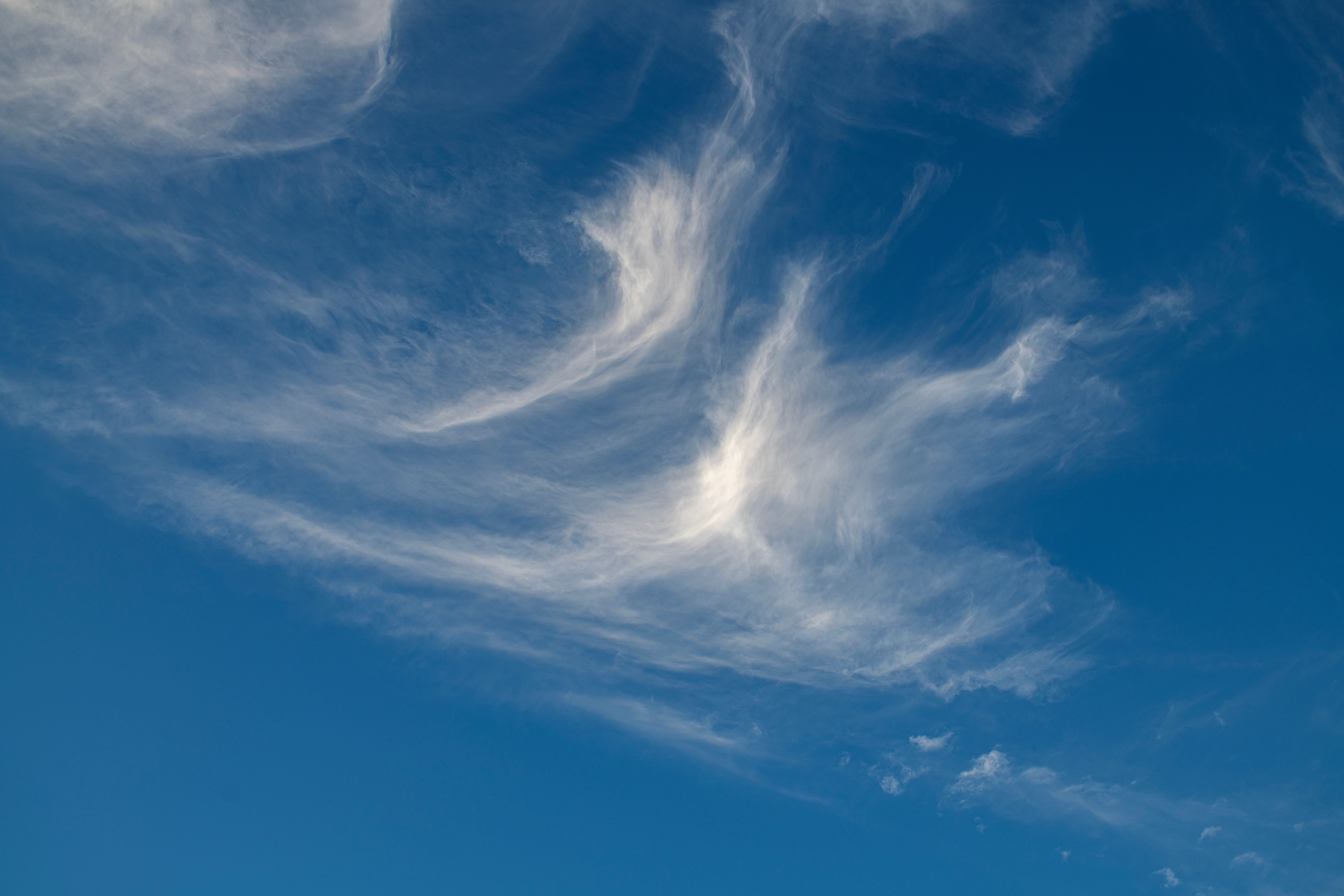
Finally, above 20,000 feet, there are the high-level cirrus, cirrocumulus, and cirrostratus clouds – clouds so thin you can sometimes barely even see them.
Each of these types has a different water-to-air ratio, correlating pretty well with where they sit in the altitude listing. That makes sense: water is heavy, and the more there is of it, the more it will weigh down the cloud, bringing it closer to the Earth. They also come in their own signature sizes: a “typical” cumulus cloud “would be about one kilometer across and about the same tall,” Thompson wrote; a thunderstorm cloud, meanwhile, is “bigger, measuring about 10 km tall and the same across.”
Still, we have our basic information: the ingredients are water and air, and the size – well, it depends on which cloud we’re talking about. Now let’s do the math.
Working it out
Let’s start with cumulus clouds. As typical ones measure about 1 kilometer wide and tall, “This means we can consider it to be a cube, with each side measuring 1km across,” Thompson says.
That works out to a total volume of 1 cubic kilometer – aka one million billion cubic centimeters. We know that one four-millionth of that is water, giving us 250 million cm3 of water. And we know, thanks to the neat way the metric system is set up, that one cubic centimeter of water is exactly one milliliter, which is exactly one gram. Combining all of that together, we find that a cumulus cloud contains 250,000,000 grams of water – that’s 250 tonnes, or roughly 2.5 blue whales, floating about above our heads.
And that’s just the water. If we want to be really nitpicky, we have to include the air, too, and you might be surprised at just how heavy it is once you tot up just how vast an amount there is of it.
“Where these low clouds are, the air weighs around one kilogram for every cubic meter – 4,000 times more than the water did,” Thompson noted. “Given the volume of our cumulus cloud, that’s 1 billion kg, or one million tonnes.”
In other words, the air outweighs the water by so much that, overall, the water is barely noticeable – about the equivalent of dropping a marshmallow into a full bathtub. “That is why the cloud can stay up in the air,” Thompson explained. “[Because] the tiny water drops are held up by all that air.”
But what about the other cloud types? Cumulus clouds may have some of the highest proportion of water in them, but they’re also some of the smallest in the sky: their royal, rainy cousin, the cumulonimbus, for example, can range anywhere from 3 to 15 kilometers in height, and the same in diameter. If it contained the same proportion of water to air as the cumulus, therefore, it would already be up to 15 times as heavy – but in fact, it’s much wetter.
“A thunderstorm cloud […] contain[s] much more water, which is why they rain so hard,” explained Thompson. He estimated “about two grams per cubic metre,” though some clouds can have more than four times that amount. Taking those higher values gives a cloud containing about 22 million tonnes of water – the equivalent of 900 Statues of Liberty, or 3.5 Great Pyramids of Giza.
Similarly heavy are the nimbostratus – those thick grey sheets that fill the sky and pour down rain for hours. “This has about the same amount of water per cubic metre as the cumulus cloud, but they cover the whole sky,” Thompson explained. “They are often very shallow – perhaps 200 metres thick – but they could easily be 500 km across. This makes them 50,000 times bigger than the cumulus, so that’s somewhere around 10 million tonnes of water.”
Again, though, even these much more water-dense clouds are far more air than water. For our cumulonimbus, the air adds another 2.65 billion tonnes or so; for the nimbostratus, it’s 50 billion tonnes – once again, the air renders the water weight basically negligible.
Of course, “You could say […] that maybe the air doesn’t count as part of the cloud’s weight, as it would have been there anyway,” Thompson pointed out. “Either way, clouds are heavier than you might think.”