Nature
 PUBLISHED
 6
6


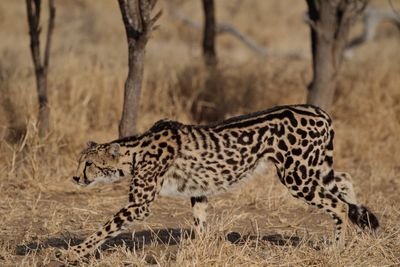


Tigers are stripy, leopards and cheetahs are spotty – that’s something many of us will have been taught as fact from an early age. But if there’s one thing we can say for sure about nature, it’s that things aren’t always as certain as they seem, and scattered across southern Africa is a rare big cat that makes a great example of that: the king cheetah.
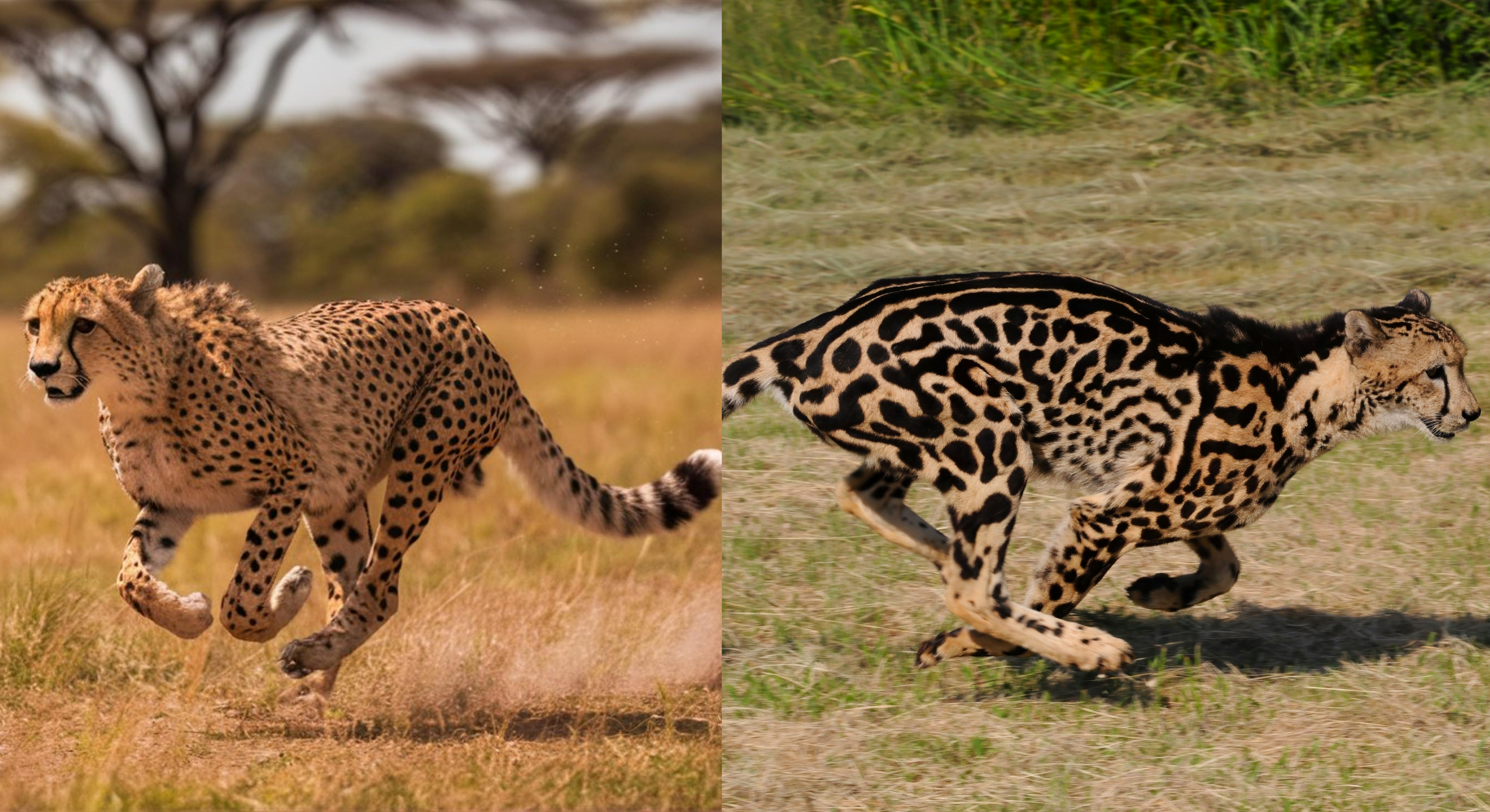
Rather than the classic roughly rounded black spots typical of a cheetah (Acinonyx jubatus), these regally named felids have a blotchy coat pattern, with elongated and merged spots and thick stripes along their spines.
So unusual was this patterning that locals in Manicaland, Zimbabwe – one of only three places where the king cheetah has been spotted in the wild – believed it to be a cross between a leopard and a hyena, and when it first caught the eye of Westerners back in the early 1900s, some proposed that the king cheetah was a leopard-cheetah hybrid.
Others dismissed the hybrid theory, instead suggesting that the king cheetah was in fact an entirely different species of cheetah, dubbed Acinonyx rex. This proposal rested primarily on the basis that the king cheetah’s feet were structurally the same as the existing cheetah, not a leopard’s, with the coat pattern being the distinguishing factor between the two cheetah species.
But unfortunately for the main proponent of this theory, English zoologist Reginald Pocock, there wasn’t enough evidence to support it, and in 1939, he retracted his classification of the new species.
Then, in 2012, the truth behind the coat pattern was finally revealed – though this revelation didn’t begin with the king cheetah itself, but instead its smaller, domesticated relatives.
Researchers at the Stanford University School of Medicine, National Cancer Institute, and HudsonAlpha Institute for Biotechnology had been curious as to why some tabby cats have a “blotched” coat pattern rather than stripy.
By comparing the DNA of feral housecats with different coat patterns, they discovered mutations in a single gene, known as Taqpep, that appear to be responsible. These mutations were recessive, meaning in order for a tabby cat to have a blotchy pattern, it has to have two copies of the mutated gene – one from each parent.
This got the research team thinking: could the mutation in Taqpep also explain the king cheetah’s patterning? They first examined the DNA of a king cheetah captive in a US conservation program – and it had the mutation.
As any good scientist will tell you, just one case is far from conclusive evidence. And so, the researchers got in touch with conservationist Ann van Dyk, who ran the conservation center in South Africa from which all captive king cheetahs came from – in other words, a nice big pool of cheetahs on which to run DNA analysis.
van Dyk has passed away in the time since this research was conducted, after dedicating her life to cheetah conservation – but she has left a legacy in more ways than one. After being the first to learn that the king cheetah pattern was likely caused by a recessive genetic mutation based on the detailed breeding records that she kept, the DNA samples taken from the cheetahs under her care proved her right.
King cheetahs may be relatively rare, with only around 10 thought to be living in the wild – but now, we finally understand why look the way they do, and thanks to captive breeding programs like those in South Africa, there may be more of these beautifully unusually cats yet to come.