Nature
 PUBLISHED


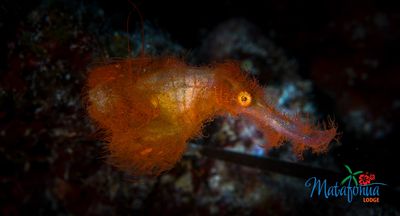


Slip under the waves and all manner of creatures await you, from deep-sea disco worms to bull sharks with best mates, the ocean holds plenty of curiosities. For one pair of researchers, their discovery proved pretty elusive to pin down, but more than 20 years later, they’ve finally described a new species of orange, hairy-looking ghost pipefish and named it Solenostomus snuffleupagus it after a muppet.
It started with a glimpse, as marine biologist David Harasti spotted something unusual while diving in Papua New Guinea. However, a glimpse it would remain for years, as the super elusive hairy red ghost pipefish couldn't be found again despite six repeated trips and attempts to spot it. On platforms like the citizen science site iNaturalist, the species kept turning up under a mistaken identity of the rough snout pipefish. This led Harasti and co-author Graham Short of the Australian Museum Research Institute to take a trip to the Great Barrier Reef after reports from local divers of this species.
Short and Harasti managed to collect the 3.4-centimeter-long (1.3-inch) specimens from that dive trip in 2020, 17 years after Harasti first spotted it in Papua New Guinea, but then disaster struck.
I had preserved them in the wrong solution. It preserved their DNA really well, but not their structure, so I couldn't CT scan them. I was like, oh no, what am I going to do?
Graham Short
“Dave and I went to the Great Barrier Reef because there started to be reports of the new species being recorded there by local divers. And so we went and found a pair and we collected it,” Short told IFLScience. “But I had preserved them in the wrong solution. It preserved their DNA really well, but not their structure, so I couldn't CT scan them. When we learned that, I was like, oh no, what am I going to do?”
The CT scans are extra important in ghost pipefish species as it allows scientists to see their skeletal structure, vital when trying to describe a new species. Ghost pipefish differ from both dusky pipefish and their seahorse cousins, as it's the females, not males, that brood the eggs in a pouch made by their fused pelvic fins. The females are also noticeably larger.
Enter Amanda Hay, collections manager of the Australian Museum, who remembered a pair of the unusual fish collected in 1993 and stored at the museum ever since. This allowed the team to conduct those all-important CT scans, helping confirm the specimens as a new species. It also revealed that Solenostomus snuffleupagus has 36 vertebrates, more than any other ghost pipefish species, which have all been recorded with 32 or 34. This key characteristic helps confirm the specimens as a distinct new species. And then they named it after a muppet.
We had a few drinks because we were just talking about the paper, and we're like, let's just write to Sesame Street and see if they respond. They responded the next day.
Graham Short
“So we had a few drinks because we were just talking about the paper, and we're like, yeah, let's just write to Sesame Street and see if they respond,” said Short. “They responded the next day.”
Solenostomus snuffleupagus is a shaggy-looking ghost pipefish with feather-like filaments all over its body, helping it blend into the algae it looks so much like. Coupled with its long snout, there was really only one muppet the species could honor.
“We are delighted that our beloved Snuffleupagus inspired the naming of a newly discovered marine species in the real world,” Sesame Workshop senior vice president of global education Rosemarie Truglio told People.
The species looks like floating bits of algae, even having different colors in different parts of the world to mimic the algae in that region.
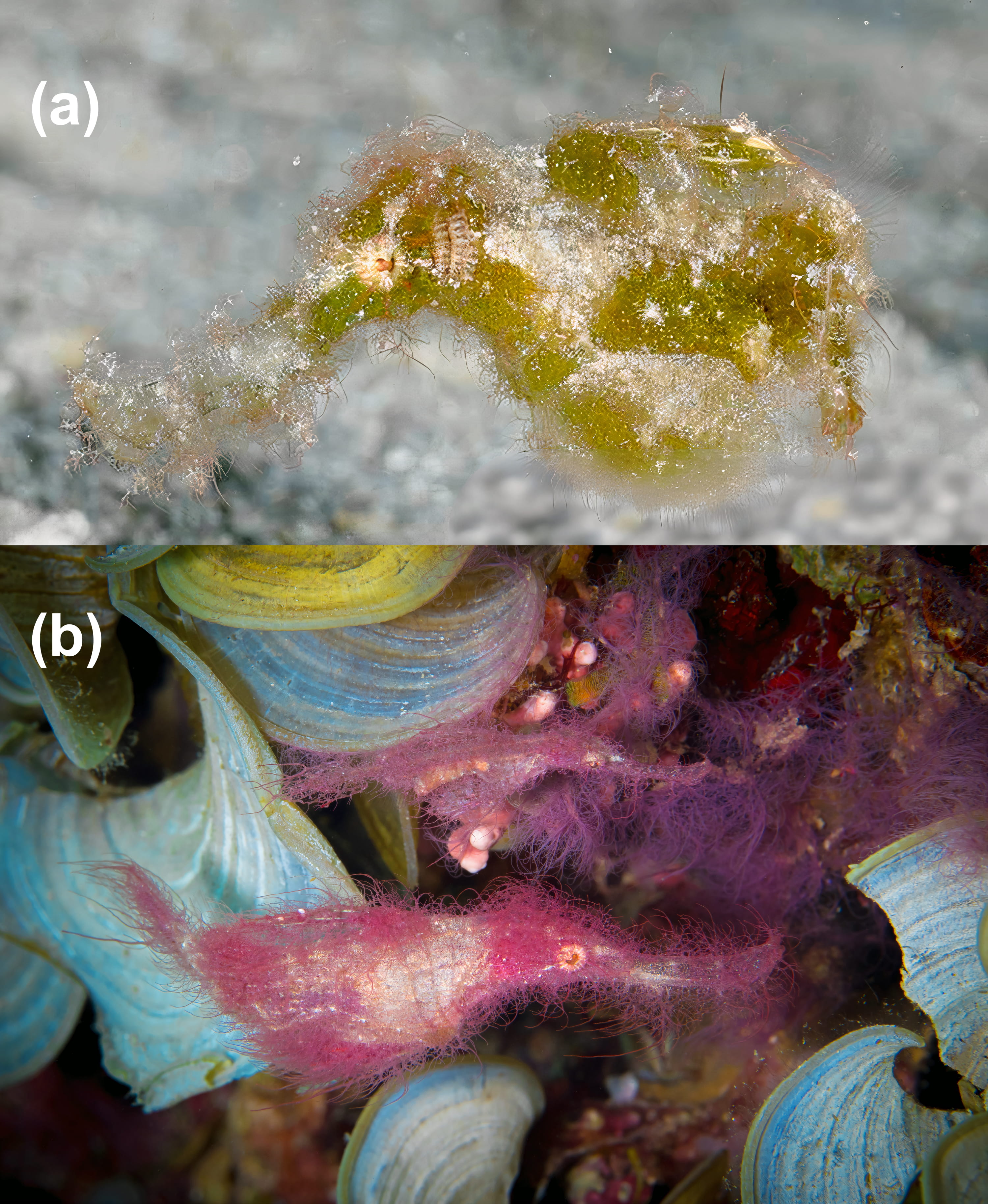
“We found a gorgeous male-female pair in this little cavern and they were stunning. You can easily swim by and mistake them for floating bits of algae. They have evolved to look like their environment. Even the way they move and maneuver in the water column, they move back and forth just like a piece of red algae would do in the current,” explained Short.
While the species might look elegant and beautiful, the CT scans revealed more about ghost pipefish than the researchers expected.
“It looks very delicate, the way it swims, it's beautiful. So you wouldn't expect it to be a predator,” Short told IFLScience.
“Right now, most people think that seahorses, ghost pipefish, and pipefish just eat little zooplankton, small crustaceans that you see in the water when you're diving. But CT scans done by Kerryn Parkinson at the Australian Museum revealed for the first time that ghost pipefish actually eat small fish, most likely gobies.
"Ghost pipefish have little [whole] fish skeletons in their guts based on CT scans, so this is the first recorded observation or documentation of this."
So far, the species is known from coral reef habitats in the southwest Pacific, though reports have observed what is believed to be the species around New Caledonia, Fiji, and Tonga. Short and Harasti are already planning a trip back to Indonesia to see if they can spot Snuffy in a new location.
The paper is published in Fish Biology.