Nature
 PUBLISHED


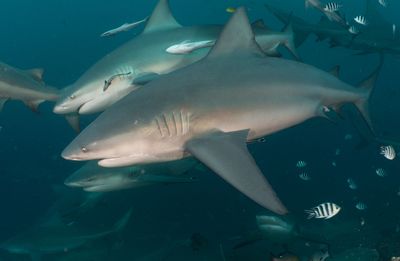


The concept of friends in the animal world is one that’s been studied fairly frequently. We’ve learned that jaguars have best friends, and even female sperm whales can have a BFF. Now there’s a surprise new species joining the social circle, as the once-deemed solitary bull sharks are teaming up with their best mates and even forming social connections with a wider group.
Bull sharks (Carcharhinus leucas) have a wide distribution and occur in tropical and temperate waters across the world. They are considered a true euryhaline species able to tolerate a range of salinities and often breed in estuaries or even freshwater. Listed as Vulnerable by the IUCN, the species is subject to fishing pressures and is hunted for its meat and fins. Given its preference for shallower waters, coastal developments can lead to habitat degradation for the species.
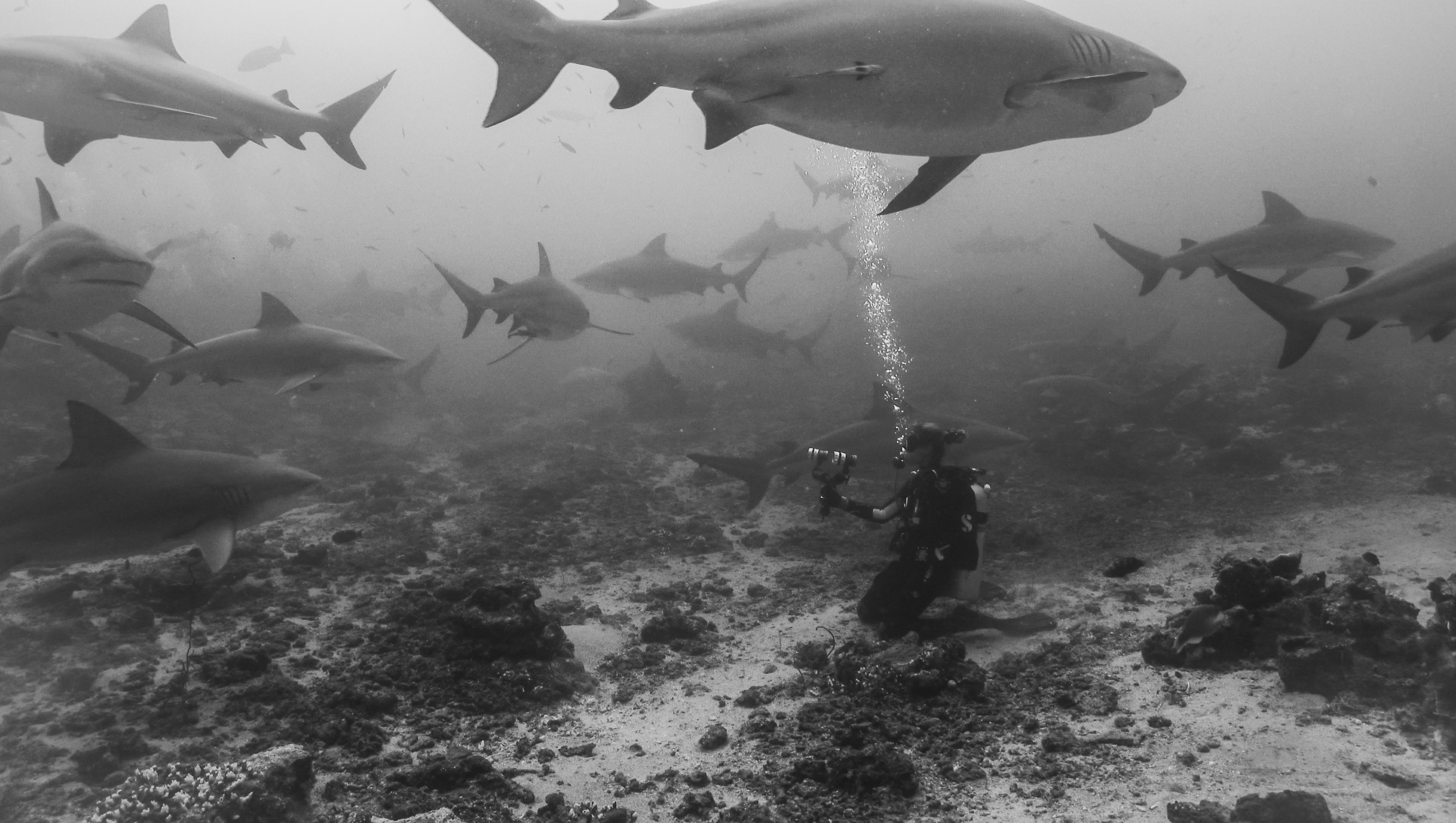
In Fiji, the Shark Reef Marine Reserve (SRMR) was established for the conservation of several shark species and provides an opportunity for researchers to study shark behavior, including that of the bull sharks.
The site hosts large groups of bull sharks that can be witnessed in groups with as many as 34-45 individuals; these could all be seen by the team within a single dive. Research suggests that the SRMR is not the full-time home for the sharks, but that they tend to aggregate there in the morning. This population is mostly made up of female sharks (85 percent), though a small proportion of males are also seen (15 percent).
Over a six-year period, the researchers identified 171 individuals through distinguishing features or special ID tags. “We identified individuals using two complementary methods. First many sharks can be recognised by distinguishing features such as scars, deformities, missing or damaged fins and distinctive coloration patterns. These features allow us to recognise the same individuals repeatedly,” Natasha Marosi, lead author, told IFLScience.
“For sharks lacking these distinguishing features, we used small numbered aluminium identification tags. These tags were attached to a short leader wire and placed just below the first dorsal fin. This allowed us to reliably identify those individuals on subsequent dives and ensure we were tracking the same sharks over time. ”
In total, the data collected on the sharks through multiple dives per week amounted to 1,438 associations for 152 sharks, and 1,719 social interactions for 136 sharks. The team wanted to find out whether the sharks were just in the same place at the same time, or if pairs of sharks known as dyads were actively choosing to spend time together. They assigned a point system and a weighting to establish social connections between the sharks, for behaviors such as "parallel swimming", "lead/follow", and "join and turn back".
“To test whether sharks were actually choosing specific partners, we compared the real social network with randomly generated networks where sharks would mix purely by chance. The real network showed clear patterns of preferred partners and avoided partners, which tells us the sharks are actively choosing who they associate with,” continued Marosi.
Adult sharks appear to form the core of the social network, where socializing with others may help them access food resources and information, build skills or meet potential mates.
Natasha Marosi
The team learnt that female sharks preferred to socialize with other female sharks the most, followed by male and female pairs. Male sharks also preferred to socialize with females rather than other males, but had more social connections on average than the females. “Males are also physically smaller than females which may encourage them to integrate socially. Having social connections to the bigger more dominant females in the aggregation can ensure their place within the group and give them access to food resources at the site,” said Marosi.
The sharks were also grouped by age: sub-adult, adult, and advanced adult. The results showed the sharks of breeding age classed as adults most often associating within their own age group. Sub-adults (pre-breeding age) rarely associated with either their own group or with the advanced adults. The research showed that the adults formed the “core” of all the social connections while the younger and older sharks generally were less socially connected.
“Our results suggest that older bull sharks become less socially connected as they age. These individuals have many years of experience hunting, navigating their environment, locating resources and choosing mates, so they may rely less on social relationships in favor of self-reliance,” explained Marosi. “In contrast, adult sharks appear to form the core of the social network, where socializing with others may help them access food resources and information, build skills or meet potential mates."
Interestingly the team found that the sharks both had friends that they chose to associate with and other sharks that they chose to avoid. “Overall, our results suggest that the social structure of the aggregation is strongly centred around females, with males integrating into the social network rather than forming their own separate male groups.”
The research shows that the sharks have far more complex social lives than was first realized. Information on aggregations like the one in Fiji can inform conservation strategies that can help protect the sharks in the future.
The study is published in Animal Behaviour.