Nature
 PUBLISHED


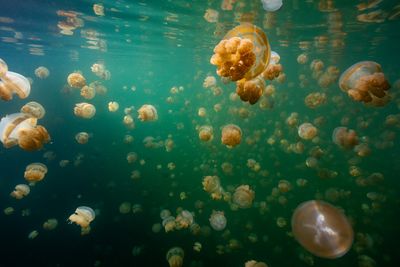


Searching for something truly unique? Look no further than Jellyfish Lake, which plays host to millions of jellyfish that, after thousands of years separated from surrounding waters, have evolved into something unlike that found anywhere else on the planet.
The lake lies within Eil Malk, a rocky island located in the western Pacific Ocean that’s part of the island country of Palau in the westernPacific. While no humans live on the island, it’s safe to say that plenty of other life can be found there; Jellyfish Lake is lined by mangrove trees bustling with marine invertebrates, perhaps none more iconic than the jellyfish that give it its name.
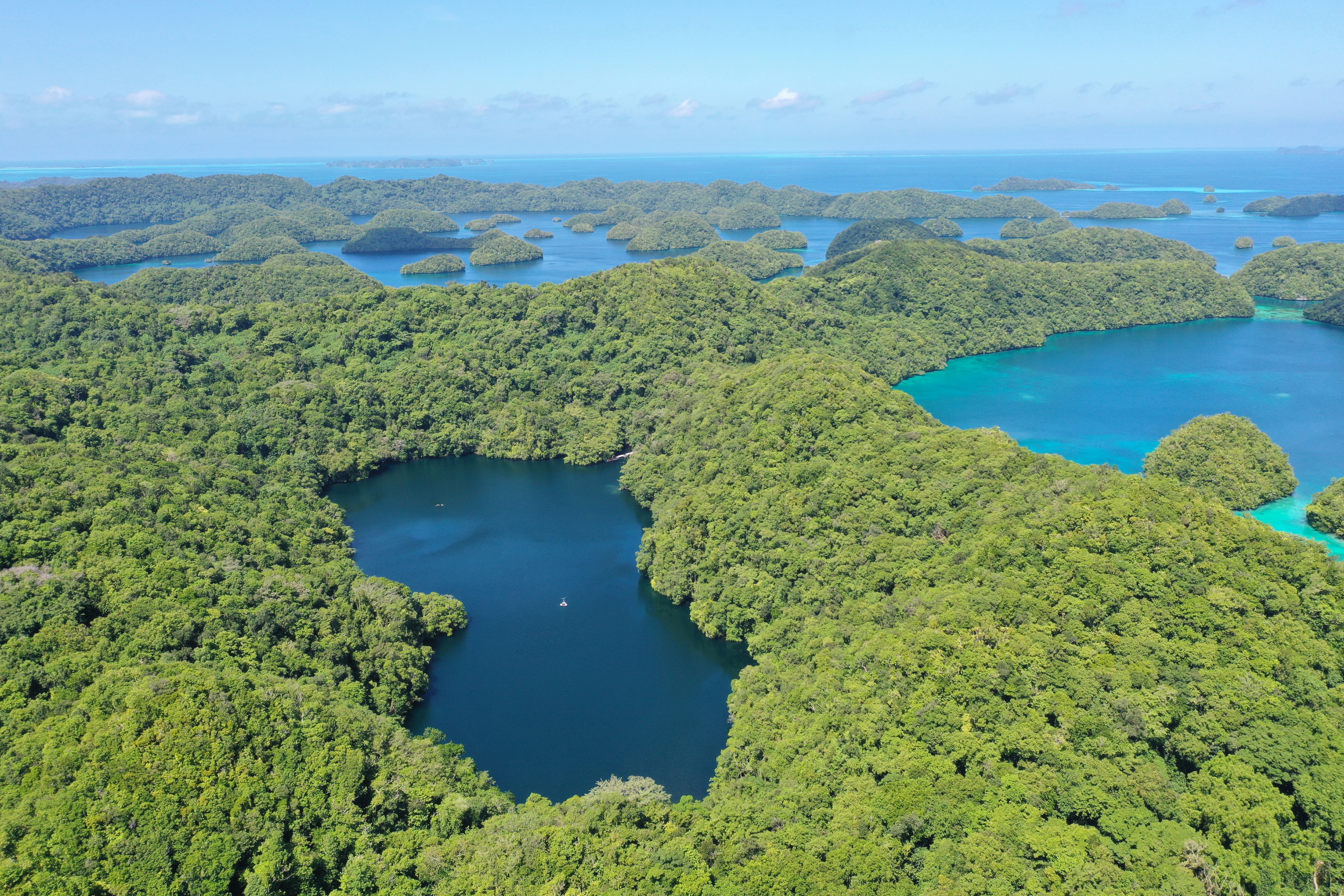
Known as “Fifth Lake” in Palauan, the lake is 400 meters long and 30 meters deep, and is thought to be around 12,000 years old. At this time, sea level changes led to the isolation of this area from nearby lagoons. With evolution by natural selection left to its own devices for all that time, the jellyfish that live in the lake today are vastly different to their relatives found elsewhere on the island – or the rest of the planet, for that matter.
Specifically, we’re talking about the golden jellyfish (Mastigias papua etpisoni), a subspecies of the spotted jellyfish that was named after Palau’s former president, Ngiratkel Etpison.
According to the Coral Reef Research Foundation, the golden jellyfish migrate in a way seen only at Jellyfish Lake. They begin their day by swimming towards the Sun in the east as it rises, stopping where a shadow line forms; come midday, they do the same but towards the west. Each time, this creates a truly spectacular “wall” of jellyfish.
Following the Sun also plays a part in the symbiotic relationship they have with dinoflagellates (a group of single-celled eukaryotic algae) in the lake, which have taken up residence in the jellyfish’s tissues. As the jellyfish rotate and bob around the water’s surface, the algae get the sunlight they need for photosynthesis, and in return, they share some of the resulting sugars with their hosts. Sounds like a pretty sweet deal to us.
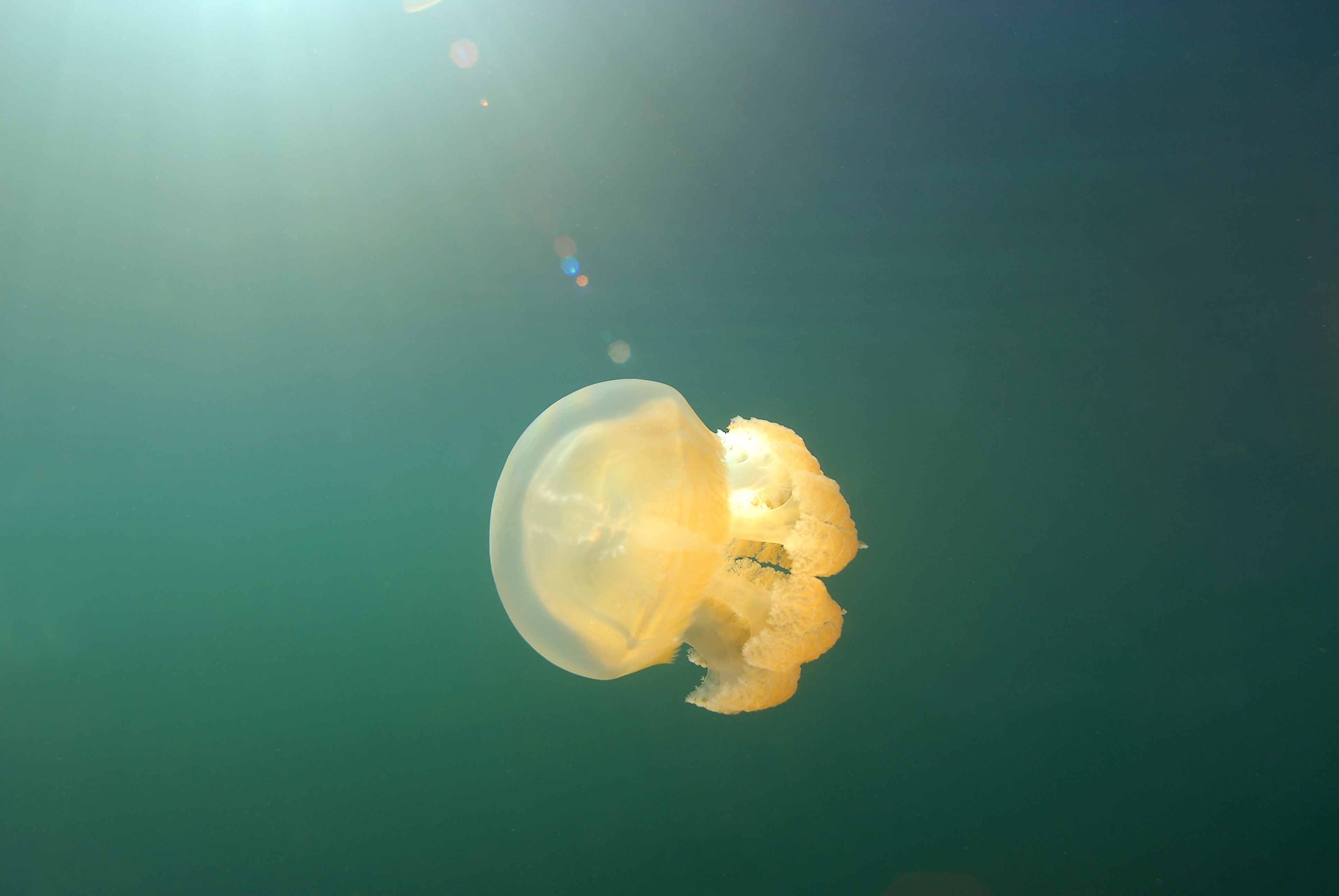
Moon jellyfish (Aurelia sp.) also live in the lake, but their golden neighbors are by far the most numerous; typically, there are around 5 million of them.
We say typically because that figure has changed throughout the years. The species reached a peak in 2005 when an estimated 30 million golden jellyfish were swimming within the lake. By 2016, however, numbers had dropped to such a low that the lake had to be closed to swimmers for two years; it’s thought that El Niño was to blame, with the warm temperatures that it caused causing algae growth to take a hit, which had a knock-on effect on their partner jellyfish.
Thankfully, by 2019, the population was back to the millions, and had reopened to visitors – so if you want to go and see these famous jellies for yourself, you best get your butt to Eil Malk.
An earlier version of this article first appeared in Issue 14 of our digital magazine CURIOUS. Older issues of CURIOUS are free for all users. To access new issues, become an All Access Member.