Nature
 PUBLISHED




Lobster fisher Brad Myslinski is no stranger to pulling up crustaceans in a net, but this year he caught something few will ever get to see in person. You see, in his net he saw a flash of electric blue, one that would turn out to be a lobster that’s as rare as one in 2 million.
Lobsters are a bit like Pokémon cards in that you can get the equivalent of a crustacean rare shiny when genetic anomalies lead to rare and striking colorations. There’s been yellow lobsters like Banana, calico like Freckles, and even lobsters that are a 50/50 split like Currant.
Your average lobster is greenish brown – a form of camouflage that allows them to blend into their rocky environment. We often think of lobsters as being red, but they actually only turn red when they are boiled (hopefully no longer alive, given recent sentient bills that recognize lobsters feel pain).
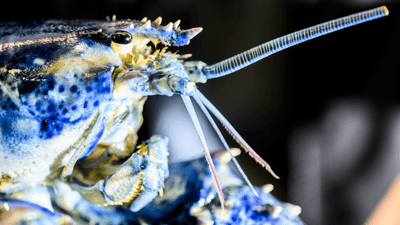
A boiled lobster turns red because the heat causes proteins called crustacyanin to unwind, releasing a pigment called astaxanthin that’s red. That crustacyanin, as the name would suggest, is blue, and this is why our dear Neptune, as it has been named, is so flashy.
Neptune has a rare genetic anomaly that overproduces crustacyanin, turning his exoskeleton electric blue. The genetic anomaly behind it is thought to occur in one in 2 million lobsters, making him very flashy indeed. So much so that even the lobster experts were excited when Myslinski donated him to Northeastern University’s Marine Science Center.
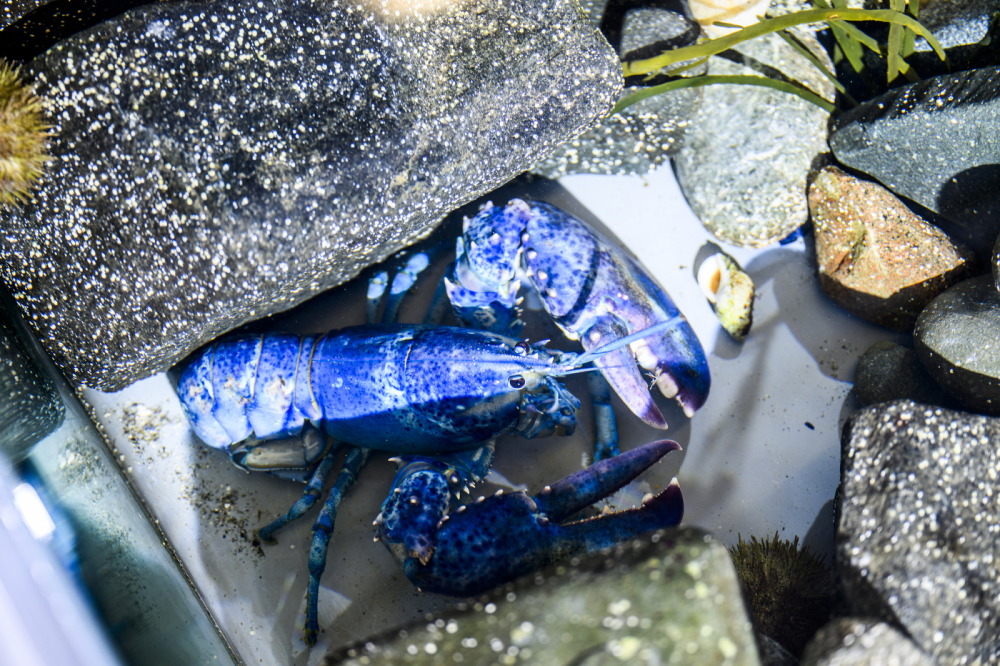
“I was really excited to see this rare coloration on a lobster,” said PhD student in Professor Jonathan Grabowski’s lab at NUMSC, Neida Villanueva, to IFLScience. “I never thought I'd get to see a blue lobster in person, considering how rare they are. The lobster fisher, Brad Myslinski, who caught and donated Neptune, was very kind to do so. We are all very excited about this new addition to our outreach program.”
“I think Neptune's coloration offers a great opportunity to get students and visitors interested and asking questions about lobsters in general. The lobster industry is so vital to New England, so any discussion and interest about it is great.”
Neptune weighs just under a kilogram (about 2 pounds) and is thought to be about 7 years old; a mere spring chicken, as lobsters can live up to 100 years. According to NUMSC, while the odds of this striking blue occurring are one in 2 million, the odds of catching one are one in 200 million.
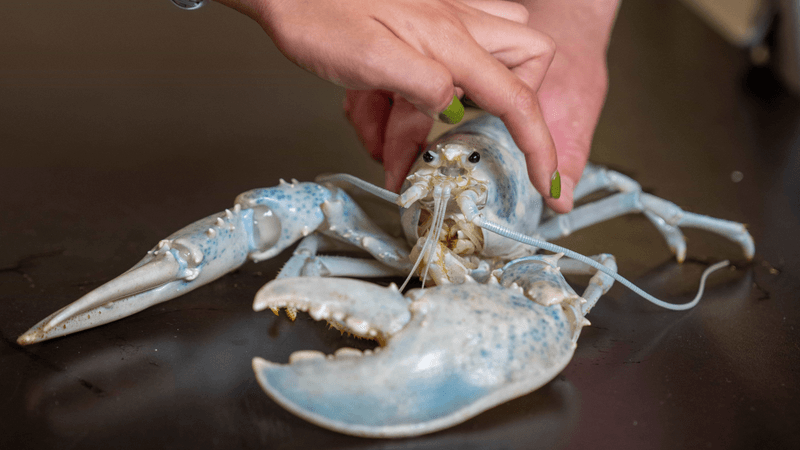
A very rare lobster indeed, but have you heard of the rarest of all? The ghostly “crystal lobster”…