Nature
 PUBLISHED


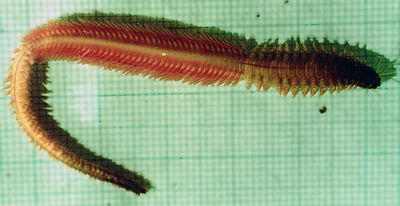


Marine worm species typically live in the seabed; but just occasionally, something rather exciting happens. These worms appear from their burrows on a warm summer evening, travel up the water column, and swarm in their thousands to breed. The eggs released during this seasonal event are tasty snacks for things like trout, but now it seems the worms themselves are snacks for an unlikely predator.
Over the course of a year researchers studied two jellyfish species: the common moon jelly (Aurelia aurita) and the invasive comb jelly (Mnemiopsis leidyi). Both species were observed in the Kerteminde Fjord and the nearby Kertinge Nor in Denmark and were found to be consuming the worms. This is the first time the species have been observed performing this feeding behavior.
“Although jellyfish are known to be omnivorous and generally consume whatever they encounter, it is the first time, this behaviour is documented,” said one of the researchers behind the discovery, biologist and postdoc Hannah Yeo from the University of Southern Denmark (SDU) Marine Biology Research Centre in Kerteminde, in a statement.
The team collected 166 moon jellies and found 45 individuals contained at least one worm, while of the 71 comb jellies, three of them contained one worm. However, the number is actually likely to be much higher, since both species were actively digesting the worms.
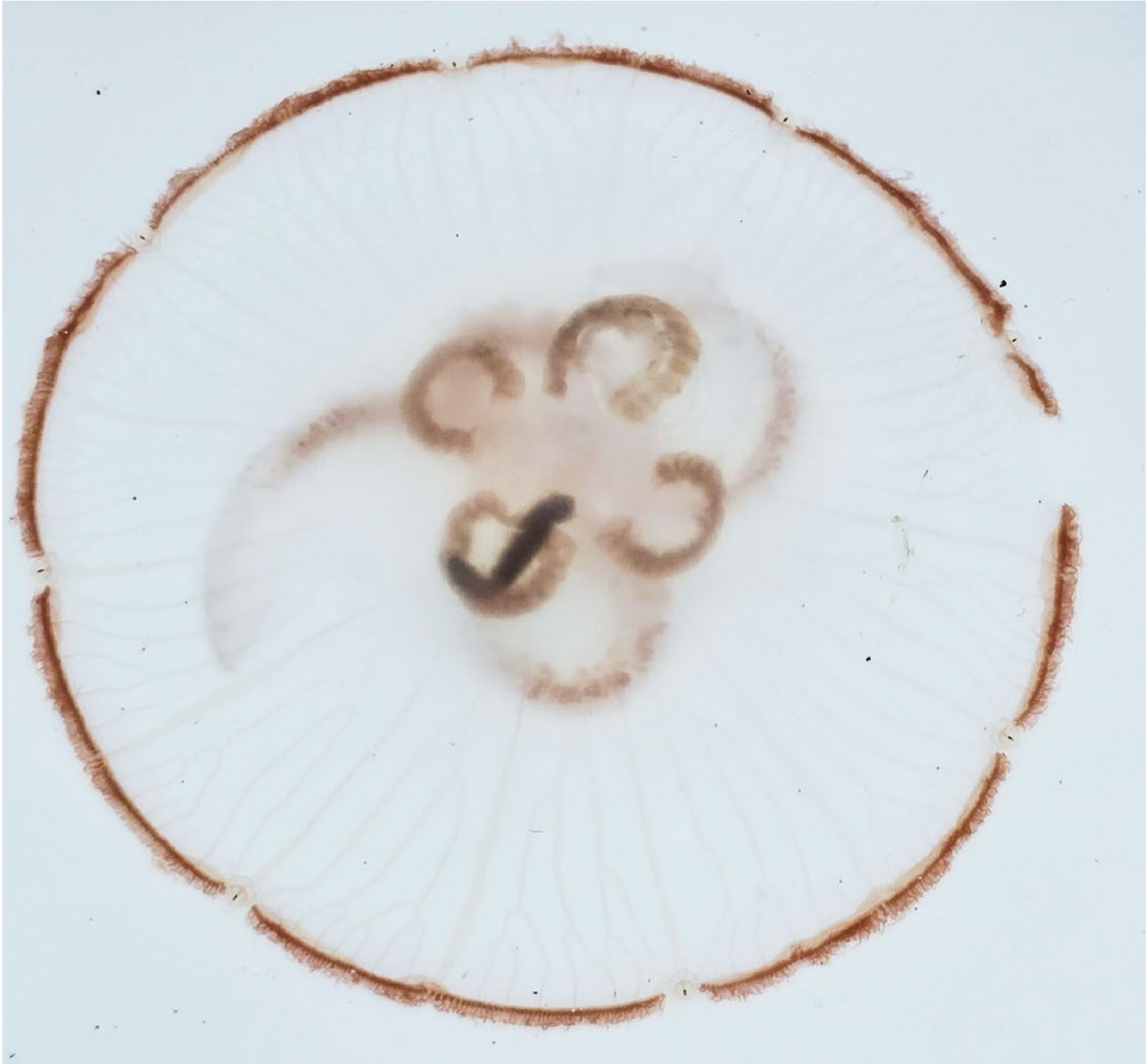
“It takes only a couple of hours for the jellyfish to digest these worms, so there were probably more cases than the ones we observed,” said co-author Professor Erik Kristensen from the Department of Biology at SDU.
Isotope analysis of the jellyfish helped confirm that the worms were being properly digested rather than simply passing through their internal system. The results showed that the nutrients from the worms were absorbed into the jellyfish tissues. The researchers think this probably doesn’t represent a large source of food for them, but it does suggest that these seasonal bursts could help the population thrive.
Although, that is not necessarily good news.
“We suspect that Mnemiopsis consumed more worms than we could detect. They also hunt at night, which is exactly when the worms swarm. By the time we sampled them in daylight, the worms would have been fully digested and impossible for us to see,” said co-author Jamileh Javidpour, associate professor at Department of Biology, SDU. “Mnemiopsis are invasive and unwanted in Danish waters because they can outcompete native species. They are highly opportunistic feeders, and this appears to be yet another food source they are able to exploit.”
Typically food and material flows away from the surface to the seabed in the water column, such as with whale fall. However, this feeding behavior showcases another area that the jellyfish are managing to exploit.
“[H]ere we see energy moving upward instead: bottom‑dwelling animals rising into the water column and being hunted there. While several predator species are known to exploit these spawning events, it has not been documented before in jellyfish or Mnemiopsis. This means gelatinous zooplankton are tapping into a benthic energy source that has been largely overlooked,” said Javidpour
The study is published in Hydrobiologia.

 2
2