Nature
 PUBLISHED




Life on Earth is complex and sprawling. Today, there are species that crawl across the ground, climb and thrive in the trees, or fly through the skies. But before this, all extant terrestrial lineages traced their ancestry back to marine or aquatic ancestors. This account of the deep- origins for land-based species has strong scientific consensus, but how have we reached this significant conclusion? The answer is informed by multiple independent lines of evidence – from fossils and anatomy to genetic research – that all point in the same direction.
Evidence set in stones
The most obvious place to start when exploring the evidence for this ancient watery ancestry is the fossil record. To be sure, this is a complicated story and not one that is easily condensed into a short article, but you can get a strong sense of just how concrete the gradual shift in fossils is for demonstrating the move towards land from the seas across millions of years.
Over the centuries, researchers – not just scientists but also early naturalists and natural philosophers – have accumulated fossils that clearly demonstrate that, in vertebrates, as in other animal lineages, the transition from water-dwelling species to land-adapted animals occurred over millions of years. The timing of the appearance of these fossils in the record provides powerful evidence of this transition.
Some of the earliest known animals with a backbone-like structure are the Haikouichthys and Myllokunmingia, small eel-like creatures that lived around 500 million years ago, during the Cambrian period. Both of these little swimmers had gills and possessed rudimentary features of backbones, including a notochord – the precursor to a backbone – that represent the first steps in vertebrate evolution. However, they lacked jaw bones; it would be millions of years before this was developed.
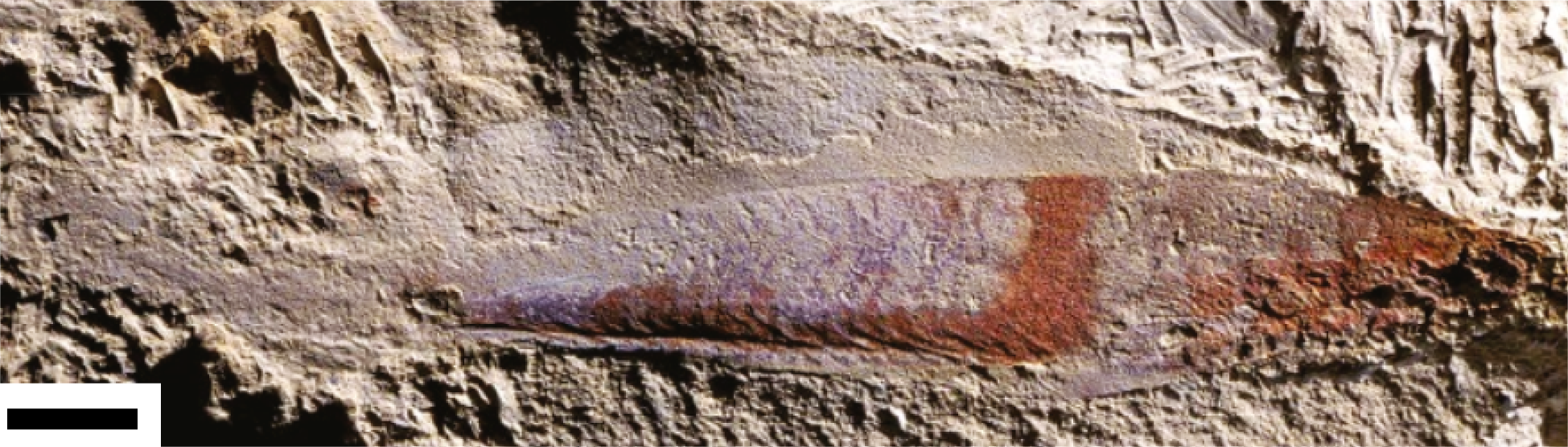
As time went on, vertebrates began to diversify and become more armored. During the Ordovician period (around 485-443 million years ago) we see fossils of creatures like Arandaspis, an extinct ostracoderm (armored jawless vertebrates), appear in the record. This creature lived in waters where Australia is now, and it was encased in bony plates. Although it still lacked a jawbone, its adaptations suggest a more complex ecosystem with greater pressures from predators.
Then, during the Devonian period (between 420-360 million years ago) – the Age of Fishes – vertebrates finally developed their jaws, allowing them to become active predators. This significant achievement led to a much wider range of forms for our ancestors.
However, while the open oceans of the world were being stalked by large, armored hunters like Dunkleosteus, the most evolutionarily important vertebrates for our story were in shallow, complex waterways. Lobe-finned fishes like Panderichthys and Eusthenopteron boasted fleshy fins that were supported by bones, resembling primitive limbs – the latter even had bone marrow. These new features suggest the animals were evolving to move around in shallow, vegetation-choked environments such as river deltas and floodplains.
Around 375 million years ago, transitional forms such as Elpistostege and Tiktaalik developed wrist-like joints, mobile necks, and bodies that were capable of holding themselves up in shallow water. These creatures show a clear shift towards land-based adaptations. Although they were still fish, they were able to exploit an ecological niche that was poised between the land and the water.
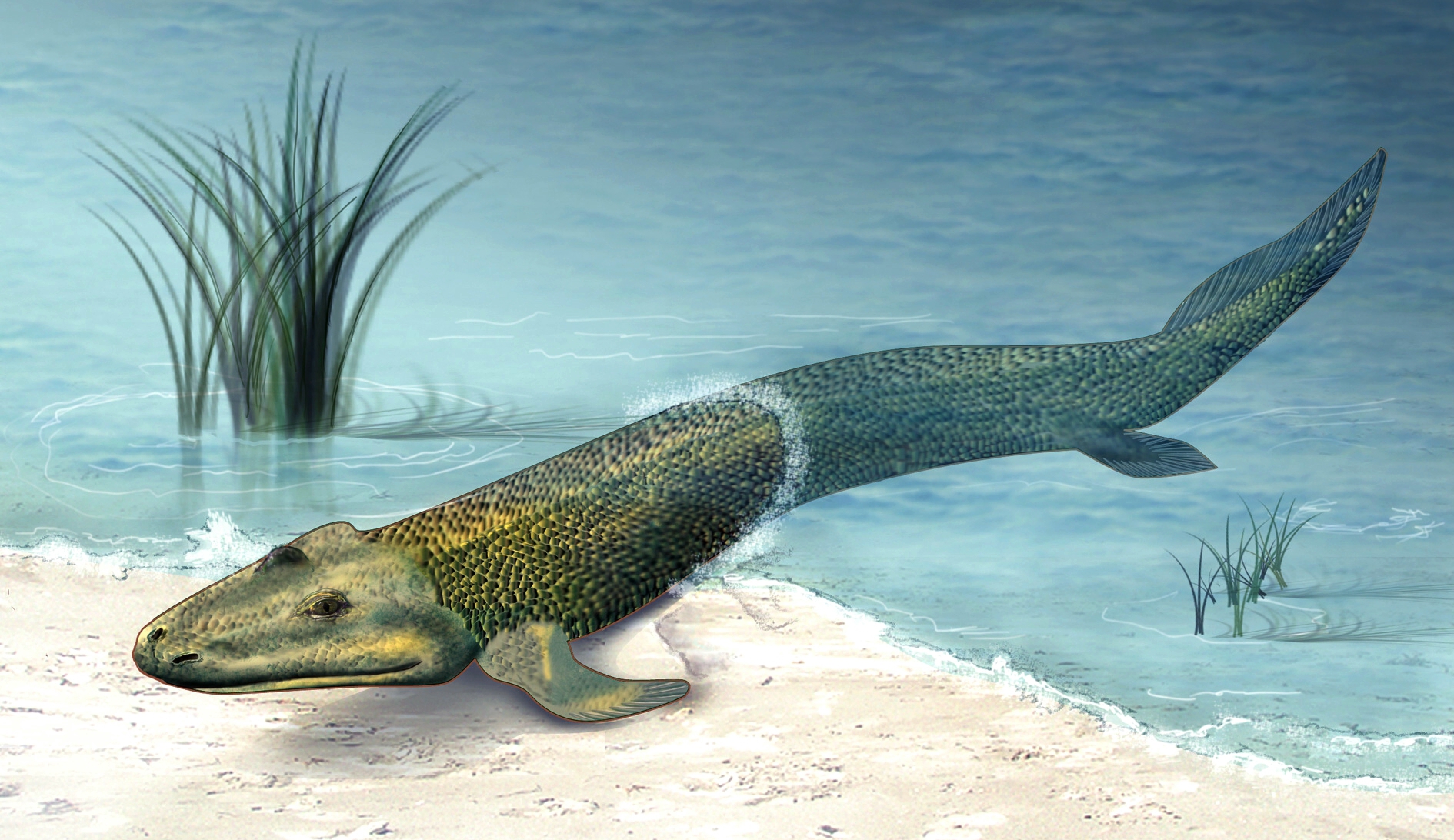
In another 10 million years, early tetrapods, such as Acanthostega (a cross between a salamander and a pancake) appeared with true limbs with digits. Although these animals were still mostly aquatic and poorly adapted to moving on land, they nevertheless demonstrate the gradual development of stronger traits for this purpose.
As we moved into the late Devonian, this shift to land-based adaptations became more pronounced. For example, around 360 million years a tetrapod called Ichthyostega flopped out the water with more robust ribs and limb joints. Although it probably couldn’t walk with these stubby limbs, it had the first limited ability to move on land.
But as time moved into the Carboniferous period, around 315 million years ago, we see the first truly terrestrial species leaving the water. One of the most significant of these was Hylonomus, a small lizard-like creature, which may have been the first fully terrestrial vertebrate to lay amniotic eggs on land – eggs that wouldn’t dry up. This allowed it to venture further into the dense forests, expanding beyond the aquatic and semi-aquatic boundaries of its ancestors.
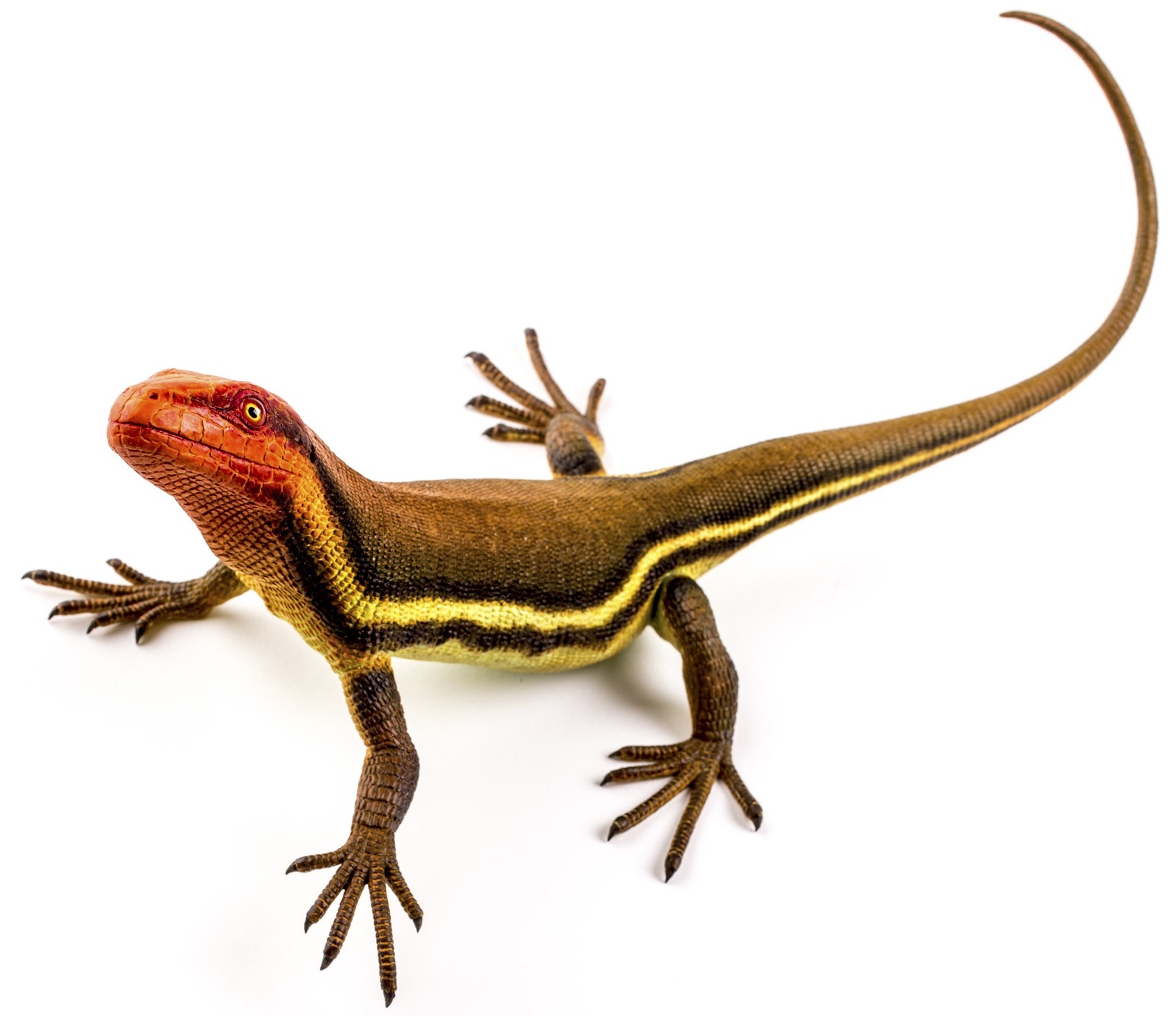
Vertebrates had finally set off on their land-based journey. And although some species, such as cetaceans, would eventually make their way back into the water and become the marine mammals we know today, life on Earth would not be the same again.
Fingers and flippers
Throughout this journey across 185 million years of evolution – from the first early vertebrate like fish to the first tetrapods - one of the most significant developments was the gradual transition towards limbs. This factor remains an important thread demonstrating our heritage with these prehistoric creatures. Today, whether you examine a human arm, a dog’s front leg, a bat’s wing or a dolphin’s flipper, you will see the same underlying homologous structure – a single upper bone (humerus), two lower bones (the radius and ulna), and a cluster of wrist bones and digits. This tetrapod limb plan appears consistently across vastly diverse species and can be traced, as demonstrated above, all the way back to the first lobe-finned fish, like Panderichthys and Eusthenopteron.
Across millions of years, the gradual accumulation of mutations caused the rudimentary structures in these fish – which were already arranged in a way that mirrored ours today – to develop into fin bones with wrist-like joints and increased mobility, as seen with Tiktaalik. Rather than appearing from nowhere, there is clear evidence of gradual change and modification as creatures started to support their weight in shallower water, eventually allowing them to move around on land. Of course, this was not an inevitable process, but one that occurred by accident across many generations.
Written in our genes
The evidence for our ancient aquatic origins is not just found in fossils and bones; it is also written in our genes. Modern genetic research has shown that tetrapods were closely related to lobe-finned fish, strongly supporting what we see in the fossil record. In particular, the key developmental genes – especially Hox genes (HoxD and HoxA clusters) – not only shape how bones develop in embryos but also guide how fins develop in fish.
This double purpose demonstrates that, rather than inventing new genetic machinery, evolution repurposes existing toolkits, modifying them to produce increasingly complex structures, including wrists, fingers and toes, rather than just fins.
For instance, in 2014, researchers at the University of Chicago offered striking evidence for this development. They looked at spotted gar – a basal ray-finned fish whose genome has evolved more slowly and retained many ancestral features – and found that genetic switches that controlled limb development are deeply conserved between fish and tetrapods.
When these gar genetic switches were inserted into developing mice, it led to limb development patterns that were “nearly indistinguishable” from those driven by the mouse genome. The results demonstrated that the genetic blueprints for creating the “autopod” – wrists and digits – existed long before hands evolved. These instructions were later reused and modified as vertebrates moved onto land. Two years later, additional research showed that the same cells and gene networks that produced fin rays in fish also helped in the formation of fingers and toes in tetrapods.
More recent genetic research has expanded our understanding of this evolution. In 2025, biologists at the University of Bristol showed that major evolutionary transitions from water to land were accompanied by a large gene turnover, including both gene gains and reductions at the same time. The ability for genomes to gain or lose genes plays a fundamental role in animal adaption to new habitats.
Among the genes most affected by this turnover were ones linked to dehydration resistance, environmental stress, metabolism, immunity and sensory perception. So, while the genetic toolkit for developing limbs was already present in aquatic ancestors, the move to land demanded additional genetic innovations to cope with new factors, such as dryness, greater exposure to UV, more dramatic temperature variations, and the ability to respond to toxic compounds in plants.
These results showed that genetic changes drove shifts in biological functions, which then became key drivers of the transition from water to land.

 2
2