Nature
 PUBLISHED


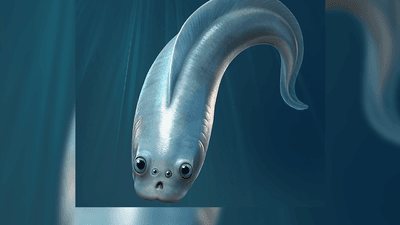


The preservation of fossils of some of the oldest known vertebrates is so impressive that palaeontologists can not only count their eyes, but determine how they worked. The findings demonstrate that soon after our ancestors developed a backbone some adopted an unexpectedly complex visual system, and the capacity to process the images.
The Cambrian Period is famous for the astonishing diversity of body forms, as a staggering variety of animal shapes appeared, with most dying out with apparently no descendants by the Silurian.
By those standards, myllokunmingids probably didn’t look particularly weird, but they have the distinctive feature of being vertebrates, and therefore a closer relative of ours than the other experiments of the era. That makes their quadocular vision system particularly notable.
Myllokunmingids are among the many species found in the 518 million-year-old Chengjiang fossil beds of southern China. Palaeontologists think they looked like a startled tadpoles, with two large eyes set on the sides of their heads, and two smaller ones front and center.
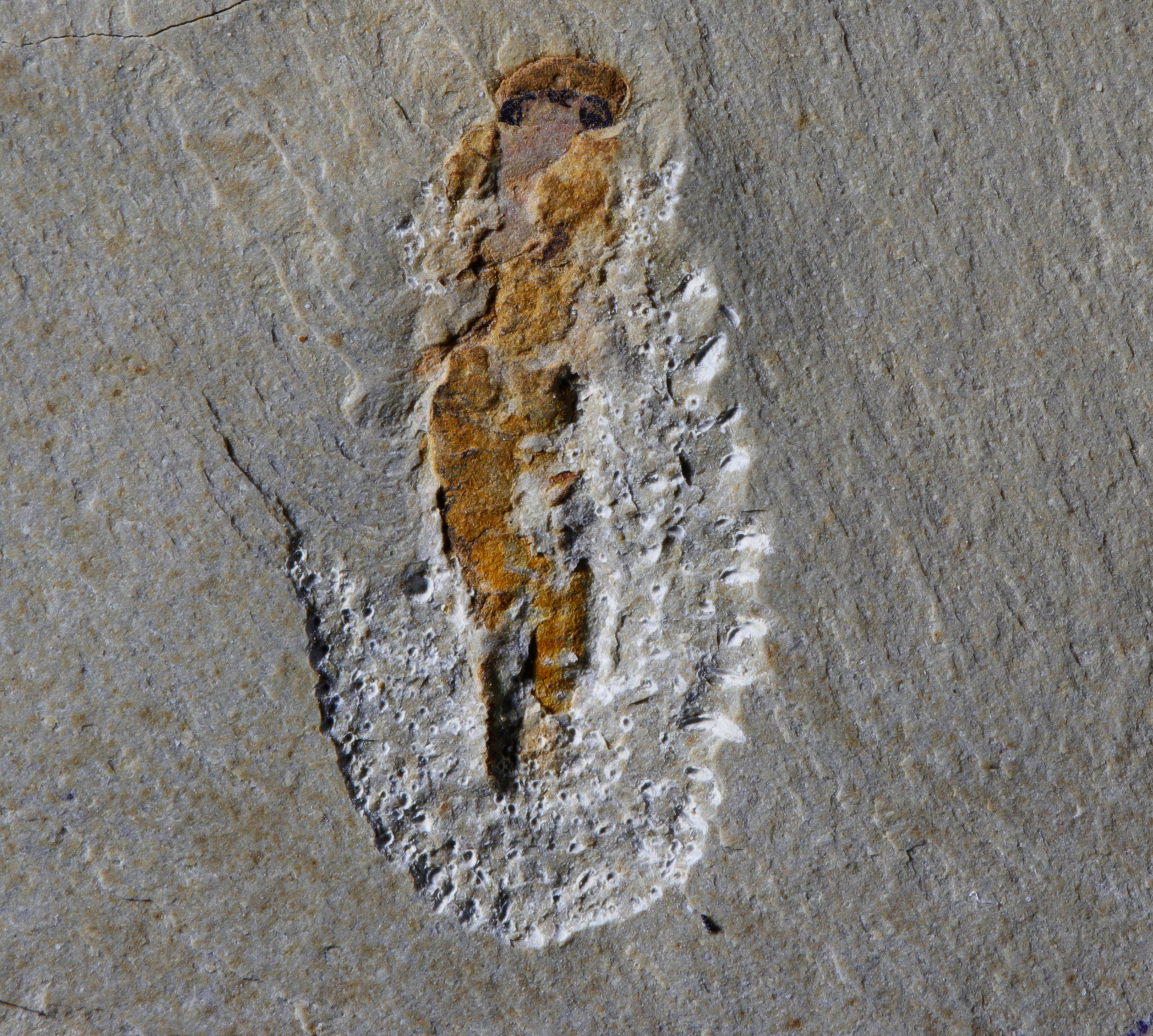
“These fossils preserve the eyes in extraordinary detail. We started by examining the obvious large eyes to understand their anatomy – and it was a complete surprise to find two smaller, fully functional eyes between them. Seeing that was incredibly exciting,” said Professor Peiyun Cong of Yunnan University in a statement.
Overshadowed by the fact that myllokunmingids had four eyes is their age. Prior to this discovery, the oldest preserved evidence of eyes with lenses was 13 million years younger, from the Burgess shale.
By the time fossils that preserve vertebrate eyes were abundant, the outer two eyes had become the sole instruments for sight. Cong and coauthors argue myllokunmingids' inner pair underwent a strange transformation to become the pineal gland.
Although our pineal gland is now internal, it still adjusts its production of melatonin for sleep control based on light exposure. While in mammals the gland has outsourced the detection of light to cells in the retina, in some lizards it is still capable of light detection. When people refer to the pineal gland as a “third eye” their words have a certain historical truth. “These animals didn’t just have a third eye – they had a fourth,” said Dr Jakob Vinther of the University of Bristol.
“What we’re seeing is that the pineal organs began as image-forming eyes. Only later in evolution did they shrink, lose visual power, and take on their modern role in regulating sleep,” Cong said.
The finding is remarkable because eyes are so soft they seldom fossilize well. Mostly, scientists reach conclusion about ancient vertebrate eyes based on the size and shape of eye sockets and extrapolating from modern counterparts.
Yet very occasionally the eye itself is preserved, or at least an imprint survives. These fossils “open a rare window into how extinct animals saw and experienced their world,” said Emeritus Professor Sarah Gabbott of the University of Leicester. “It was a long shot, but we suspected the eyes in these Chinese fossils might be preserved — and they were, complete with light-absorbing pigments in the retina and lenses capable of forming images, showing just how well our earliest ancestors could see.”
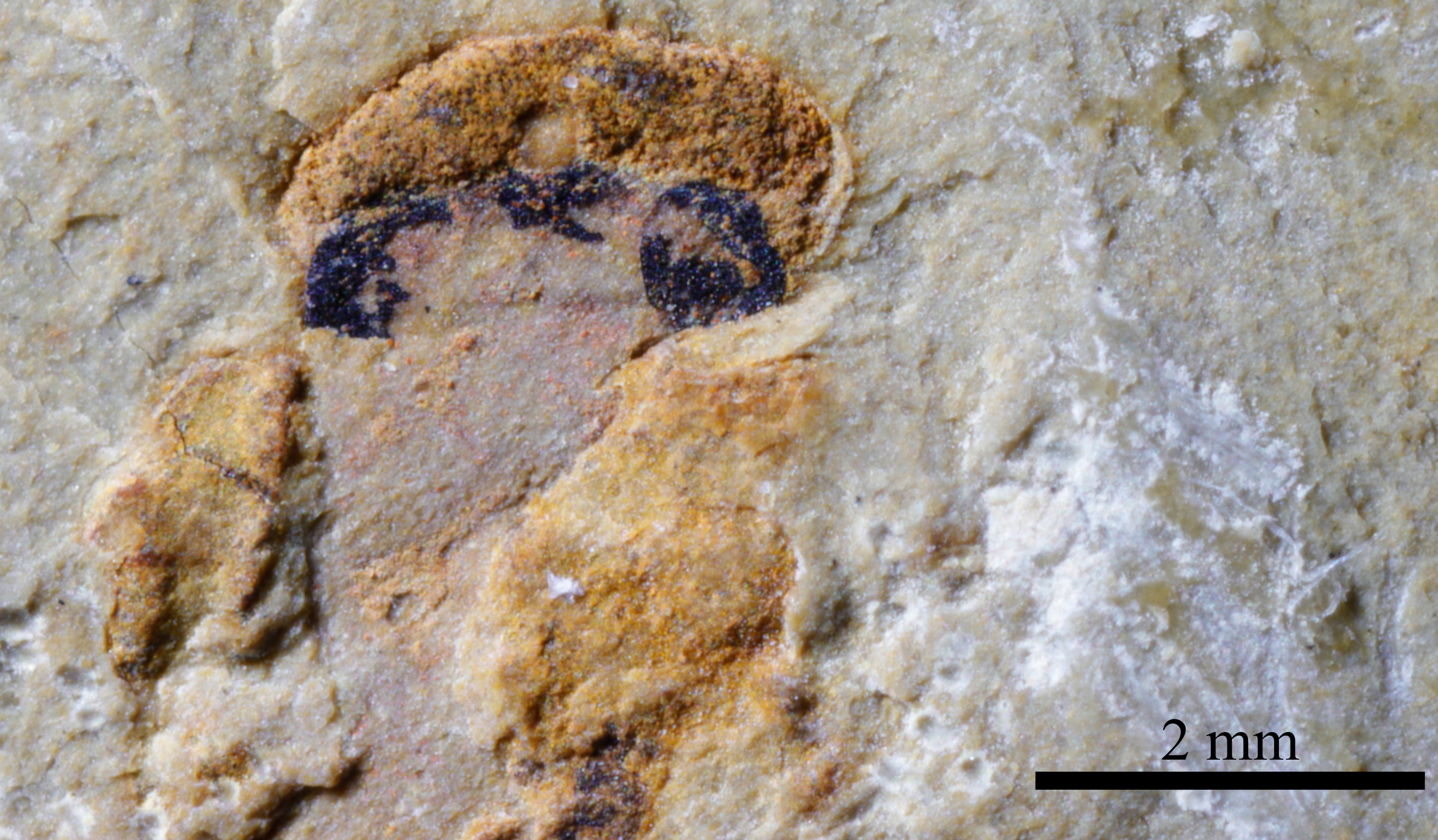
The team even managed to confirm the four-eyed nature of two different species of myllokunmingids, Haikouichthys ercaicunensis and another that has yet to be named.
The similarity between the composition of the inner and outer eyes helped build the authors confidence these were similar organs. Further evidence comes from the presence of melanin, a versatile pigment that has been maintained as an important part of light absorption from myllokunmingids to ourselves.
Previous examiners of the fossils had concluded the dark spots at the top of the head were nasal sacs, but there’s no reason proto-noses would be rich in melanin, nor have a lens shape.
Myllokunmingids appear to have lacked armor. Although we can’t rule out other defenses, such as being poisonous, the odds are they relied on spotting predators early and taking evasive action to survive. “In that environment having four eyes may have given these animals a wider field of view – important to avoid predators,” Vinther said.
Nevertheless, there must have been a price to pay for the extra orbs, or we’d still have them today. Presumably, between the energy consumed in making the eyes themselves, and fueling the neurons to combine the images four lenses captured into a cohesive picture, the extra two were more burden than benefit. Instead, our line waited 518 million years to develop the technology to have additional eyes in the form of cameras, but only when we need them.
The study is published in Nature.