Nature
 PUBLISHED




How did spiders get their fangs? Spiders are one of the most successful groups, surviving in pretty much every habitat. One of the reasons for their success could be the evolution of powerful mouthparts known as chelicerae, which are used as pincers or fangs to manipulate and kill prey.
Now, a 518-million-year-old fossil from a dig in China could shed some light onto the evolution of these mouthparts. All chelicerates have these mouthparts, but how they got them has remained something of a mystery.
One idea suggested a link between ancient fossils that have something called SGAs, or short great appendages. These were found on a Cambrian group called megacheirans, which might have preceded the modern chelicerates or stem euarthropods, though the hypothesis is still up for debate.
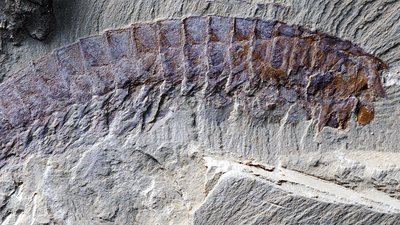
The fossil, which has been called Urokodia aequalis, was discovered at the famous Chengjiang fossil site of Yunnan Province in southern China. The fossil was initially thought to be related to a trilobite, but new research has suggested that it is closer to a spider.
While the body of the creature looks quite different from modern-day spiders and scorpions, there is one key feature that led the team into thinking they were looking at the early evolution of chelicerae – protruding, pincer-like limbs emerging just behind the eyes can be seen on the fossil.
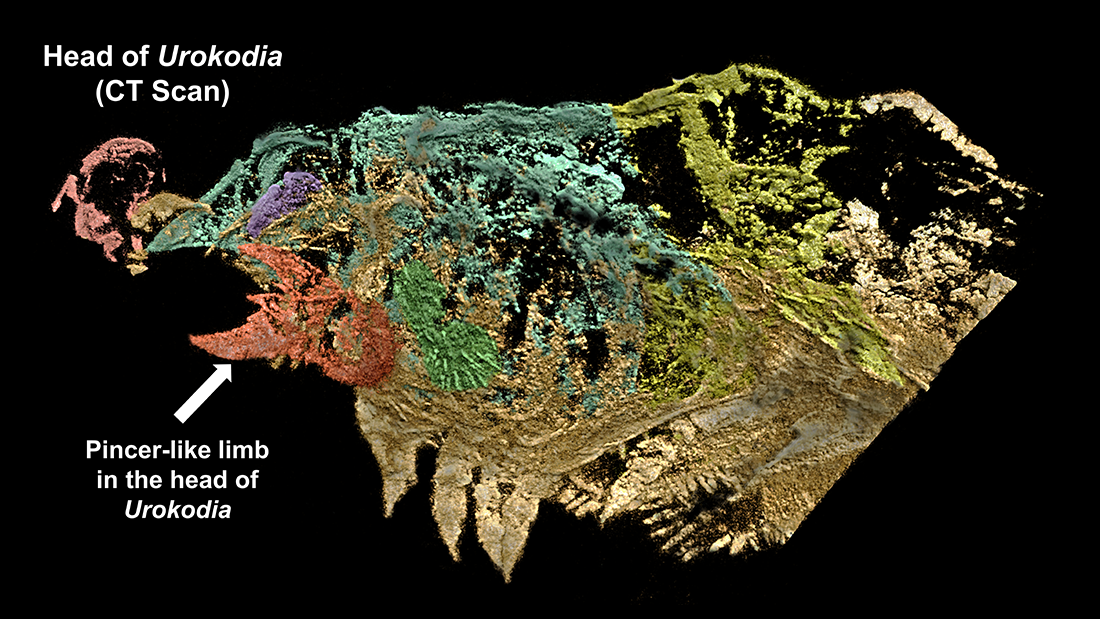
“We were using X-ray tomography analysis of these fossils to reveal their soft anatomy buried in the rocks for hundreds of millions of years, when suddenly we noticed the pincer-like limbs at the front of the animal,” said Professor Yu Liu of Yunnan University in a statement.
“We knew immediately that this was a very exciting fossil and indeed a distant ancestor of living chelicerates like scorpions and spiders.”
The team used X-ray analysis to look closer at the rock where Urokodia was found and revealed that most of its soft body parts were still preserved even after hundreds of millions of years. The X-rays also reveal a feature that looks similar to book gills, found on the legs of the fossil and used for breathing.
The team think that Urokodia provides a link in the evolution of chelicerae – that they started as multisegment structures, moved to the pincer like SGA seen in Urokodia, and then evolved into pincers seen in other known chelicerate fossils such as Mollisonia, Megachelicerax, and Limulus.
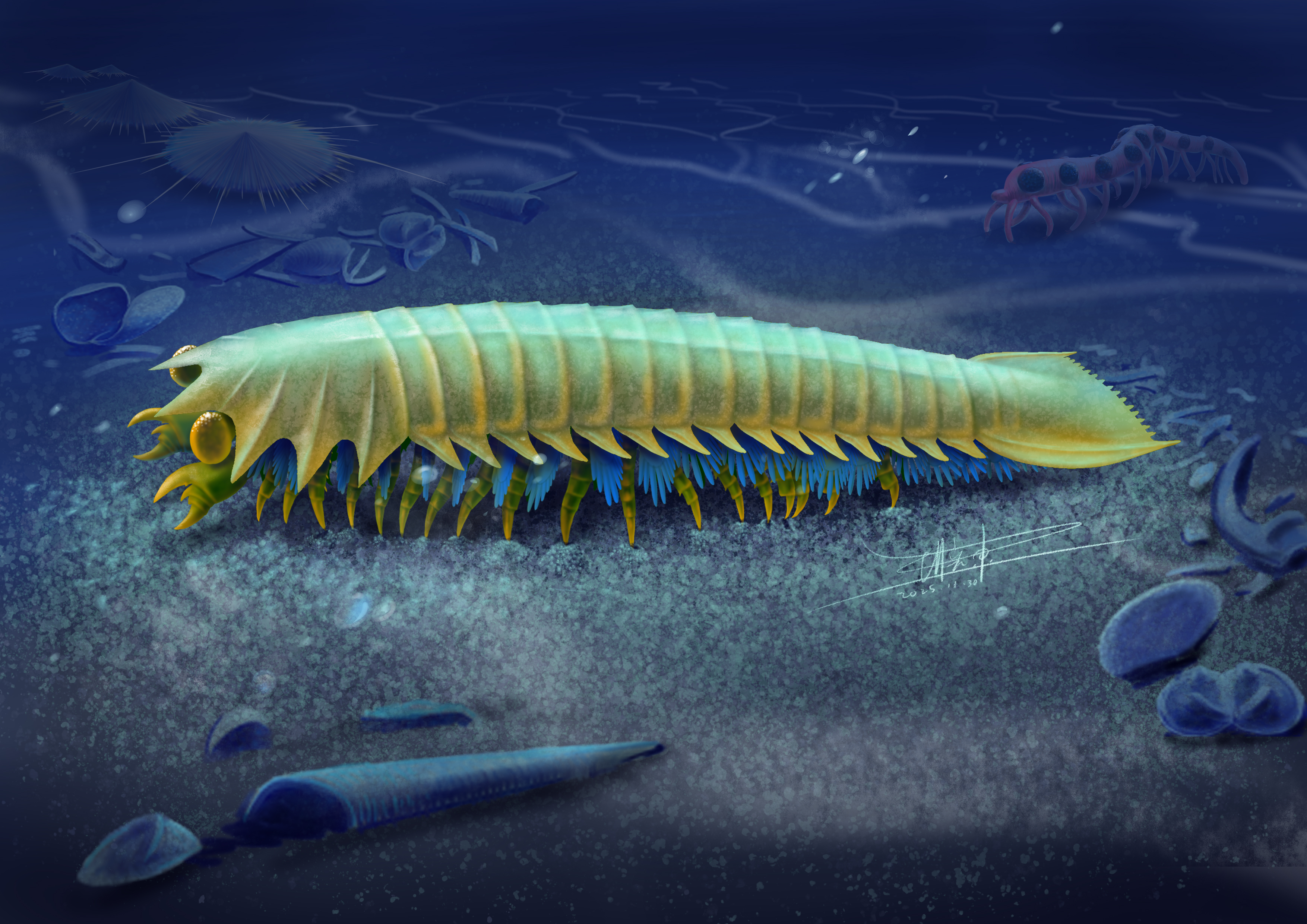
“Urokodia was part of an ancient ecosystem of over 200 different types of animals living in the seas over 500 million years ago. These spectacularly preserved fossils provide real insights into how life was evolving on our planet at the very dawn of animals,” said co-author Professor Mark Williams from the University of Leicester School of Geography, Geology and the Environment.
The study is published in Nature.