Nature
 PUBLISHED





Every dinosaur came from an egg, but exactly how those eggs cracked open is something we know little about. That's why a recent study investigated how dinosaurs called oviraptors incubated their eggs until they were ready to hatch. Did they use environmental heat like crocodiles, body heat like birds, or was it something else altogether?
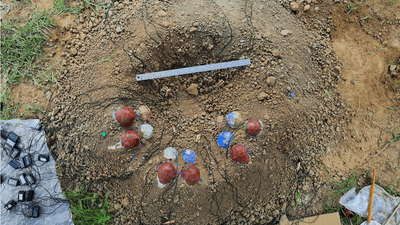
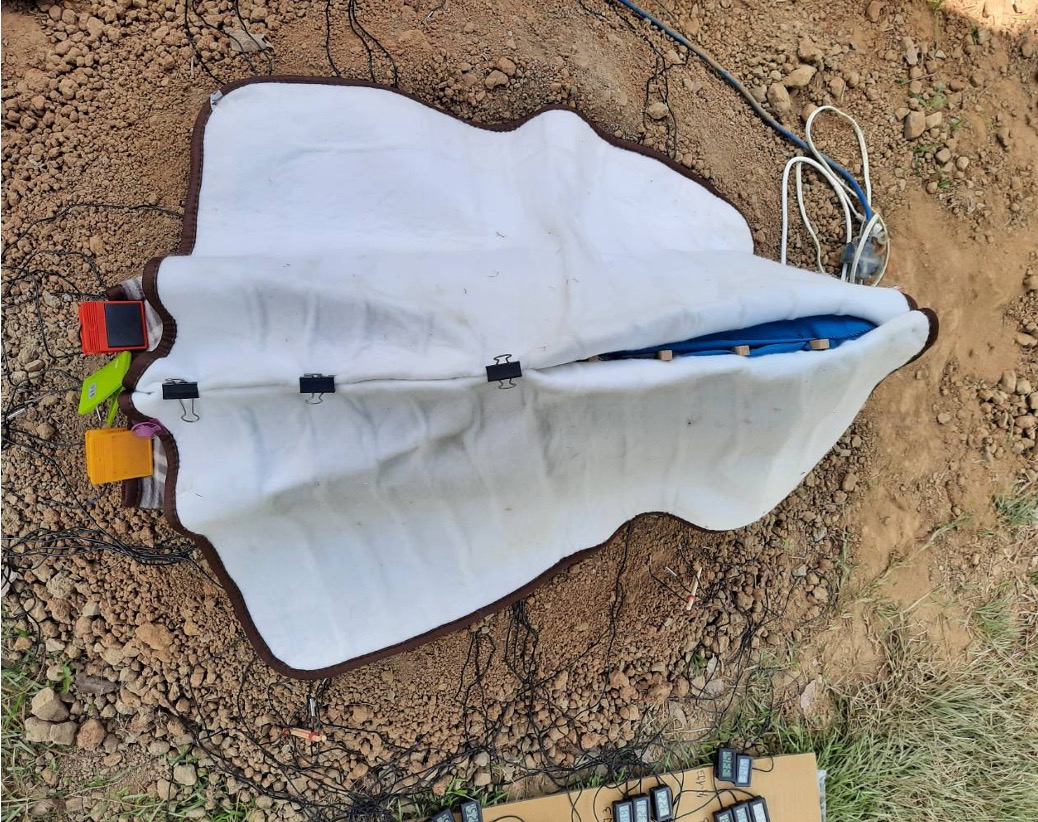
To find the answer, the researchers behind the study had to get creative, so they got to work building a life-sized “oviraptor incubator”, complete with an imitation oviraptor torso made from wood, polystyrene and cloth. They also crafted artificial oviraptor eggs, something that’s easier said than done.
"Part of the difficulty lies in reconstructing oviraptor incubation realistically," first author Chun-Yu Su, who attended Washington High School in Taichung, Taiwan, when the research was conducted, said in a statement. "For example, their eggs are unlike those of any living species, so we invented the resin eggs to approximate real oviraptor eggs as best as we could."
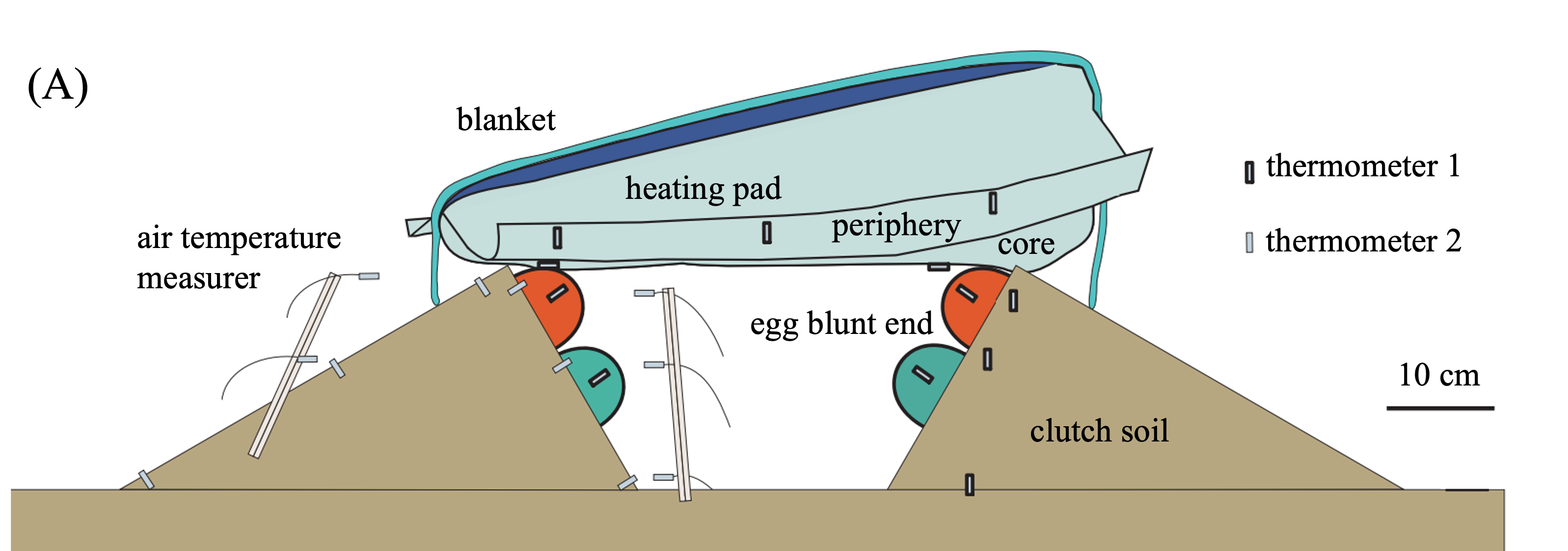
The resin eggs were arranged in rings inside human-made nests, replicating a formation we’ve observed in real fossilized oviraptor nests. With the right setup of heating pads and sensors, the researchers could then observe how efficient an oviraptor would have been at incubating its clutch.
Modern birds use something known as thermoregulatory contact incubation to keep their eggs warm. It requires three key things: that the adult bird is in contact with every egg, that its body is the main heat source, and that the nest temperature is stable.
The experiments revealed that in colder temperatures, the ring-like arrangement meant temperatures of oviraptor eggs could differ by up to 6°C, even with a brooding oviraptor present. In warmer temperatures, that difference dropped to just 0.6°C. This is important because large differences in temperatures would result in eggs hatching at different times.
The eggs were arranged in such a way that an adult oviraptor couldn’t have touched them all at the same time. Also, they were half-submerged, suggesting the dinosaurs took advantage of different heat sources, including the earth and Sun, rather than using their own bodies to incubate their clutch.
"It’s unlikely that large dinosaurs sat atop their clutches," added senior author Dr Tzu-Ruei Yang, an associate curator of vertebrate palaeontology at Taiwan’s National Museum of Natural Science, said in the statement. "Supposedly they used the heat of the Sun or soil to hatch their eggs, like turtles. Since oviraptor clutches are open to the air, heat from the Sun likely mattered much more than heat from the soil."
So, oviraptors weren't quite crocodilian or avian in their approach, but it’s a great example of how nature has many solutions to the same problem. The best method just depends on your circumstances.
"Modern birds aren’t ‘better’ at hatching eggs," said Yang. "Instead, birds living today and oviraptors have a very different way of incubation or, more specifically, brooding. Nothing is better or worse. It just depends on the environment."
The study is published in the journal Frontiers in Ecology and Evolution.