


 Nature
 PUBLISHED


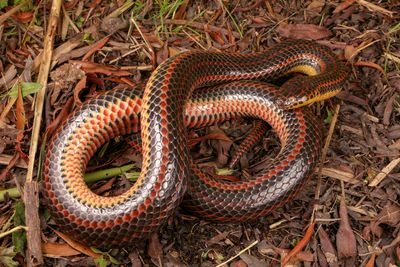


Florida wildlife officials are turning to the public to help locate one of the state’s most elusive reptiles, the rainbow snake (Farancia erytrogramma). This distinctive, nonvenomous species has seen its population steadily decline, with only one sighting recorded since 1969, which has left biologists scrambling to piece together clues about its current whereabouts.
Last seen in February 2020 by hiker Tracey Cauthen in the Ocala National Forest, the Florida Fish and Wildlife Conservation Commission (FWC) is once again asking locals and people visiting the area to keep their eyes peeled for signs of this incredibly flashy snake.
With an iridescent black or violet-blue body, a bright yellow and red underside, and three distinctive red stripes along its back, it’s surprising the species is so rarely seen. They typically reach 90 to 122 centimeters (3 to 4 feet) in length and don’t resemble any other native snake species. They’re semi-aquatic, so are expected to be seen around bodies of water, including rivers, springs, and marshes.
“Every sighting report gives us valuable data about their current distribution and helps us assess the health of the species in Florida,” said Kevin Enge, Research Scientist with FWC’s Fish and Wildlife Research Institute. “We need help from Floridians and visitors to better understand where rainbow snakes still occur in the state.”
The lack of sightings comes as a result of several factors driving the rainbow snake’s population decline in Florida. Feeding primarily on American eels, the decline in eel populations in Florida waters is affecting available food sources for the rainbow snake. Additionally, habitat loss and pollution are impacting the snake’s ability to survive in their native habitats throughout the Florida Panhandle, parts of the northern peninsula along the St. Marys River drainage, St. Johns River drainage, and Suwannee River drainage.
Officials have also noted the threat from snake fungal disease, a deadly fungal infection that causes lesions on the snake’s skin. Snake fungal disease is increasing rapidly among the wild snake population in the US, putting the rare rainbow snake and many other threatened snake species at risk.
Because rainbow snakes are so elusive, every bit of potential data helps. Photos, location, and the date of a sighting all contribute to building a clearer picture of the species' status. This data is crucial for mapping current populations, monitoring their health, and guiding conservation efforts.
The FWC is asking anyone who thinks they’ve seen a rainbow snake to report it via its website, ideally including a photo for verification. Even reports that seem minor could reveal vital information about habitat spread or small, overlooked populations.



 1
1