Nature
 PUBLISHED




If you go down to the deep sea today you could be in for a big surprise. From dancing disco worms to majestic phantom jellyfish, the deep sea is full of wonders. For a group of researchers in Japan, they stumbled upon something never seen before inside a deep-sea cave.
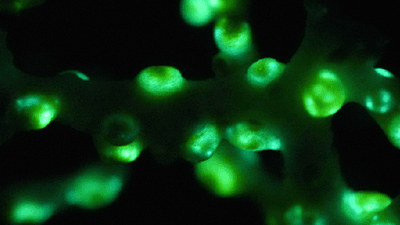
While conducting deep-sea surveys using a remotely operated vehicle around Minamidaito Island off the coast of southern Japan, researchers found a new coral (Corallizoanthus) species at 245-400 meters (803-1,312 feet) deep. What’s even more impressive is that this coral was glowing.
Bioluminescence involves a chemical reaction that releases energy as light and takes place within a living organism; common on-land examples include glowworms and fireflies.
The team took samples of this new coral species and tested the capability of its bioluminescence both onboard the ship and in a living specimen. By gently touching the coral colonies with the end of an optic fiber, the team found that the polyps of this new coral emitted blinking green luminescence with both gentle touching and chemical stimulation; however, no bioluminescence was found in the stolon, a layer of tissue that connects the polyps.
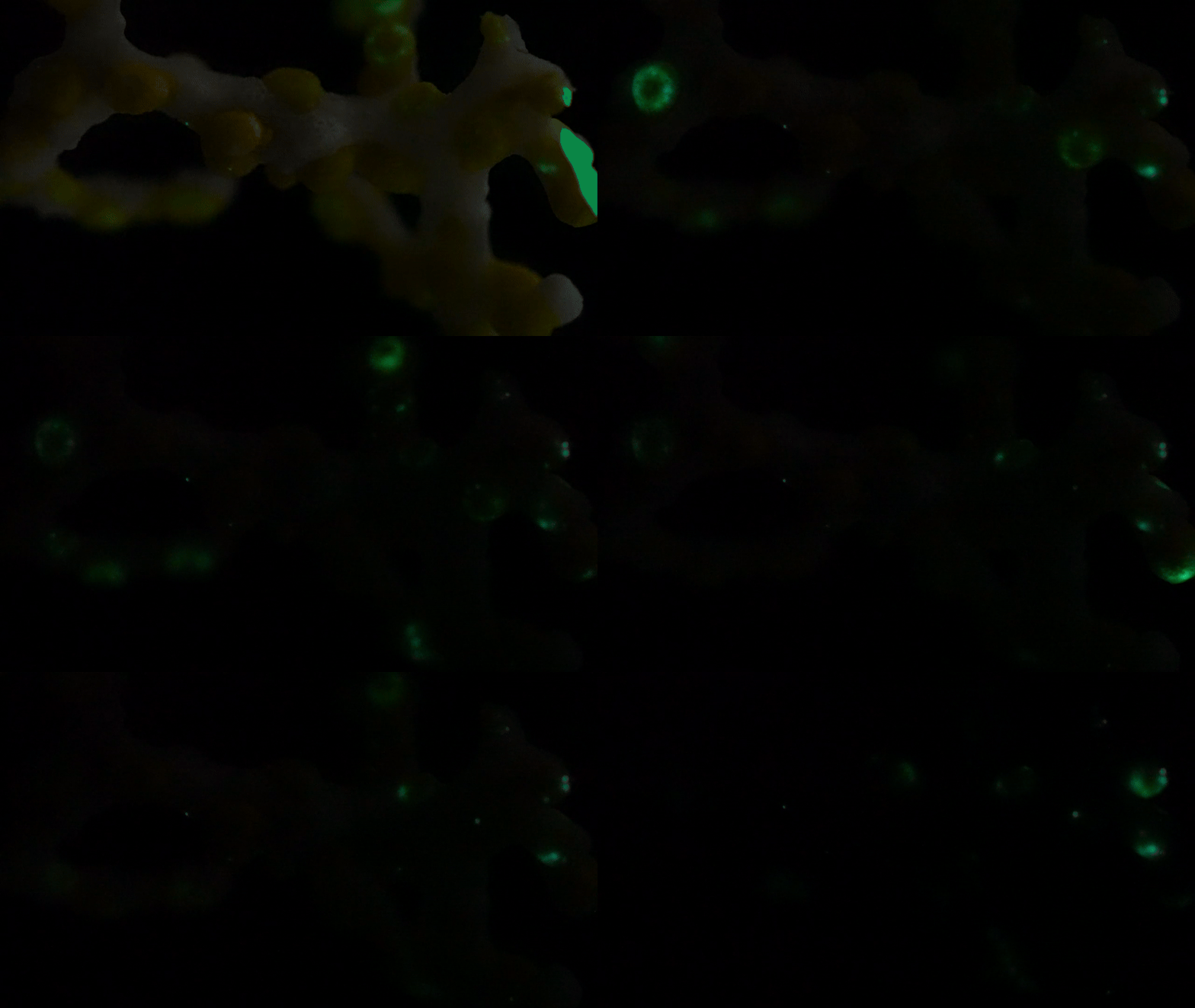
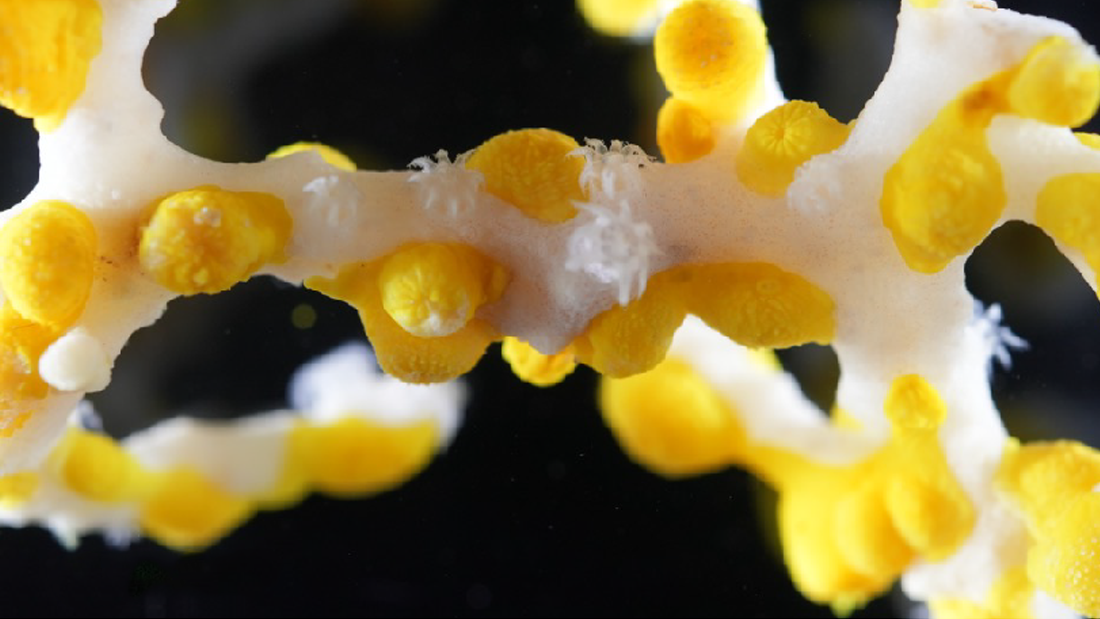
The new coral was named Corallizoanthus aureus, with aureus meaning "golden" in Latin. The team think that this is the first report of bioluminescence within a deep-sea cave.
While the specimen showed bioluminescence upon stimulation, the corals don’t blink green all the time. This suggests that the bioluminescence might be a defense mechanism, or even a kind of burglar alarm. When a predator attacks the coral, the coral flashes green and lights them up – this could signal to other, larger species in the area that there is something worth eating nearby, namely the original predator.
Another suggestion is that the tip part of the coral may be self-sacrificing and could attach onto the predator itself, temporarily making it glow and therefore more vulnerable to higher order predators. It would work like a flashing neon tag on the coral's attacker, alerting other predators in the area.
The team think this new discovery will not only help them understand how bioluminescence has evolved in corals, but also how bioluminescence is used from an ecological perspective in deep-sea conditions.
The study is published in Royal Society Open Science.


 2
2