Nature
 PUBLISHED
 1
1




What you'll discover in this article
- Australia was once home to the only known animals to "give birth" out of their mouths.
- These frogs have since gone extinct, but a specimen that's been in a freezer for 40 years could make it possible to bring one species back.
- Frog expert Professor Michael Mahony told IFLScience, "We did achieve producing very early-stage embryos (blastula stage) and confirmed they contained Rheobatrachus nuclear DNA. So, it appears we were able to have the ‘dead’ DNA replicate.”
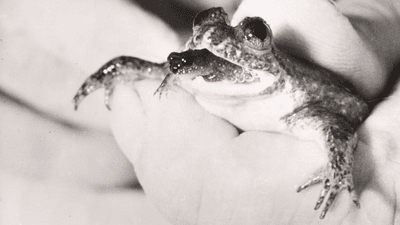
In 2013, scientists announced they had successfully "revived" the genome of an extinct Australian frog. The species, Rheobatrachus silus, was a creature unlike any other as the only animal known to practice gastric-brooding. Aka, “giving birth” through its mouth.
Most frogs produce young through external fertilization. Females lay their eggs in water and males release sperm, sometimes gripping her in amplexus (though they occasionally get confused by boots).
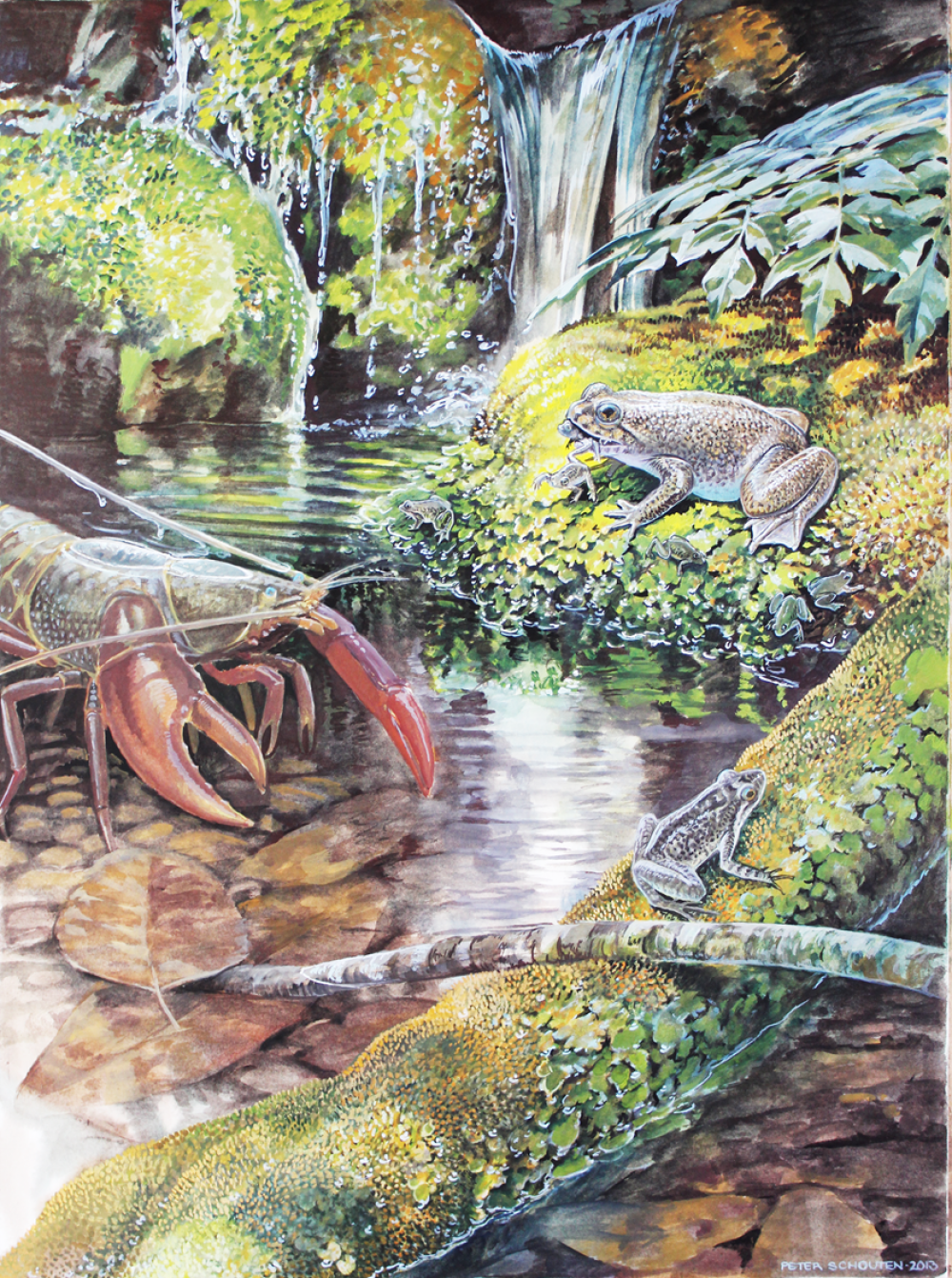
While your typical frog leaves their eggs in the water, gastric-brooding frogs go one step further and swallow them. The stomach then operates as a uterus until fully formed froglets are ready to hop out the frog’s mouth.
We did achieve producing very early-stage embryos (blastula stage) and confirmed they contained Rheobatrachus nuclear DNA.
Prof Michael Mahony
It’s something no other living creature can do. There was once another example of this in frogs: a closely related species named R. vitellinus. Native to Queensland, Australia, it vanished a year after it was discovered in 1984.
R. silus was described in 1973, but by 1981 it was already extinct in the wild. Then, the final captive individuals died in 1983.
Both species had fallen victim to chytrid fungus, a pathogen threat that's spread is attributed to human activity. For this reason, scientists started thinking long and hard about ways to bring them back.
De-extincting a frog
The gastric-brooding frog R. silus became the subject of the “Lazarus Project” that aimed to bring them back from the dead. Unlike other de-extinction projects with their sights set on the ancient past, however, the Lazarus Project has a secret weapon: a frog frozen for 40 years.
Across a research period of five years the team behind the Lazarus Project used somatic cell nuclear transfer (SCNT) to place nuclei from the cells of the extinct frog into the egg cells of a distant relative: the great barred frog, Mixophyes fasciolatus.
It appears we were able to have the ‘dead’ DNA replicate.
Prof Michael Mahony
“The specimen is in very good condition, and we did many hundred somatic cell nuclear transfer experiments to try and get a living tadpole/frog,” said frog expert Professor Michael Mahony of the University of Newcastle, Australia to IFLScience.
“We did achieve producing very early-stage embryos (blastula stage) and confirmed they contained Rheobatrachus nuclear DNA. So, it appears we were able to have the ‘dead’ DNA replicate.”
Fresh vs. frozen
Unlike the de-extinction company Colossal Biosciences that's trying to use fragmented ancient DNA of animals like the mammoth to splice into the cells of Asian elephants, Mahony’s team had the whole genome to work with. Even still, the project was not without its obstacles.
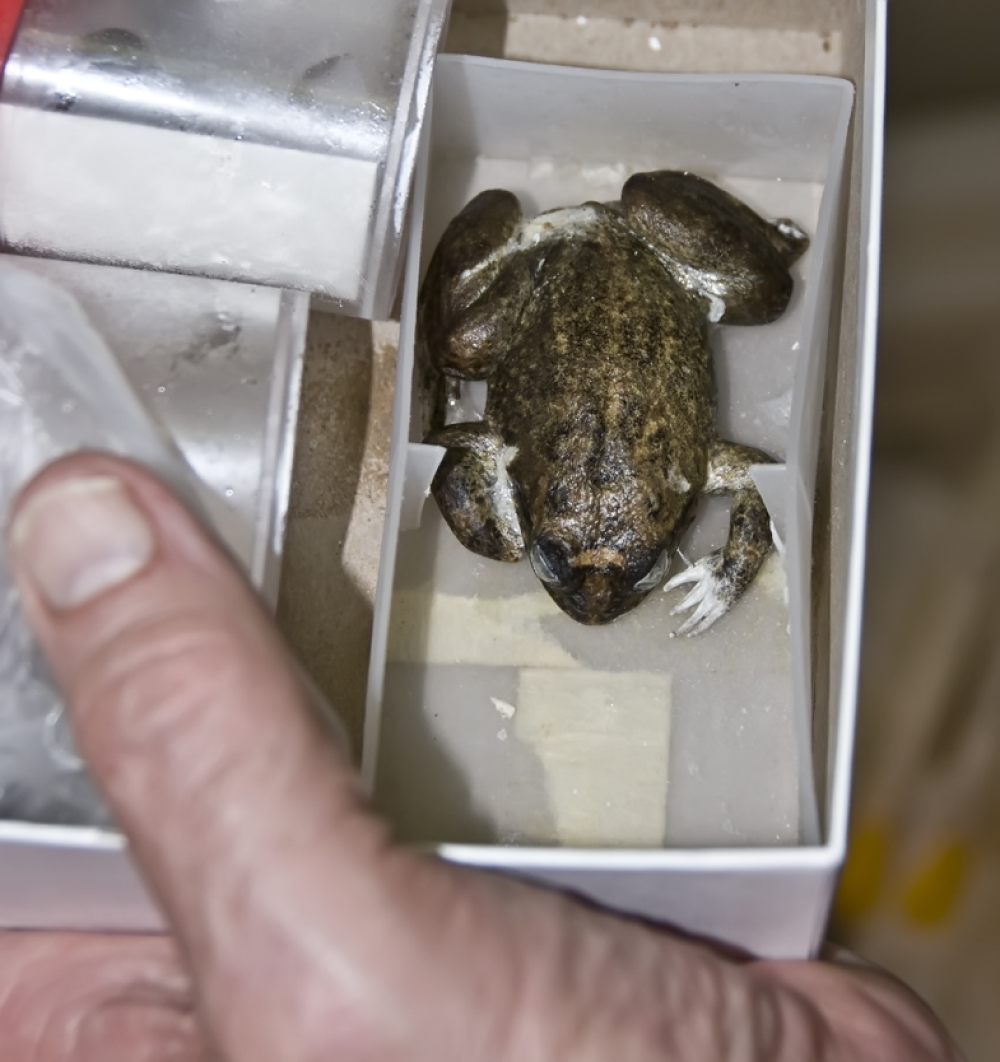
“Basic problem is the cells (nuclei) we have come from a carcass frozen for over 40 years ago,” said Mahony. “[But it’s] much better than any material that is fixed in alcohol or formalin.”
“We also have only one carcass, and it is juvenile, so there were no gametic nuclei (either sperm or eggs).”
We continue to optimise the system and when that is achieved we will have another run at SCNT for Rheobatrachus.
Prof Michael Mahony
While the Lazarus Project was unable to successfully bring back the gastric-brooding frog, the team haven’t given up hope. The project highlighted several technical and genetic issues Mahony continues to investigate. This includes the fact that SCNT wasn’t able to produce viable offspring even when using fresh frog nuclei as a control.
“If we could not do it with fresh nuclei why we would expect it to work with frozen nuclei?” said Mahony.
“That meant we have worked on our SCNT model to understand several steps and in the past 12 months we have produced clones of an Australian frog that survived to tadpole stage. We continue to optimise the system and when that is achieved we will have another run at SCNT for Rheobatrachus with real time controls.”
Perhaps the world will see another froglet crawling out of its mother's mouth yet.