Nature
 PUBLISHED


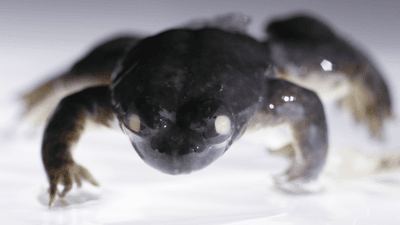


It’s fair to say that growing new life is rarely easy. For humans, it involves a lengthy stay in the womb before being squeezed out through the vagina – an amazing, but painful feat. Some other species have rejected the genitals as a means of delivery, however. Just take a look at gastric-brooding frogs.
How do gastric-brooding frogs give birth?
Gastric-brooding frogs incubate their eggs in their stomachs, as the name suggests. Doing so involves neutralizing the acid that usually sits in there to help digest their food, and ends with fully-formed froglets hopping out of the mother's mouth. That's right, she voms them into existence.
"The gastric brooding frog swallows externally fertilized eggs into its stomach, which then operates as a uterus," said "frog whisperer" Michael Mahony, Project Lazarus Leader and Emeritus Professor of Biology at the University of Newcastle, in a release. "No other living creature can do this. This unique ability could help the medical world work out how to manage gastric secretions in the gut."
There were only ever two known species of frogs to give birth in this way: the southern (Rheobatrachus silus) and northern (R. vitellinus) gastric-brooding frogs, both native to Queensland, Australia.
What happened to the gastric brooding frogs?
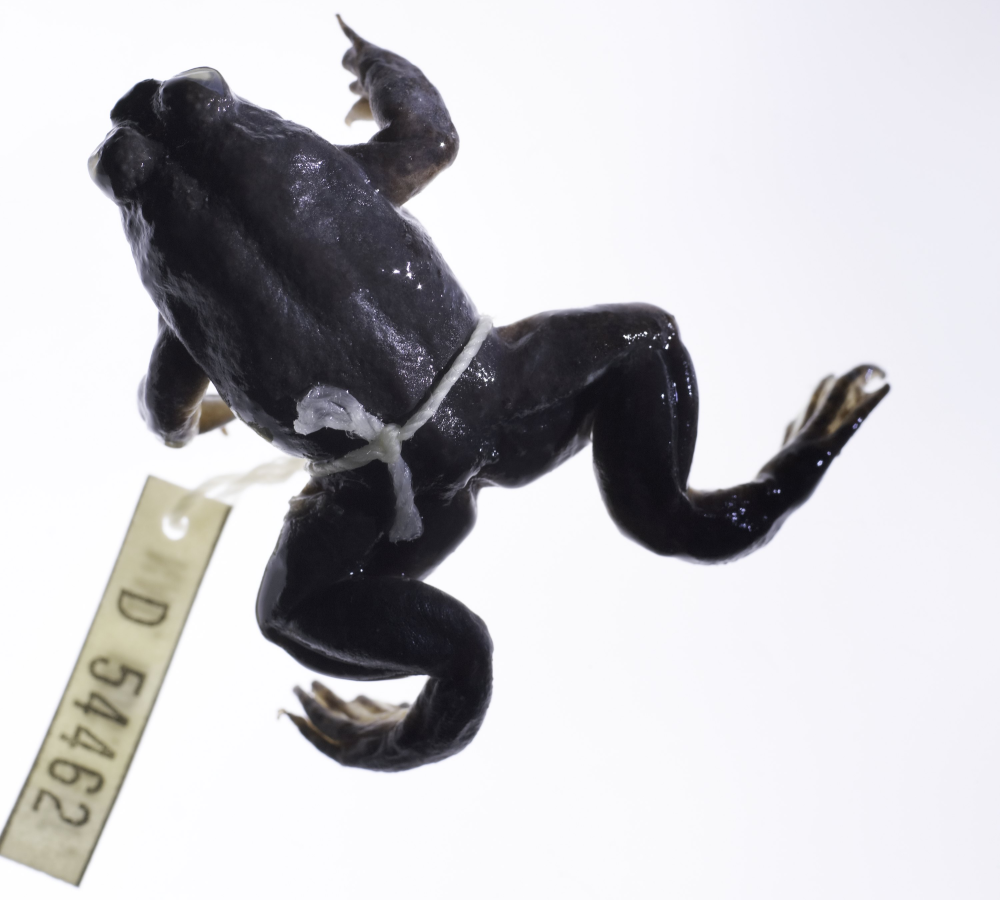
Scientists at the University of Newcastle were very interested in these curious amphibians. The southern species was only described in 1973, but it was extinct by the 1980s. The second, northern, species was discovered in 1984, but by 1986, they too had disappeared from the wild.
Both species had fallen victim to chytrid fungus, which has caused many new-to-science species discovered in Australia to go extinct within a few years of having first been discovered. For this reason, scientists started thinking long and hard about ways to bring them back. Aka, de-extinction.
"If it is clear that we have exterminated a species, we arguably have an obligation to bring it back," said Mahony.
And so, Project Lazarus was born – an ambitious initiative that hoped to use a frozen gastric brood carcass to resurrect the species. It required intact DNA to be transferred into a surrogate egg, and while there were hopeful signs a frozen carcass could make it possible, the project came up against some key obstacles.
“Basic problem is the cells (nuclei) we have come from a carcass frozen for over 40 years ago,” said Mahony to IFLScience. “We also have only one carcass, and it is juvenile, so there were no gametic nuclei (either sperm or eggs).”
“The specimen is in very good condition, and we did many hundred somatic cell nuclear transfer experiments to try and get a living tadpole/frog. We did achieve producing very early-stage embryos (blastula stage) and confirmed they contained Rheobatrachus nuclear DNA. So, it appears were able to have the ‘dead’ DNA replicate.”
Can we bring back the gastric brooding frogs?
So, is that the end for the gastric-brooding frog? Not necessarily.
“We have been moving on to try and address the technical and genetic issues our project highlighted,” said Mahony. “For example, we were not successful with control somatic cell nuclear transfer (SCNT) (i.e. fresh nuclei injected into recipient denucleated eggs) to produce viable offspring in at the time we were using the Rheobatrachus material.”
“This is the classic cloning experiment of Briggs and King (1952) and Gurdon (1962). So, if we could not do it with fresh nuclei, why we would expect it to work with frozen nuclei? That meant we have worked on our SCNT model to understand several steps, and in the past 12 months, we have produced clones of an Australian frog that survived to tadpole stage.”
“We continue to optimise the system and when that is achieved, we will have another run at SCNT for Rheobatrachus with real time controls. There are other things we have done but that is the most basic to the recovery of the extinct species.”
De-extinction: Is it really possible?
Resurrecting lost species is an emerging area of science, as some companies seek to craft a “de-extinction toolkit” that could help us restore species that are driven to extinction as a result of human activity.
Stories about the mammoth and dire wolf may be the ones you see in the media, but there are numerous approaches that hope the technologies innovated could prevent future extinctions and keep more species off the de-extinction candidate list.
Is it really possible? Well, as luck would have it, we’ve an entire podcast episode on the topic that you can find here, featuring interviews with Colossal Bioscience’s Ben Lamb, Beth Shapiro, and Matt James, as well as author and historian Sadiah Qureshi, who wrote Vanished: An Unnatural History Of Extinction.
There are many questions that need answering to better understand the emerging technologies' potential, but there is one question we can answer very easily: Would I like to see a living frog that can vomit up its babies? Yes, yes I would.