Nature
 PUBLISHED
 19
19


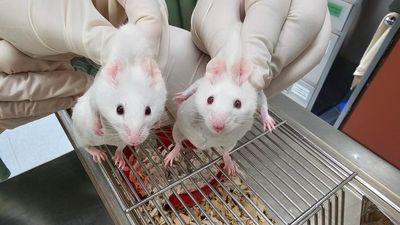


In an incredible breakthrough, scientists have created a mouse using ancient genetic tools older than animal life. By taking a gene from single-celled lifeforms and introducing it into mouse cells, researchers generated stem cells, which, when injected into a developing embryo, helped give rise to a living, breathing mouse.
Hundreds of millions of years ago, before multicellular organisms had evolved, simple, single-celled organisms were blobbing about on planet Earth. Some of these, called choanoflagellates, are considered to be the closest living relatives of animals. Their genomes, the new research finds, contain versions of the genes Sox and POU – these are known to drive the formation of stem cells in mammals, and until now were thought to be exclusive to animals, having been notably absent in our unicellular relatives.
Their discovery in a single-celled organism therefore shakes up everything we thought we knew about stem cells and their evolution. It’s an unprecedented finding in and of itself, but the researchers took it a step further, using the genes to reprogram mouse cells.
“By successfully creating a mouse using molecular tools derived from our single-celled relatives, we’re witnessing an extraordinary continuity of function across nearly a billion years of evolution,” study author Dr Alex de Mendoza said in a statement. "The study implies that key genes involved in stem cell formation might have originated far earlier than the stem cells themselves, perhaps helping pave the way for the multicellular life we see today."
The team introduced choanoflagellate Sox genes into mouse cells, replacing their existing Sox2 genes – and, in doing so, triggering the cells to become induced pluripotent stem cells (iPSCs). These cells have the potential to develop into any cell type in the body.
When they injected their iPSCs into a developing mouse embryo, they produced what is known as a chimera – an animal whose body is composed of cells that are genetically different from one another, containing two distinct sets of DNA. In this case, the mouse displayed traits from both the donor embryo and the iPSCs, with black fur patches and dark eyes, confirming that the ancient genes had influenced the animal’s development.
It’s impressive, especially given the simple origins of the genes. It seems early lifeforms evolved their own ways of maintaining pluripotency, long before multicellular organisms, and stem cells, came into being.
"Choanoflagellates don’t have stem cells, they’re single-celled organisms, but they have these genes, likely to control basic cellular processes that multicellular animals probably later repurposed for building complex bodies,” explained Dr de Mendoza.
Aside from just being fascinating, the discovery could inform future advances in regenerative medicine, in which stem cells play an integral part.
"Studying the ancient roots of these genetic tools lets us innovate with a clearer view of how pluripotency mechanisms can be tweaked or optimised," co-author Dr Ralf Jauch added.
The study is published in the journal Nature Communications.