Nature
 PUBLISHED


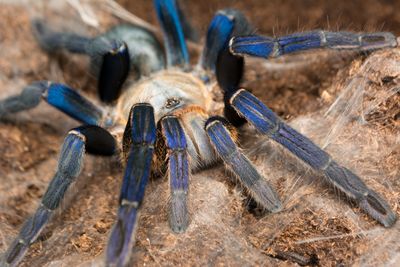


Tarantulas might be an arachnophobe's greatest fear – but who could resist the power of an electric blue tarantula? Three species are particularly famous for having an electric blue hue, and while they might be the stuff of nightmares for some, they are pretty dreamy to behold.
The Cobalt Blue Tarantula
Our first blue species is the cobalt blue tarantula (Cyriopagopus lividus). Unfortunately, little is known about the ecology and habits of all of our three popular species and most of what is known is mainly learned from hobbyists and pet owners. This species is a popular pet and originates from the tropical rainforests of Thailand and Myanmar. Despite its popularity as a pet species, the tarantula has a reputation for being aggressive and can even deliver a painful bite. They spend much of their time in burrows
The Electric Blue Tarantula
The second species in our list is a relatively new one. Only officially described last year, the electric blue tarantula (Chilobrachys natanicharum) is native to Thailand, and researchers found it on a tree in a mangrove forest.
“The secret behind the vivid blue coloration of our tarantula lies not in the presence of blue pigments, but rather in the unique structure of their hair, which incorporates nanostructures that manipulate light to create this striking blue appearance.” researcher Dr Narin Chomphuphuang said in a statement at the time.
The Greenbottle Blue Tarantula
The greenbottle blue tarantula (Chromatopelma cyaneopubescens) is again a popular pet and hobby species because of its attractive coloration. Endemic to Venezuela, this species has blue legs but more of a green-colored carapace, hence the name.

Why Are Some Tarantulas So Vividly Coloured?
It’s long been a puzzle to scientists why species like the cobalt and electric blue tarantulas possess such vivid colors when they are largely nocturnal or crepuscular species. There has even been the suggestion that the species themselves do not possess true color vision, or could tell colors apart.
However, research from 2020 showed that the tarantulas could perceive the bright blue tones on their bodies. The team also suggested that the color had nothing to do with defense, but rather was to attract potential mates.
"While the precise function of blueness remains unclear, our results suggest that tarantulas may be able to see these blue displays, so mate choice is a likely potential explanation.” Said Dr Saoirse Foley from CMU in a statement.