Nature
 PUBLISHED
 1
1


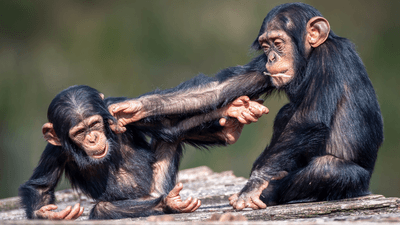


Orangutans, chimpanzees, bonobos, and gorillas share many traits with humans, and now it seems we can add teasing to the list. Playful teasing, that is, the kind that emerges in human babies before they can speak and that may have been a crucial stepping stone to humor in the human lineage (not that it's always been so good... have you seen the world's oldest bar joke?).
Play encompasses many behaviors, but teasing is one we Homo sapiens can get a jump on before we’re ready to walk and talk. We see it in babies as young as eight months old, and since it doesn’t require language, it figures we might find it in other species.
“Great apes are excellent candidates for playful teasing, as they are closely related to us, engage in social play, show laughter and display relatively sophisticated understandings of others’ expectations,” said post-doctoral researcher and the first author of the study, Isabelle Laumer, in a statement.
In what must have been one of the more joyful observational studies, a team of researchers analyzed footage of social interactions between apes, paying special attention to the animals’ body movements, facial expressions, and actions. They also looked for indicators of intention, such as whether the “teaser” waited for a response from the "teasee", and if they were directing their behavior at one or multiple individuals.
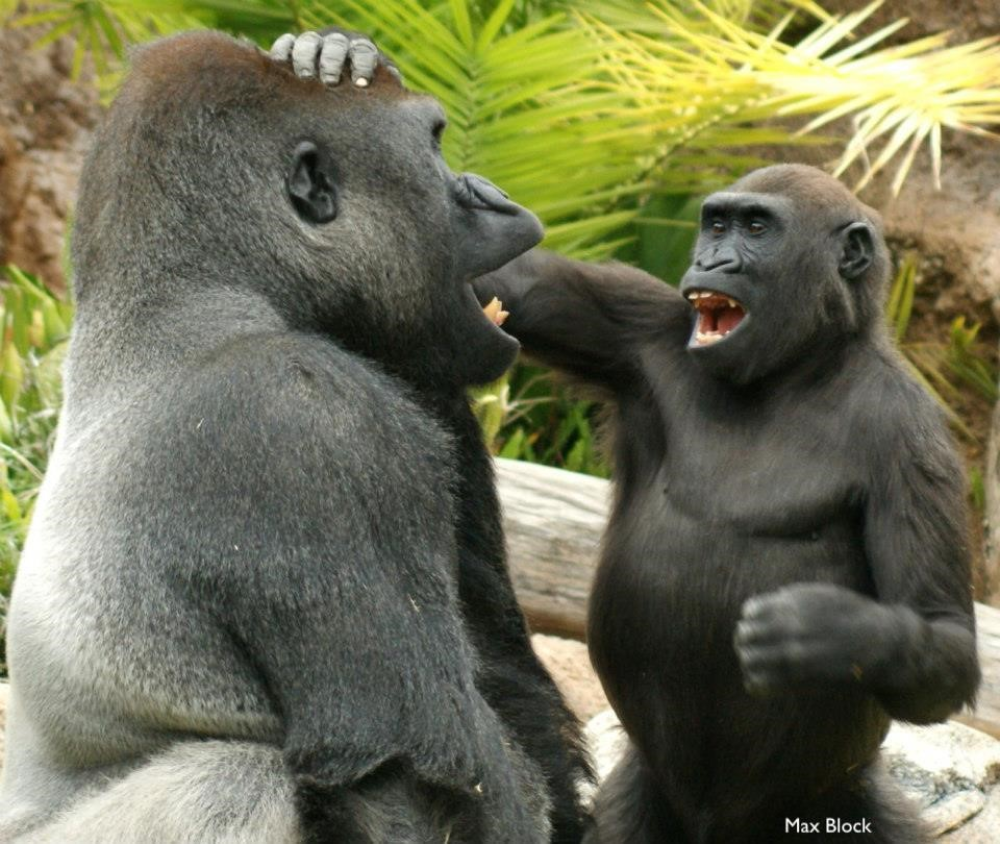
Among the confirmed wind-up merchants were orangutans, chimpanzees, bonobos, and gorillas, which were found to engage in teasing behaviors in tandem with what looked like play. A lot of the playful teasing appeared to center around provoking a response or trying to get another individual’s attention, something anyone who’s ever looked after a five-year-old will no doubt be familiar with.
"It was common for teasers to repeatedly wave or swing a body part or object in the middle of the target’s field of vision, hit or poke them, stare closely at their face, disrupt their movements, pull on their hair, or perform other behaviors that were extremely difficult for the target to ignore," added senior author of the study Professor Erica Cartmill.
Yes… harrowingly familiar.
As for why the banter of apes is a concern for us humans, understanding how and where the early elements of humor emerged among primates can teach us about our own evolution. Given the integral role that joking plays in human interactions today, it figures that it took the lineage a while to adapt our craft.
“From an evolutionary perspective, the presence of playful teasing in all four great apes and its similarities to playful teasing and joking in human infants suggests that playful teasing and its cognitive prerequisites may have been present in our last common ancestor, at least 13 million years ago,” concluded Laumer.
“We hope that our study will inspire other researchers to study playful teasing in more species in order to better understand the evolution of this multi-faceted behavior. We also hope that this study raises awareness of the similarities we share with our closest relatives and the importance of protecting these endangered animals.”
The study is published in Proceedings of the Royal Society B.