Nature
 PUBLISHED



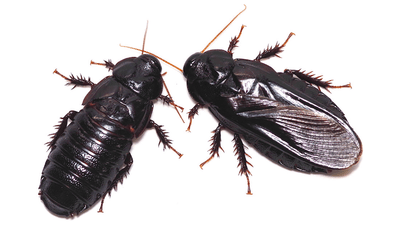


How do you impress a potential love interest? Bring them flowers and chocolates, offer to pay for dinner, or even buy them a gift? Well, in the cockroach world, males and females do things a little differently, and it all starts with a spot of cannibalism.
The wood-feeding cockroach Salganea taiwanensis is one of only a few insects studied in regard to their pair bonding and mating behaviors. They are especially interesting because their pair bonding is so strong they eat off each other's wings, potentially to stop one another mating with anyone else. After engaging in this “mutual-wing eating”, the pair will construct a nest and care for offspring together across many years.
Pair bonds can have many benefits, including shared resources and enhanced reproductive success, but they can even provide mutually positive outcomes without offspring, and pairs have been observed to treat their mates differently from other individuals.
To test the strength of newly formed pair bonds, the researchers decided to introduce unfamiliar individuals to the pairs to see if either partner would be tempted by another. They had pairs that had already passed the wing eating stage and pairs that hadn't yet nibbled each other's appendages, to see if the strength of their bond made any difference.
The team found that pairs that had eaten each other's wings were more likely to attack the interlopers, including ramming the intruder and other bouts of aggression. The pairs that were in the pre-wing-eating stage showed minimal aggression.
“Thus, once a pair performed mutual wing-eating, aggression was expressed selectively toward intruders while avoiding aggression toward the established partner,” explain the authors in the paper.
The authors also observed that there was no copulation with intruders and none of the pairs traded partners at any stage. This is thought to be the first experiment that shows selective aggression in an invertebrate that clearly distinguishes between their mate and other adults of the same species.
The paper is published in Royal Society Open Science.


 1
1