Nature
 PUBLISHED
 4
4


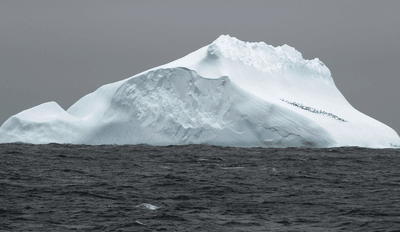


Something may be stirring in the world’s largest oceanic current. New research suggests that this vast conveyor belt of cold water around the South Pole could shift its location over the coming centuries, if not millennia, potentially reshaping the planet’s climate and ecosystems.
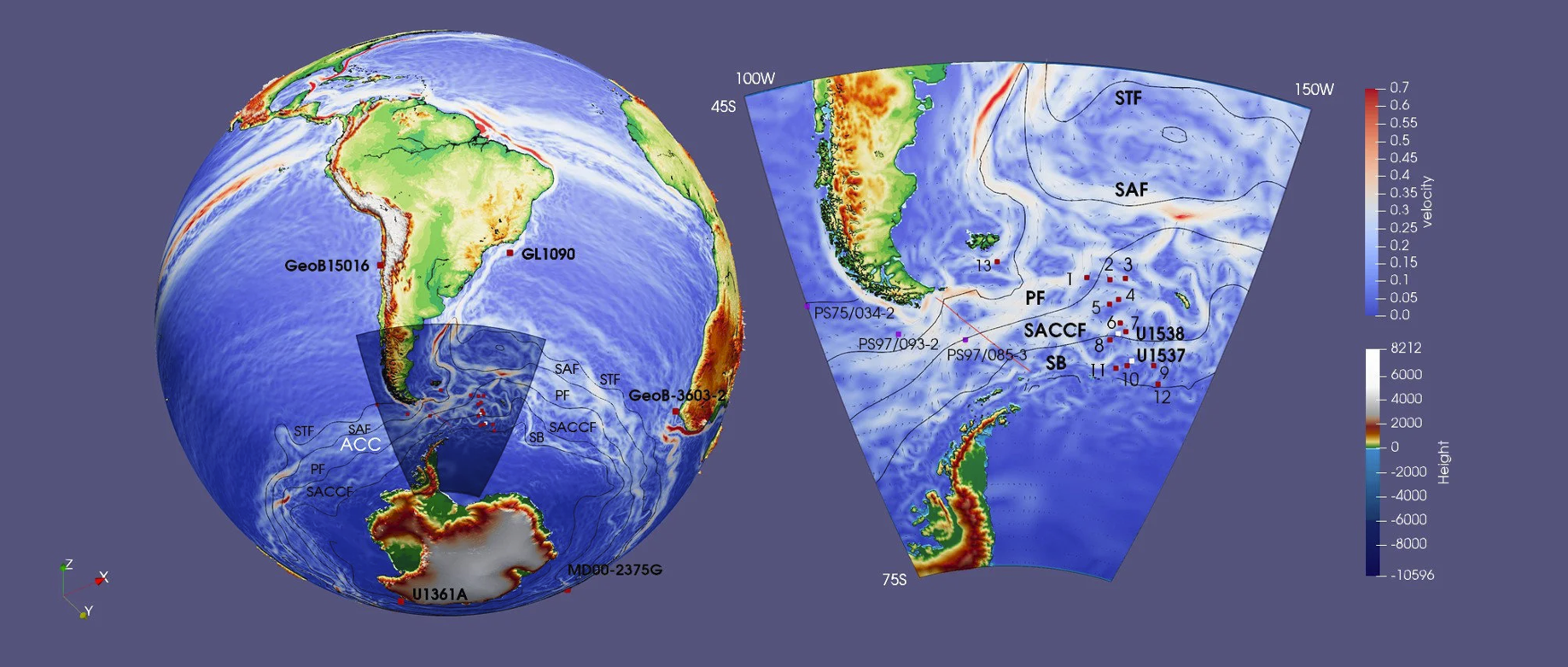
The Antarctic Circumpolar Current (ACC) is a vast current of cold seawater that flows clockwise from west to east around Antarctica. The main driving force behind it is powerful Southern Westerly Winds, which sweep unimpeded around the southernmost continent, unblocked by landmasses.
Acting as a crucial link between the Atlantic, Pacific, and Indian Oceans, the ACC plays a key role in the movement of heat across the globe, the carbon cycle, and the distribution of nutrients across the oceans. But recent studies suggest it may not be as constant as once believed.
An international team of scientists has been piecing together the ACC’s history using core samples collected from 3,000 to 4,000 meters (9,800 to 13,100 feet) below the surface of the Scotia Sea, north of Antarctica.
These cores, stretching hundreds of meters in length, offer a detailed record of the current’s past. Grain size provides a crucial clue: when the current flows faster, it carries fine particles along, which only settle to the seabed when the water slows. By examining the size distribution of particles, scientists can reconstruct changes in the current’s speed over time.
Through studying the grain, the team found that the ACC was significantly stronger in the past during warm periods.
“The velocity in the second-to-last warm period, roughly 130,000 years ago was more than three times greater than in the last millennia comprising the current warm period,” Dr Michael Weber, study author from the University of Bonn Institute of Geosciences, said in a statement.
The researchers attribute this dramatic increase in speed to changes in Earth’s orbit around the Sun, which altered the amount of solar radiation and heat reaching the planet. This cycle repeats approximately every 100,000 years, plus Earth’s axis changes in tilt and rotation every 21,000 years.
Furthermore, they found that the ACC shifted southwards towards Antarctica during this same period by approximately 600 kilometers (372 miles).
“This brought warmer waters closer to the Antarctic ice sheets, which may have contributed to sea level being 6 to 9 meters higher [19 to 30 feet] in the last interglacial,” Weber explains.
Because the ACC has shifted velocity and location during past warm periods, researchers warn that a similar response could lie ahead. Some evidence already points to the current speeding up due to climate change, though the new modeling suggests it may drift northward, counteracting a predicted southward shift caused by warming.
As a key node in Earth’s natural system, any major change to the ACC could trigger ripple effects across ecosystems, coastlines, and climate systems worldwide.
The new study is published in the journal Nature Communications.