Nature
 PUBLISHED
 6
6




There’s plenty of rough sex in the animal kingdom, but dinosaur copulation may have been so violent that it literally broke the spine of the female. Ironically, though, that’s wonderful news for palaeontologists, as the love scars left behind by these prehistoric couplings may finally enable us to distinguish between male and female specimens.
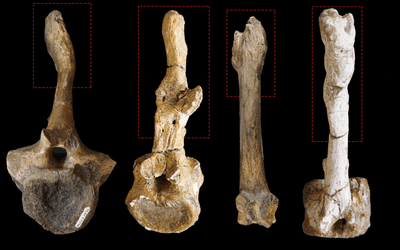
Until now, determining the sex of fossilized dinosaurs has proved impossible as the soft, gooey sexual organs of these ancient creatures have all long-since decomposed. At the same time, researchers have spent decades wondering why all species of herbivorous hadrosaurs – or duckbilled dinosaurs – tend to display extraordinarily high rates of healed fractures to the vertebrae at the top of their tails.
“It is indeed a peculiar situation. Often when you find a caudal vertebra from the upper end of a hadrosaur tail, there is a strong chance of it bearing a healed injury,” explained Professor Eileen Murphy from Queen’s University Belfast in a statement seen by IFLScience. “This is a clear pattern, and we set out to try to explain its cause,” she says.
Examining roughly 500 of these damaged vertebrae from hadrosaurs across Eurasia and North America, Murphy and her colleagues discovered that the exact same pathological pattern is found in every species, regardless of location or age. This, they say, suggests that the injury must be the result of some shared behavior that is common to all hadrosaurs.
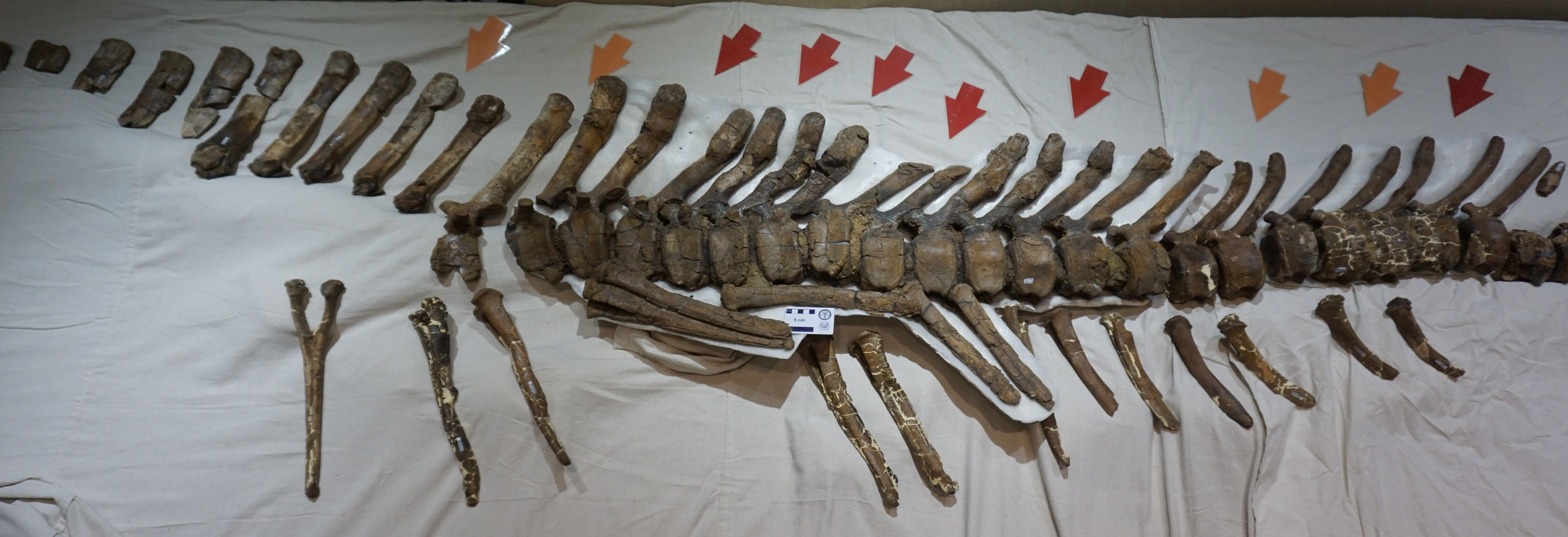
The researchers therefore used computerized models to investigate which types of forces could produce the fractures, and found that injuries were likely to have resulted from intense pressure being applied around the region of the cloaca – which housed the sexual organs of both male and female hadrosaurs.
Describing their analysis in a new study, the researchers scrutinize every possible scenario that could have led to such an outcome. Predation, for instance, appears an unlikely explanation as no bite marks were found on any of the hadrosaur vertebrae.
Tail fighting was also considered before being ruled out due to the location of the injuries, which would be more likely to appear on the side of the tail if sparring was involved.
“After considering these other scenarios, we argue that mating is the most likely scenario to have caused the recurrent pattern of injuries,” write the study authors. According to their simulations, the accidental fractures were probably caused by males mounting females from the side and crushing the vertebrae in the upper tail during sex.
In an email to IFLScience, first author Filippo Bertozzo explained that this insight represents “the first door on sexual behavior of dinosaurs, a topic that has always been difficult to study given the fact we only have the skeletal remains of these animals.”
And as unpleasant as dino humping seems, the fact that the fractures typically show signs of healing indicates that these mating injuries were not fatal, which means that the evolutionary cost of rough sex was unlikely to be high enough to negatively influence species survival rates. As study author Professor Gareth Arnott explains, “aggressively pursuing a female during reproduction might sound evolutionary disadvantageous for the continuation of the species but we already witness similar occurrences in many modern species, such as in sea lions, turtles, and some species of birds.”
This might bring a cascade of implications.
Filippo Bertozzo
More significantly, Bertozzo points out that “if the mating hypothesis is correct, we can infer that an individual with the injuries is female. This will be a game changer since it will enable other questions to be answered about differences between male and female dinosaurs.”
For instance, Bertozzo told IFLScience that being able to identify the sex of a hadrosaur could help to resolve long-standing uncertainties around sexual dimorphism in dinosaurs. “This might bring a cascade of implications, such as testing whether skull crests vary between sexes, or identify anatomical features that were previously assigned to new species,” he says.
The study is published in the journal iScience.
Amendment 5/11/25: This story has been updated to include quotes from first author Filippo Bertozzo.