Nature
 PUBLISHED
 3
3


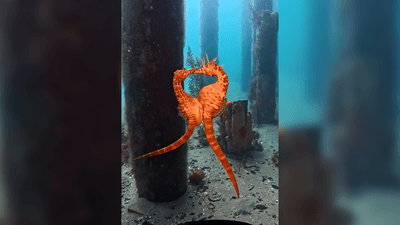


Down beneath the ocean waves are all manner of secret surprises, from mysterious-looking new species to gentle seahorses floating in the current. One diver was lucky enough to capture a key moment as she witnessed eggs being passed between two seahorse parents.
Australian diver Jules Casey regularly films her interactions with sea life and shares them to her social media page. For the first pair of seahorses, Casey wrote on Instagram, “The male was inflating his belly to show the female he had plenty of room for her eggs. Then the magic happened. They pointed their snouts upwards which indicates they are both ready to attempt the transfer of eggs. They rise together into the open water to complete the transfer. This only lasted about 30-40 seconds. They then go their separate ways.”
These are big-bellied seahorses (Hippocampus abdominalis), the largest seahorse species in Australia that can grow to around 35 centimeters (13. 7 inches) in total length. Males will brood the eggs that are passed from the female to be fertilized inside their brood pouches. This provides protection for the developing embryos, which can be as many as 300-700.
Big-bellied seahorses are strong swimmers and can travel hundreds of meters a day. They belong to the Syngnathidae family which also includes the seadragons and the pipefish. While male brooding is unusual, some fish species take it a step further and the males brood eggs inside their mouths to protect them.
“To capture this exact moment is an underwater photographer’s dream,” Casey told Storyful. “I’ve now witnessed this five times; I’m very lucky.”