Nature
 PUBLISHED


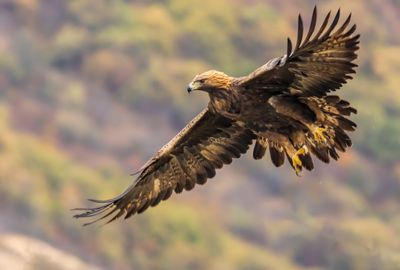


Bird life in England isn't all seagulls, swans, and pigeons. In past centuries, the golden eagle was an iconic sight across the "green and pleasant land" – even Shakespeare couldn't shut up about them. Now, in a new government push, these iconic raptors could be making a comeback as early as next year.
A study by Forestry England has concluded that the country has the capacity to sustain golden eagle populations once again. Its researchers identified eight potential "recovery zones," mostly in the north of England, as the most suitable areas for the species' return.
Some sheep farmers have reportedly spoken out against the plan, complaining that the eagles will steal lambs from their land. However, the project has a fair amount of momentum behind it. The UK government has set aside £1 million (roughly $1,355,855) and expressed its full backing.
"This government is committed to protecting and restoring our most threatened native wildlife – and that includes bringing back iconic species like the golden eagle," Emma Reynolds, UK Environment Secretary, said in a statement.
All being well, England could see a reintroduction program in which juveniles, approximately six to eight weeks old, are released to certain zones as early as 2027.
The golden eagle (Aquila chrysaetos) is native to large parts of the Northern Hemisphere. With a 2-meter (nearly 6-foot 7-inch) wingspan, the species is an apex predator at the top of the food chain, using its sharp talons to hunt a variety of small mammals.
The eagle was almost completely purged from England and Wales in the mid-1800s by farmers and gamekeepers, who viewed birds of prey as a threat to livestock and gamebirds. A few populations partially bounced back during the World Wars, when hunting was put on hold to deal with other problems, but numbers never returned to their former levels.
By 2016, the last native golden eagle had vanished from the Lake District, marking their local extinction from the country. While the odd bird is occasionally seen in northern parts of England, crossing over the border from southern Scotland, it's become an increasingly rare sight.
It was a sad end for a species that once held a cherished place in national culture. Shakespeare himself is said to have referenced the bird more than 40 times across his works, albeit under several different aliases, including the "Roman eagle," "Jove's bird," "holy eagle," and "royal bird."
The potential resurgence of the golden eagle is part of a broader initiative aimed at restoring wilderness across England and other parts of the British Isles. For a country often defined by manicured gardens and orderly hedgerows, the golden eagle is a reminder that England was once truly wild and rugged.
"It is our ambition that the nation’s forests will become the most valuable places for wildlife to thrive and expand in England. And we know from our successful reintroduction projects that returning lost species is vital for nature recovery across landscapes," said Mike Seddon, Chief Executive of Forestry England.

 2
2