Nature
 PUBLISHED


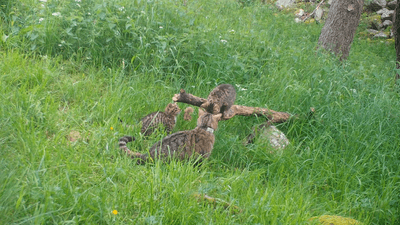


In a major first for a project aiming to restore the population of wildcats in Scotland, at least two females have given birth in the wild – and the footage of their kittens is as “awwww”-inducing as you’d expect.
Last year, 19 captive-bred wildcats were released into Scotland’s Cairngorms National Park by Saving Wildcats, a project led by the Royal Zoological Society of Scotland that aims to recover the critically endangered Scottish population of the European wildcat (Felis silvestris silvestris).
The project team has now announced that at least two of the female wildcats released have given birth, having caught the mothers and kittens on camera.
“We suspected that some of the females had given birth when their movement and activity changed very suddenly but didn’t know for sure until footage of the kittens was captured on our cameras,” said Dr Keri Langridge, the field manager for Saving Wildcats, in a statement.
“With the support of local landowners, gamekeepers and the local community, our field team has successfully managed to monitor and film these kittens in the wild – which is no simple task. We have taken extreme care not to disturb the mother and kittens.”
What’s not yet known is who the baby daddies are. Though it’s hoped they’re fellow wildcats, there’s a risk that the mothers may have interbred with domestic cats – generally considered to be the biggest threat to the survival of the wildcat population in Scotland.
“While we know from their GPS-radio collars that the two females that have given birth have overlapped with male wildcats, we do not yet know their paternity,” said Dr Helen Senn, Saving Wildcats’ lead.
“Once the wildcats are old enough, we will attempt to get a DNA profile from them. We are hopeful that they are indeed the offspring of male wildcats that were released last year – and the first of many more to come.”
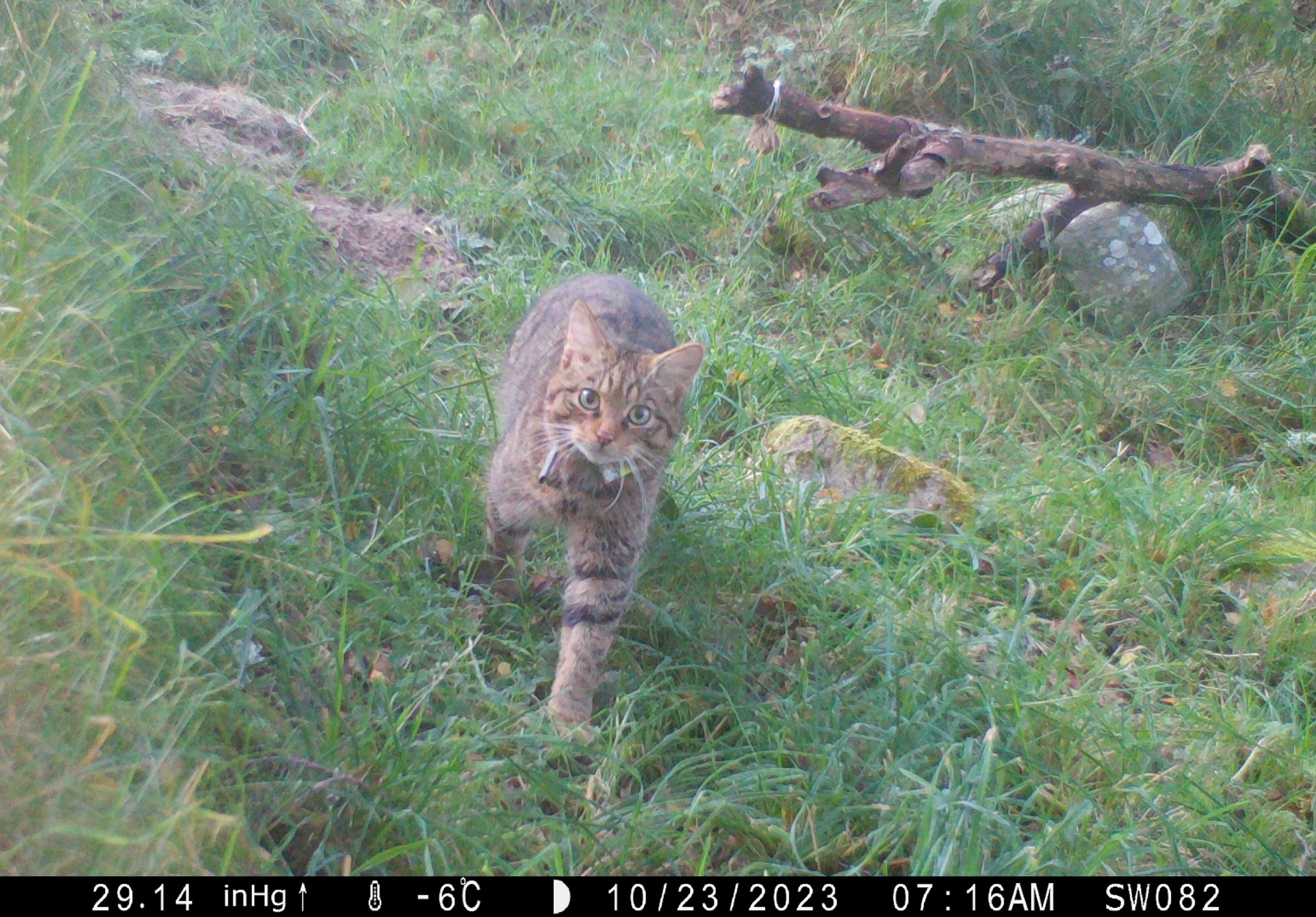
Wildcats were once widespread in Scotland, first having made their way over to Britain from mainland Europe around 9,000 years ago and getting stuck when Doggerland disappeared beneath the sea.
However, habitat loss and hunting had already gone a long way to reducing wildcat numbers by the end of the 19th century – and in the century that followed, interbreeding and the spread of disease from feral domestic cats also took a heavy toll. By 2019, the Scottish wildcat was considered to be on the brink of extinction in the wild.
It’s hoped that the birth of wildcat kittens in their native habitat is only the first in a series of successful steps to bring them back from that ledge.
“This is a major milestone for wildcat recovery in Scotland,” said Senn. “These births demonstrate that the process of breeding wildcats for release into the wild is working, as those released animals have learned to hunt and survive – and now reproduce in their first breeding season, a clear indication that they are doing well.”
“While the mortality rate for wildcat kittens in their first year of life can be high,” Senn added, “we are hopeful for the future of these kittens.”