Nature
 PUBLISHED
 1
1



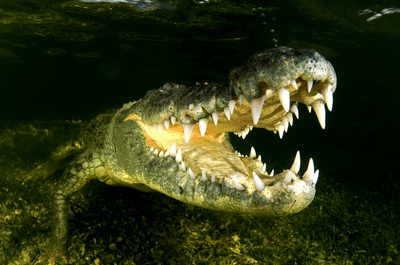


Evolution doesn’t work in a neat, straight line, like that old image of a crude monkey transforming into a huddled ape and eventually turning into an upright man. Take, for instance, the crocodilians, which appear to have become warm-blooded only to have reverted back to being cold-blooded again.
Keeping it in the family
It’s often said that birds are dinosaurs, but they’re also technically reptiles, which is the broader group containing lizards, dinosaurs, and crocodilians. This means crocodiles and alligators are surprisingly close evolutionary cousins of birds.
All these characters are archosauriforms, a group that originated about 250 million years ago in the early Triassic period and eventually split into two lineages: Pseudosuchia, which includes crocodiles, alligators, caimans, and the like; and Avemetatarsalia, which includes modern birds and some dinosaurs.
Cold-blooded vs warm-blooded
Sometimes this relationship can intuitively make sense. Take a look at a cassowary or a shoebill, and the link with prehistoric reptiles doesn’t seem too surprising. By and large, though, the tweeting songbird seems very different from the lumbering alligator.
Biologically speaking, one of the many key differences is that crocs are cold-blooded (or ectothermic) and birds are warm-blooded (endothermic).
This difference is sharply reflected in their behaviors and lifestyles. Crocodilians are sit-and-chill ambush predators, spending large amounts of time in a lethargic state of inactivity. On the other hand, birds have a high energy demand, fluttering and flapping around with supercharged metabolic rates.
According to a new study, however, the characterization of cold-blooded crocodiles and warm-blooded birds might not be quite as concrete it seems.
“Scientists have assumed that warm-blooded animals evolved from cold-blooded ones, not the reverse. As warm-blooded creatures ourselves, we have had a habit of thinking warm-blooded animals are physiologically superior to cold-blooded ones," Roger S. Seymour, author of the new study and an emeritus professor at Adelaide University, Australia, wrote for The Conversation.
Warm-blooded crocs
It turns out that archosauriforms, the expansive clade that includes crocodilians and birds, have been warm-blooded through most of their evolutionary history.
The researchers looked at 81 different species of extinct bird and crocodile relatives and found they had large blood vessels running through their bones to accommodate high flow, which is a relatively good indication that they were warm-blooded with high metabolic rates.
“The new view of the history of the crocodile lineage starts in the Triassic period, with them as active land-dwelling warm-blooded animals, in many cases even running on two legs. They diversified into hundreds of species over the Jurassic and Cretaceous periods, living on land, in salt and fresh water, and in between. However, they apparently remained warm-blooded until recently,” explains Seymour.
So, it appears that the crocodile lineage went from warm-blooded to cold-blooded relatively recently, most likely to help them switch their behaviour from leggy land-runners to water-dwelling ambush predators.
This endothermic history can also be seen in the structure of their heart. Crocodilians, even modern species alive today, are the only reptiles that have a four-chambered heart, much like us mammals and other warm-blooded creatures.
It's another indication of warm-blooded endothermy, as the four-chambered heart is required to maintain high rates of blood flow and high blood pressure.
Since the heart structure didn't hamper the survival of the crocodile lineage when cold-blooded ectothermy emerged, it simply stuck around as a residual evolutionary trait.
It started cold-blooded
However, it’s worth remembering that all early vertebrate animals were cold-blooded. It stayed this way for a very long time until warm-blooded animals emerged around 233 million years ago.
So, zoom out far enough, and it’s possible to see distant ancestors of crocodilians eventually going from cold-blooded to warm-blooded and back to cold-blooded again.
The whole saga is a strong reminder that evolution isn’t linear, progressive, or straightforward; it’s simply about fitting whatever niche is available and seeing whether the traits can get passed on.
The new study is published in the journal Paleobiology.