Nature
 PUBLISHED


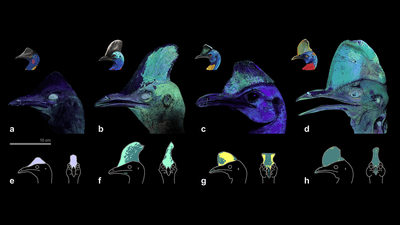


Cassowaries are pretty much as badass as any bird could be. They have giant claws, bright green eggs, an extremely strong kick, and blue skin. On top of that they are literally nicknamed “murder birds” And if you thought they couldn’t get any cooler, well they’ve added another impressively stylish trait to their already tremendous list, as researchers have found that that their casques glow under UV light.
Cassowaries possess large bony plates on their heads known as casques. These are made from part of the skull but with an outer layer made from keratin, the same protein structure that is found in hair and fingernails. While they might look a dull color, in comparison to the bright blue feathers and red wattles, researchers have discovered that their glow under UV light is within the range of cassowary eyesight.
“I went out with one of the owners that night, and he was actually kind of making fun of me because he didn't think anything was going to happen,” Todd Green, lead author of the study, told National Geographic. “It was one of the brightest fluorescences I've ever seen. I audibly gasped.”
The casque has long been somewhat of a mystery to researchers, with ideas suggesting that it could be used in defense, sound production, or displaying to one another – cassowaries live in thick rainforest, where they act as seed dispersers through eating a vast array of fruits.
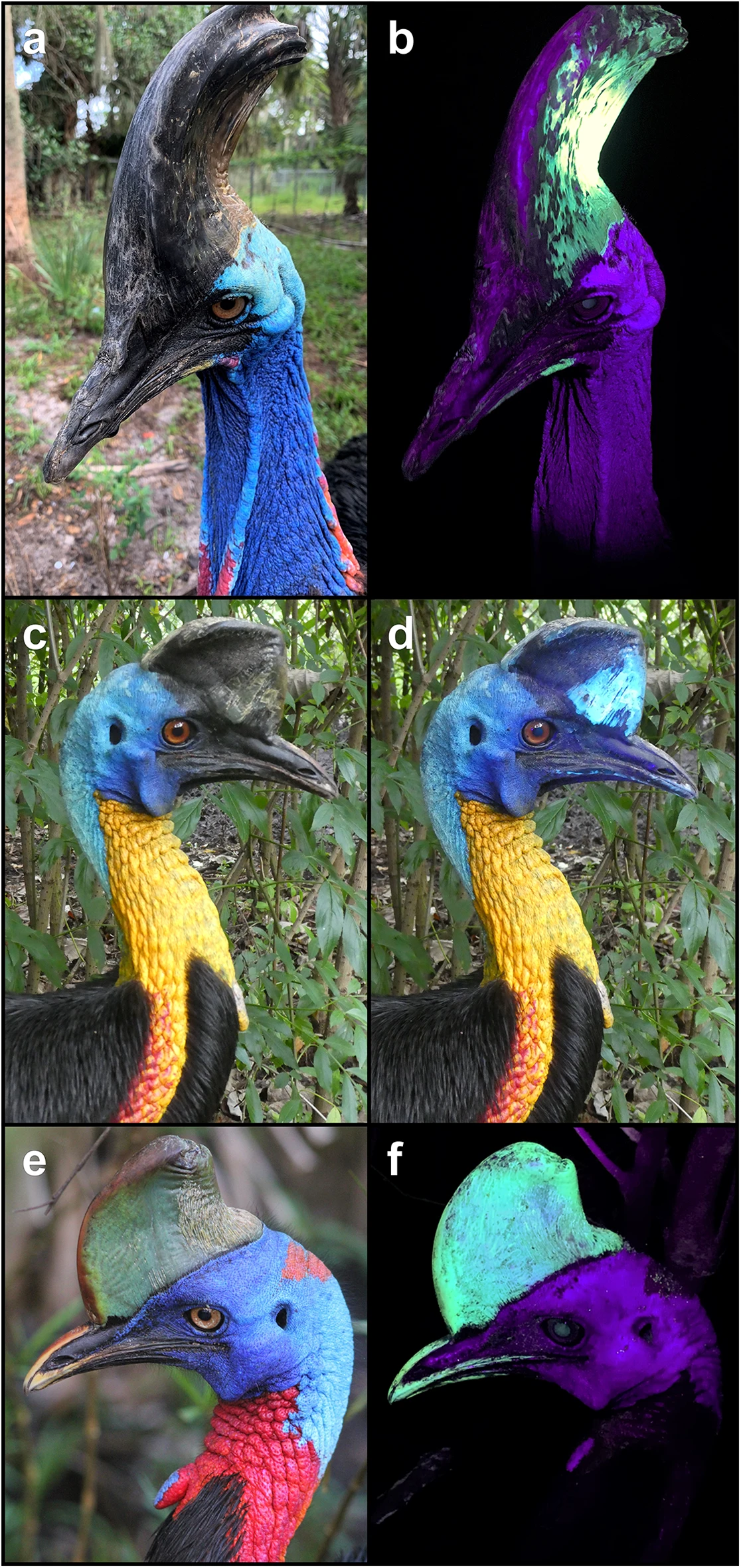
In total the team used 95 adult cassowaries for this study. Most of the casques were from museum specimens, but nine living individuals were also used.
There are three species of cassowary: the northern (Casuarius unappendiculatus), southern (Casuarius casuarius), and dwarf (Casuarius bennetti) cassowaries. The dwarf was only observed from museum samples, while living samples were observed for the other two species.
While the team discovered that the casques did glow under UV light, they found no difference between males and females. Two of the species showed strong fluorescence across quite a large area of the casque itself, at 365 nanometers and at 385-395 nanometers. Only one dwarf cassowary casque – which are jet black – actually fluoresced at all, while the southern and northern glowed in different places across their casques.
The cassowaries join a very long and unusual list of species that glow under UV, including puffins, sharks, and even bats.
While the team found that the casques fluoresce in the range of light the cassowaries can see, it's not clear if the casques appear to be glowing all the time to living birds in normal daylight conditions, or what the purpose of the glowing casques still might be. This leaves several openings as areas for future research.
The study is published Scientific Reports.