Nature
 PUBLISHED



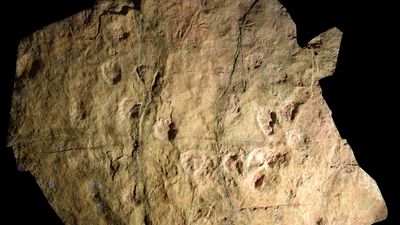


Dinosaurs were already the dominant large animals, at least in what is now northern Italy, by around 230 million years ago, according to a study of ancient footprints. The findings potentially extend the dinosaurs’ reign by millions of years to the earliest phase of the late Triassic.
We talk about the Jurassic and Cretaceous as the “Age of the Dinosaurs." Of course, by some measures, these periods, like the rest of the past 700 million years, were really the age of bacteria and fungi, but that kind of quibble is likely only to garner you a hefty eye-roll.
On the other hand, whether the Triassic should count as part of the dinosaurs' reign is more contentious. A visitor to Earth in the early Triassic would probably have seen dinosaurs as just one among many reptile clades, and not even the most successful. If they stuck around until the very end, however, it would be clear that dinosaurs had become the top dogs.
Exactly when that change occurred has been the subject of some debate, with the fossil record being a bit too patchy to offer clear answers. We now have a bit more evidence, however, this time not from fossil bones or teeth but from a swathe of fossilized footprints found on an ancient shoreline at Lerici in northwestern Italy, which researchers recently reanalyzed.
Lorenzo Marchetti at Berlin’s Museum of Natural History and his co-authors argue that these tracks show dinosaurs were already the most abundant large animals here by the earliest stage of the late Triassic. If so, this is the oldest site where that is the case.
This, the authors argue, supports the hypothesis that a climatic shift called the Carnian Pluvial Episode (CPE) played a key role in the dinosaurs’ rise to dominance.
Around 234 million years ago volcanic activity warmed the planet, enhancing evaporation from the oceans and causing 1-2 million years of dramatically increased rainfall in Pangea, the sole continent of the day. Although the CPE was probably punctuated by dry intervals, the rainy spells lasted long enough to allow species that needed plenty of water to find new homes.
Prior to the CPE, it appears many dinosaur lines were trapped in southern Pangea, unable to cross the continent’s vast deserts and leaving other reptiles free to fill out evolutionary niches in the north.
When the CPE turned those deserts wet, the idea goes, it was the dinosaurs, particularly the ancestors of the sauropods, who expanded the most in both range and diversity. Although not everyone is convinced of the CPE’s importance, the hypothesis has gained some recent support.
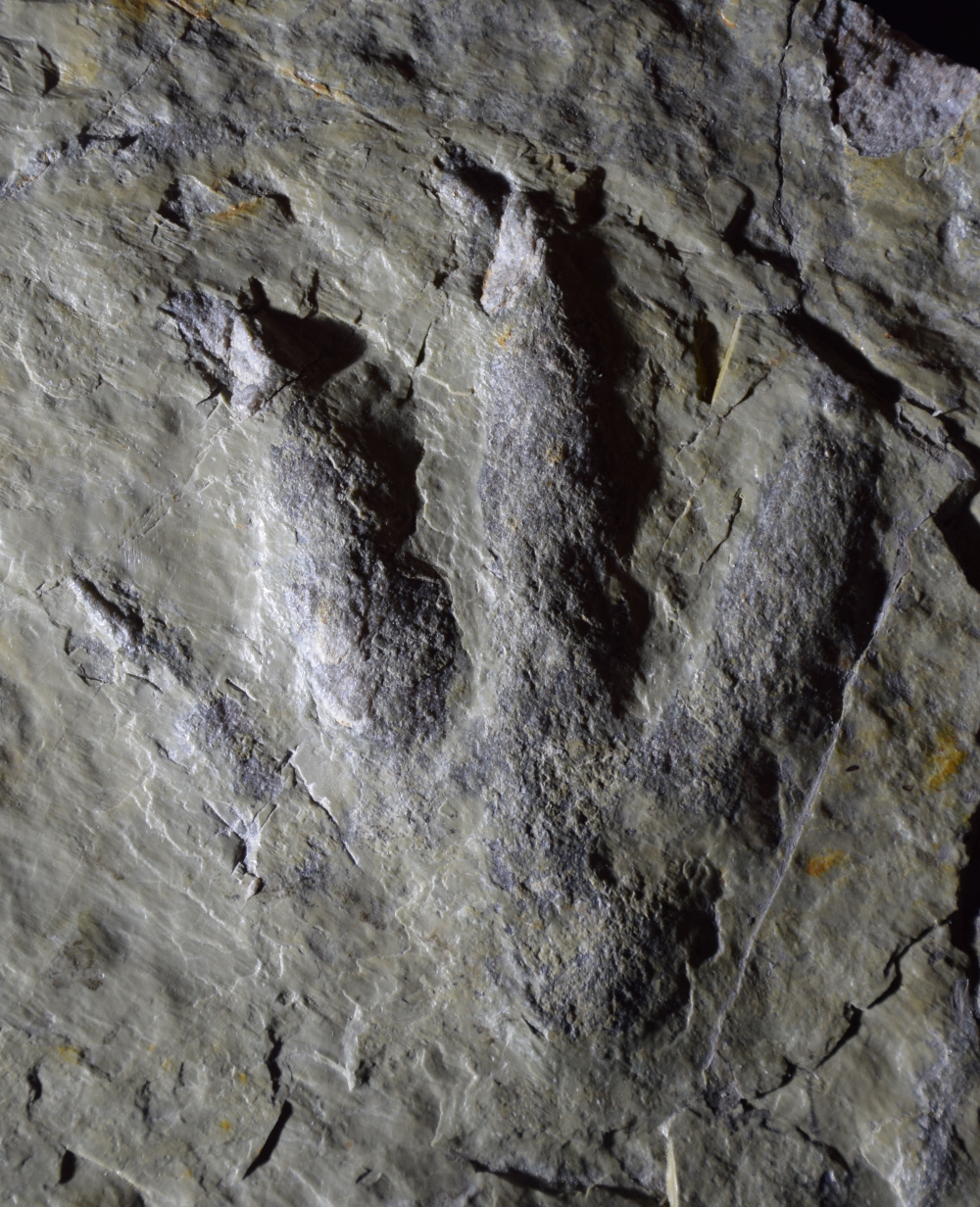
Key to the researchers’ conclusion is the diversity of the footprints found at Lerici that appear to have been made by dinosaurs. Many prints from a single species, or possibly even several closely related species, wouldn't tell us much. However, the authors report three types of footprints belonging to widely separated branches of the dinosaur family tree and only two made by non-dinosaurian reptiles.
It’s difficult to match footprints to specific species known from their bones, so palaeontologists create “ichnospecies” based on footprints with enough in common that they likely shared a maker. Ichnospecies can only occasionally be matched with species based on bones, but the shape of the print is often sufficient to identify which family of organism was responsible.
At Lerici, the two non-dinosaur ichnospecies the team identified were one pseudosuchian and one the authors say is most likely a member of the “lepidosauromorphs." Pseudosuchians are represented today by crocodiles and alligators, while lepidosauromorphs are a family closer to lizards than dinosaurs.
On the other hand, the site hosts one set of footprints from a theropod and two others believed to have been produced by “non-sauropod sauropodomorph ichnospecies," a description no doubt much less confusing to palaeontologists than to the rest of us, but that essentially means two species that were a part of the broader clade that includes sauropods but not true sauropods themselves.
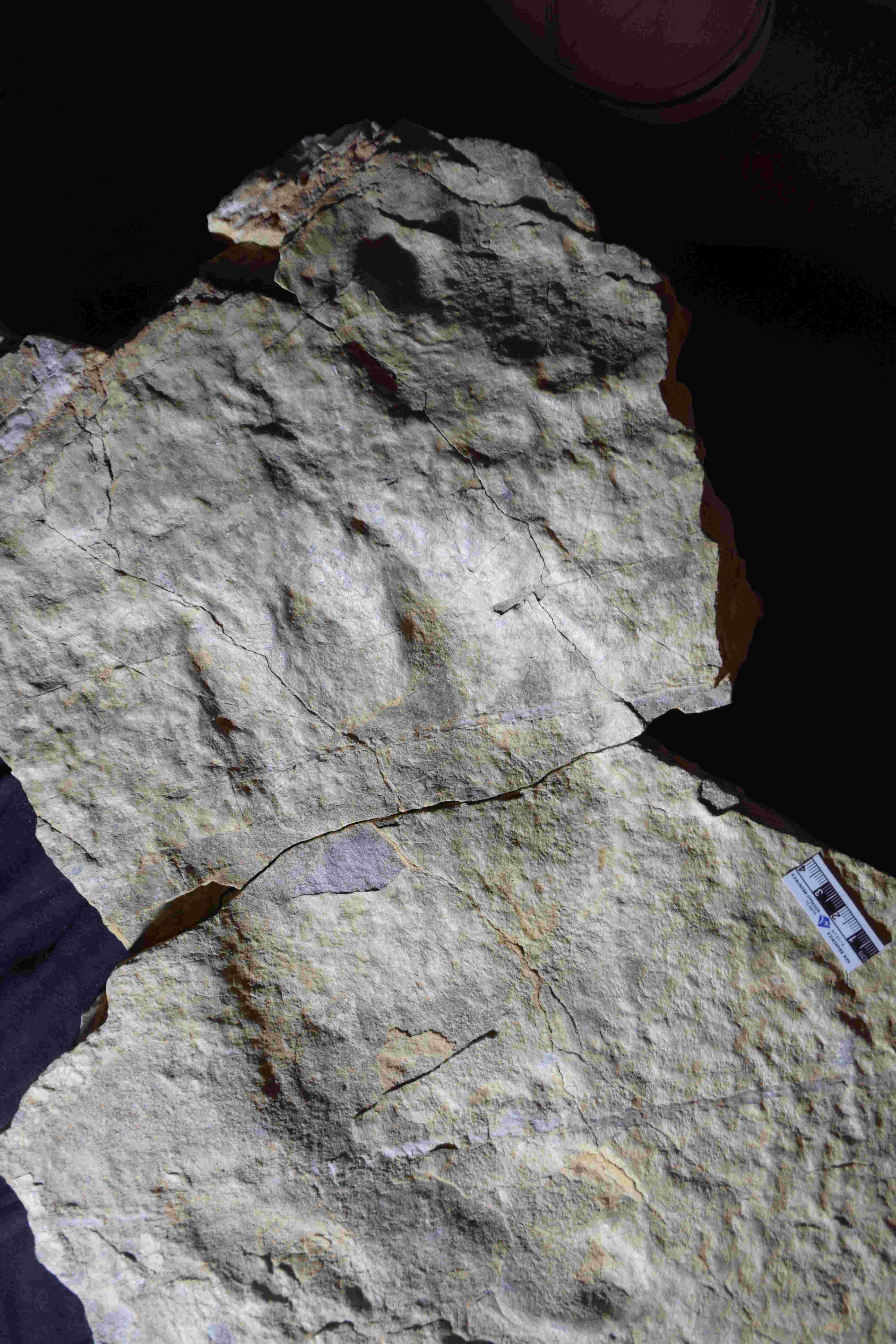
In other words, not only did the dinosaurs walking at the site during the Triassic outnumber their rivals three to two, in species at least, but they were also highly diverse. With the prints probably having been made during the CPE, the authors think this dinosaur majority makes most sense if their numbers had recently exploded.
These conclusions would be undermined if the prints weren't from dinosaurs at all, but the authors express confidence that the makers of these prints had ankles that didn't allow parts of the foot to rotate. This rigidity is a key way in which early dinosaurs differed from the pseudosuchians of their day. Without the tendency to twist, dinosaur feet didn’t need the hooked fifth toe the pseudosuchians sported, and it eventually atrophied.
Besides adding to evidence for the CPE’s importance in dinosaur history, the paper proposes a revision to the way sauropodomorph ichnospecies are categorized. All this from a slab just 6 square meters (60 square feet) in size, smaller than many bedrooms.
The study is published in Gondwanan Research