Nature
 PUBLISHED
 1
1



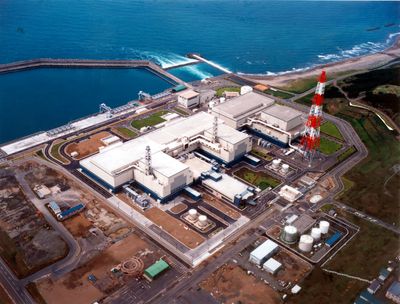


Nearly 15 years after the Fukushima disaster brought Japan’s nuclear industry to a standstill, a reactor has started to be brought back into action at the Kashiwazaki-Kariwa plant, the world’s largest nuclear power station.
Tokyo Electric Power Company (TEPCO), the Japanese company that runs the facility, and also ran the Fukushima Daiichi nuclear power plant, has confirmed it has restarted Reactor No. 6 at the Kashiwazaki-Kariwa plant on the west coast of Japan’s main island of Honshu.
The company has been quietly preparing for this moment for the past few years. Nuclear fuel was loaded into the reactor back in June 2025, but activity was held in check by control rods, which absorb excess neutrons and prevent a sustained nuclear chain reaction.
After a few setbacks, technicians began withdrawing the control rods at 7:02 pm local time on January 21, 2026, restarting the reactor.
TEPCO’s eventual aim is to get Reactor No. 6 and No.7 fully up and running so it can supply power throughout Eastern Japan, including to Tokyo.
Kashiwazaki-Kariwa is the world's largest nuclear power station by capacity. According to the International Atomic Energy Agency, its seven boiling water reactor units have a combined net capacity of 7,965 megawatts – that’s enough to power Switzerland with energy to spare.
However, the giant has remained dormant since the Fukushima nuclear accident in March 2011, when a powerful earthquake and a 15-meter (49-foot) tsunami struck the seaside Fukushima Daiichi plant in northeastern Japan, triggering catastrophic meltdowns in three reactors.
The release of radioactive material forced the evacuation of nearly 160,000 residents, and authorities established a 30-kilometer (18-mile) exclusion zone around the site. In the aftermath, amid protests and unease, Japan shut down all of its nuclear reactors across the country.
The big switch-off placed severe strain on the country's energy supply. Nuclear power accounted for almost 30 percent of Japan’s energy consumption prior to 2011, but that figure fell to around 5 percent after the shutdown. To compensate, the country was forced to import around 90 percent of its energy requirements, leaving it vulnerable to the whims of volatile global markets.
Now, as Kashiwazaki-Kariwa slowly returns to operation, the move marks a major change. With the plant’s return and several other reactors already restarted, Japan appears ready for a cautious re-embrace of nuclear power.
“It signals the end of the post-Fukushima nuclear stalemate and reaffirms the importance of the atom for a stable power supply,” said Filippo Pedretti, a nuclear and thermal power analyst with Japan NRG in Tokyo, according to Reuters. “If even TEPCO, the utility involved in the Fukushima Daiichi disaster, can restart its most important plant, other facilities can follow.”