Nature
 PUBLISHED


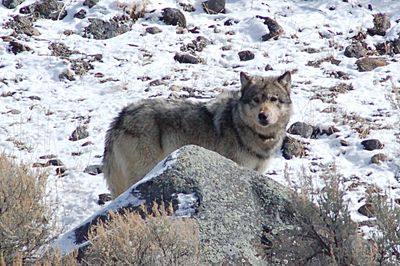


One of Yellowstone National Park’s oldest gray wolves, a one-eyed matriarch dubbed 907F, has died after sustaining wounds in a fight with a rival pack.
Affectionately named “queen of the wolves”, 907F lived to the grand age of 11 – exceptionally long for a wild canid – and birthed an astonishing 10 litters in her time.
Unfortunately, her reign came to an end on Christmas Day, three days after she clashed with another pack, Cowboy State Daily reports.
On December 22, 907F – the alpha of the Junction Butte pack – and her pups were feeding on a bison carcass on the north side of the Yellowstone River when they were attacked by rival Rescue Creek pack. Though she survived the initial encounter, 907F eventually succumbed to her injuries, Taylor Rabe, a biological science technician with the Yellowstone Wolf, Cougar, and Elk Project, explained.
Rabe was able to keep tabs on the wolf via her radio collar, which for two days following the attack signaled she was alive. However, by December 26 her collar was signaling “mortality”, indicating she hadn’t moved for at least 12 hours.
“It’s sad. But specifically for all of us on the project, we always like to see a wolf die naturally, rather than at the hands of a human,” Rabe told Cowboy State Daily. “It gives us peace to know that she went in a natural manner.”
Her body has been recovered and frozen for preservation, including a full necropsy.
The “queen of the wolves” was fully deserving of her title, having lived through a heck of a lot in her 11 years – more than twice as long as Yellowstone wolves are expected to survive and over three times the average lifespan of wolves outside the park.
At around age 4, she lost her left eye – no one knows exactly how that happened, but it could be the result of infection or injury. She also reportedly contracted mange – a skin disease caused by parasitic mites – in her early years, and walked with a limp toward the end of her life.
Yet none of that stopped her from becoming, according to Rabe, “the most reproductively successful wolf in Yellowstone History.” Just last year, 907F became a mom again, giving birth to her 10th litter.
As something of a minor celebrity in the park, she’s even been compared to another Yellowstone icon, Grizzly 399 – the world’s most famous bear, who died in October aged 28 after being struck by a vehicle at Grand Teton National Park, part of the Greater Yellowstone Ecosystem.
Fortunately for 907F, and those who admired her tenacity, her death didn’t come at the hands of humans. “It’s more comforting to know she died a natural death rather than suffering 399’s fate,” Wyoming photographer Jorn Vangoidtsenhoven told Cowboy State Daily.
RIP to a real one.

 1
1