Nature
 PUBLISHED





The underwater space is having a bumper couple of months: there’s a new contender for the world’s largest coral, a giant coral has been discovered in the Mariana Islands, and now footage from Miami has been released showing the world’s longest-running underwater time-lapse crossing the 1,000 day threshold.
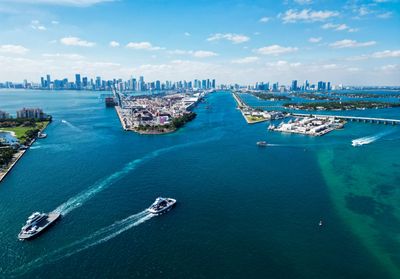
The time-lapse camera was set up by Coral Morphologic in the Port of Miami to monitor the condition and growth of the corals there. Starting on May 1, 2023, the camera has since become the world’s longest underwater time-lapse and passed 1,000 days on January 28, 2026.
Coral Morphologic was founded in 2007 by marine biologist Colin Foord and musician J.D McKay in Miami. Originally a way to combine their love for the marine world with art and inspire the general public to want to restore the Miami reef, the project has changed and developed over the years to have many facets, including a charming coral livestream.
The time-lapse camera captured not only 2023’s unprecedented coral bleaching mortality event but multiple bleaching and recovery events in different species over its runtime. The team are especially invested in the growth of the staghorn coral, which is a species native to the area (Acropora cervicornis aka ACER ‘Ventura’). The timelapse shows that not only did that particular coral not suffer with bleaching, but in fact it has grown rapidly. It could now be one of the thickest areas of that species within the state of Florida.
The team also has a buoy in place to monitor the temperature of the ocean around the camera's area. “We recorded late summer temps reaching 90°F (32.6°C) and recent 2026 winter lows of 60°F (15.5°C). This represents a huge range of thermal tolerance for this strain of critically important reef building coral,” wrote Coral Morphologic in a statement. This highlights how the corals have to be adaptable to both extreme heat and extreme cold conditions.
As well as temperature, the timelapse can tell the researchers more about sediment movements in the area. Port Miami is subject to intense currents thanks to its shipping lanes, moving large volumes of water in a way that affects both sedentary marine species like corals and more mobile marine species that live there.
After three years of pretty near continuous recording, the camera has captured more than 200 species of fish, years-worth of coral growth, and might now be one of the best studied and continually monitored regions in the underwater world.


 1
1