Nature
 PUBLISHED
 3
3


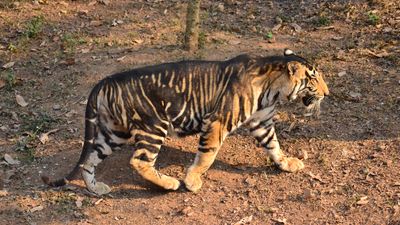


If you’ve ever dreamed of going on safari to see Africa’s big five, allow us to present a different kind of opportunity. The government in the Indian state of Odisha has announced the world’s first black tiger safari in a bid to provide tourists with a chance to catch a glimpse of the only black tigers in the world.
Black (or pseudomelanistic) tigers have been reported in the Similipal Tiger Reserve (STR) since the middle of the 1970s and the area is believed to be the only habitat for these specific tigers across the world. They are not a separate species, but rather Bengal tigers (Panthera tigris tigris) with a genetic mutation.
The new safari is to be located near Baripada in the Mayurbhanj district of the state, according to an announcement on the social media platform X (formerly known as Twitter) by the Chief Minister of the Odisha Government, Naveen Patnaik. This is just 15 kilometers (9.3 miles) away from the STR. The new area is approximately 200 hectares and is adjacent to National Highway 18, according to Indian Express.
According to Scientific American, one in three tigers in the STR are black. These tigers are a result of a genetic mutation that typically causes the animal to become black due to the excess of the pigment melanin in their cells. Melanistic animals (such as lynx and seals) have been seen, as well as the opposite effect known as albinism, and even leucitic animals, which all show variation in color patterns because of genetic differences in melanin quantities.
Technically, the tigers of the STP are what is known as pseudomelanistic, with a variation in their coat that causes their stripes to be unusually large or even merged. In 2021, a paper traced the mutation to a single gene called Transmembrane Aminopeptidase Q or taqpep that was present in 10 out of 12 of the tigers tested in the study. None of the 395 tigers that lived outside the STR had a single copy of the gene mutation, suggesting that this population did not breed with tigers outside of their range. This is what is known as an autosomal recessive trait.

According to the paper, this could suggest not a chance to see an ultra-rare black tiger but an indicator of a bigger problem - inbreeding due to low population diversity likely caused in this species by habitat fragmentation by humans.