Nature


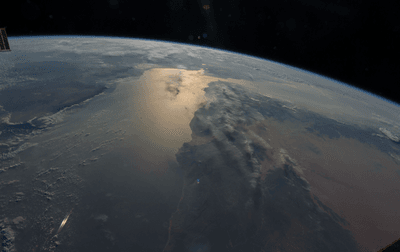


Africa is slowly splitting in two. Like anything in geology, it’s an extremely long process that will take millions upon millions of years, but it will eventually see part of East Africa chip off from the rest of the continent, likely resulting in a new ocean arising between the two land masses.
You can stamp all you like but the ground beneath your feet still ain't solid, not really. We all live our lives atop a complex network of puzzle pieces that, thanks to Earth’s hot gooey center, are constantly shifting, generating earthquakes, building mountains, and tearing continents apart – which is currently happening to Africa.
The East African Rift Valley
The emerging crack is associated with the East African Rift System (EARS), one of the largest rifts in the world, stretching downward for thousands of kilometers through several countries in Africa, including Ethiopia, Kenya, the Democratic Republic of the Congo, Uganda, Rwanda, Burundi, Zambia, Tanzania, Malawi, and Mozambique.
When it breaks away, it’ll separate the smaller Somalian plate from the larger Nubian plate as part of a painstakingly slow process that’s already been developing for around 25 million years.
A dramatic crack in the Kenyan Rift Valley in 2018 got "The Internet" very excited about the concept of tearing continents. It was a very impressive fissure, but one that may have had little to do with Africa's geologic future; some have suggested it was more likely caused by soil erosion. However, its placement is curious.
“Questions remain as to why it has formed in the location that it did and whether its appearance is at all connected to the ongoing East African Rift,” wrote Lucía Pérez Díaz, at the time a postdoctoral researcher in the Fault Dynamics Research Group at Royal Holloway University of London, in The Conversation.
“For example, the crack could be the result of the erosion of soft soils infilling an old rift-related fault,” the geologist added.

A new ocean in Africa?
The process of the great continent of Africa losing its eastern shoulder will be slow and gradual rather than a sudden, cartoon-like split. When it eventually happens, it’s expected a vast sea will form between the Somalian plate and the Nubian plate. The great continent of Africa will lose its eastern shoulder and a vast sea will cut off East Africa.
A shocking concept to the modern-day Homo sapiens, but it’s a story that the Earth has told time and time again.
The Earth as it stands today is a modern development in relation to the planet’s history. Once upon a time, all of the continents were combined into one known as Pangaea, but the action of tectonic plates pulled it apart, creating drifting continents with edges that – if brought together – would slot together like perfect puzzle pieces.
If the puzzle-like nature of the continents doesn’t convince you, there’s also all the fossil evidence we’ve found that shows ancient species living in places that are now geographically separated. This is true of Mesosaurus, an extinct 290-million-year-old genus of reptile, fossils of which have been found in South America and Africa, according to the American Museum Of Natural History.
It’s a seismic split that’s hard to get your head around, and it’s thought that the continents have come together and split apart at least three times in Earth’s history, with more on the way – albeit very, very slowly.
The departure of East Africa appears to be the next in line, but it will be just another move in this giant geological playbook. Whether we as a species will survive for long enough to witness it? Well, that’s a different story.