Nature
 PUBLISHED
 2
2


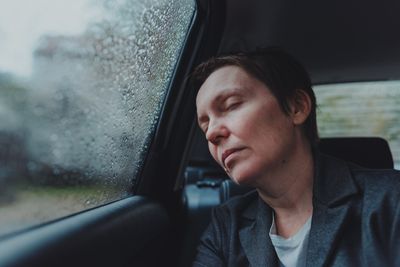


Have you ever wondered why that first sniff of rain makes you instantly tired? Or why it’s virtually impossible to peel yourself away from the sheets on a rainy morning? Well, it turns out you’re not just lazy, there’s a scientific reason rain makes us sleepy.
There are a number of factors at play causing us to feel drowsy when it’s raining, but most have to do with the weather's effect on how our bodies function.
How can the weather affect your sleep?
The UVA and UVB rays present in sunlight prompt the release of serotonin while the pineal gland reduces melatonin production. Serotonin, often dubbed the “happy hormone”, is responsible for alertness and elevated mood, while melatonin is used by the body to regulate our sleep-wake cycle by producing more to induce sleep and less to remain awake.
Rainy weather, however, often comes paired with dark, heavy rain clouds that reduce the amount of sun exposure we get. This functions in the same way as nightfall, causing a decrease in serotonin production and an increase in melatonin.
“Our ability to fall asleep or wake up is enhanced by our environment. If we’re used to falling asleep in complete darkness, it can be difficult to do so if there is any light in the room. Conversely, if we’re used to waking up when it’s light out, it can be difficult to do so if it’s dark, whether that’s due to changes in season or weather,” said Dr Darius Loghmanee, a sleep specialist at Advocate Christ Medical Center, in a statement.
Additionally, the increased humidity during rainy weather can mean your body has to work harder to maintain a stable internal temperature through homeostasis – and all of that work can be tiring.
Along with increased humidity, the barometric pressure is also affected by stormy conditions. Storms are usually accompanied by lower pressure, which reduces oxygen levels in the air. Although only minor, drowsiness can be a sign of oxygen deprivation.
Finally, it can be the sound of rain specifically that’s causing us to feel sleepy. Rain is a type of pink noise, which is similar to white noise. Listening to both can be effective ways to improve sleep by producing a constant background noise that works to block out any distracting sounds. Unlike white noise, pink noise is characterized as being lower pitch and more soothing. The sound of rustling leaves, wind, and even the sound of your own heartbeat all categorize as pink noise.
Seasonal Affective Disorder
Conditions like Seasonal Affective Disorder (SAD) are triggered by seasons and weather. Technically referred to as depressive disorder with seasonal patterns, many experience SAD as a result of reduced light levels in the winter months, although SAD can be experienced any time of year.
A leading treatment for SAD, and one that could also work to shake those rainy-day blues, is light therapy. While this can come in the form of prescribed sunbed sessions to increase UV exposure, for most it predominantly involves using a light therapy box that gives off a 10,000-lux light intensity.
Dr Michelle Drerup, Director of Behavioral Sleep Medicine at the Cleveland Clinic, told Bustle that light box therapy "can be extremely helpful to fight sleep inertia and help increase alertness during daytime."
While it may be the last thing you want to do on a sleep-filled rainy day, exercise is also a great way to shake off feelings of tiredness, as is staying hydrated with things other than coffee – sorry!
All “explainer” articles are confirmed by fact checkers to be correct at time of publishing. Text, images, and links may be edited, removed, or added to at a later date to keep information current.
The content of this article is not intended to be a substitute for professional medical advice, diagnosis, or treatment. Always seek the advice of qualified health providers with questions you may have regarding medical conditions.