


 Nature
 PUBLISHED


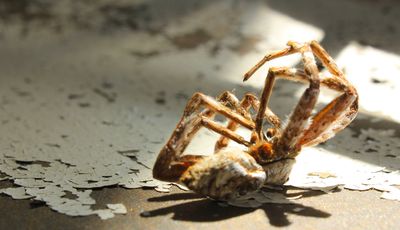


Usually, it's the number of legs and that strange scuttling motion that sets off arachnophobes. But with all eight legs motionless when you find an unfortunate deceased spider behind the sofa, we ask the question: why do their legs curl up when they die?
Inside a spider, there isn't blood like a mammal but a fluid called hemolymph – a pressurized liquid that helps the spider's body act a bit like a hydraulic system. The muscles in a spider's legs help bend the legs inwards, and the hydraulic hemolymph liquid is pushed into them to spread them outwards.
Spider legs don’t have extensor muscles, which means that the flexor muscles can get stronger and stronger. This helps the spiders grip onto their prey species and climb up vertical surfaces.
Spiders have pretty good control of their hemolymph pressure normally; however, when they die, they lose control of their bodily fluids. This stops the hemolymph from being forced into the legs, keeping them outwards, causing the legs to curl in.
To make matters even more undignified, this loss of hemolymph and stability can shift the center of gravity, turning the spiders onto their backs, where they remain with their legs curling inwards. Of course, encounters with predators, or even a human swatter, can also lead to spiders being injured on their backs without the pressure to stretch out their legs and right themselves.
This internal mechanism is interesting for researchers to study. One team at Rice University used this pressure system to make what they call “spider necrobots”. This involves using dead spiders, and instead of liquid, injecting air into the spiders' bodies, causing the limbs to stretch out. By reducing the air pressure, it turned them into mechanical grippers as demonstrated by the video below.
If you're not a fan of sharing your space with spiders, please don’t kill them. If you can’t bring yourself to gently remove them, try these tips to discourage spiders from entering in the first place.



 1
1