Nature
 PUBLISHED
 15
15


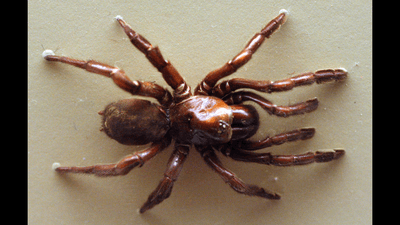


Would you like to go to a spider’s birthday party? No? Suit yourself, I think it would be excellent. Eight legs call for as many balloons, but how many candles might you expect on the cake? It might shock you to learn that for Number 16, the longest-lived spider on record, that number reached a staggering 43.
This is the tale of the world’s oldest spider, celebrated among scientists as a sustainable queen. You see, her life was characterized by sensible resource use and low-impact living, something that a team of researchers thinks we humans could learn a thing or two from.
Number 16 was a kind of mygalomorph spider, an infraorder of spiders that live in burrows, like trapdoor spiders. She was one of many enrolled in a long-term population study led by Barbara York Main at North Bungulla Reserve near Tammin, south-western Australia, back in 1974.
The spiders were monitored annually, a project that ticked on for several decades. As well as revealing unprecedented insight into the need for high-priority conservation for some of the species studied, it also revealed a surprise record breaker: the longest-living spider on record.
Number 16 was a Gauis villosus spider that was among the first group of dispersing spiderlings included in the study. She was the 16th spider identified with a peg, hence the name, but she outshone the previous 15 in terms of longevity.
By 2016, they and others that followed had all died, but Number 16 trucked on. That was, until Halloween that same year, when the researchers saw that the lid of her burrow had been pierced by a parasitic wasp.
The scene of the crime led the researchers to deduce that Number 16 didn’t die of old age, despite her great age, but was parasitized. It’s a grim fate that many large spiders face, ending in the host being consumed by larvae that hatch from eggs oviposited inside the host’s tissues. Think Alien, but with spiders and wasps.
Number 16 blew the previous record holder for longest-lived spider out of the water, reaching an age of 43 when that other arachnid only made it to 28. She left another legacy, however, one that we should all pay mind to.
Having lived her entire 43 years in the same burrow she maintained while taking only what she needed from the environment, the authors of a paper about her life suggest she’s a shining example of low-impact living. Something our planet, and our species, could really benefit from.
“We suggest that the life-styles of short-range endemics provide lessons for humanity and sustainable living in old stable landscapes,” wrote the authors. “As we begin rebuilding with more sustainable technologies and improve the management of known threatening processes, we can be inspired by an ancient mygalomorph spider and the rich biodiversity she embodied.”
If you’ll excuse me, I’m off to humbly tend to my burrow.