Nature
 PUBLISHED


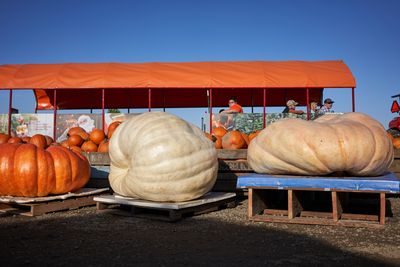


Fall is finally upon us, and that means we’re about to see pumpkins galore – including some absolute chonkers. The winner of last year’s Safeway World Championship Pumpkin Weigh-Off, for example, weighed roughly the same as two grizzly bears. But why do giant pumpkins like this get so big?
One of the main reasons is that it’s in their genes. Over time, growers have bred bigger and bigger pumpkins by taking pollen from the male flowers of a giant pumpkin plant (Cucurbita maxima), and using it to pollinate female giant pumpkin flowers; this is known as selective breeding. The female flowers then go on to produce fruit, aka the pumpkin, which contains seeds that should be genetically predisposed to transform into gigantic gourds.
Genetics isn’t everything, though. Another reason giant pumpkins can get so big is because they’re provided with the right growing conditions. This typically means a careful combination of specific soils, water – as much as 1,890 liters a week during the summer but less the rest of the time – sunlight (but not too much), and enough space to grow. It’s nature versus nurture in action; a seed might have all the right instructions to grow to a monster scale, but not if it isn’t given the ingredients to do so.
But back in 2014, researchers from Harvard University’s Department of Organismic and Evolutionary Biology set to fill in a significant gap in our knowledge of giant pumpkins: we understand that genes play a role, but how does that translate into what goes on inside a growing pumpkin? Is there something unique about its anatomy and physiology that allows it to grow so big?
To find out, the team compared the leaves, stems, and fruit of three different varieties of giant pumpkin, taking samples from some that they’d grown themselves and others cultivated by dedicated growers.
What they discovered is that the vascular system of a giant pumpkin also appears to be a key factor in maximizing its size. This system isn’t made up of veins and arteries, like ours; plants instead have xylem and phloem as tissues that transport substances throughout the plant. Xylem moves around water and minerals, while phloem transports sugars.
It turns out that the biggest fruit from giant pumpkin plants has a lot more phloem than other large squashes, allowing them to take up plenty of sugar, and so providing the pumpkins with enough of the energy they need to grow to such enormous sizes.