Nature
 PUBLISHED
 1
1


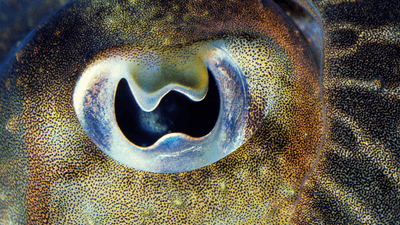


Did you know cuttlefish have the most acute polarization vision of any animal? They can detect patterns in light that human eyes can't see. We still have a lot to learn about how they process the underwater world, but one mystery we have solved is their bizarre W-shaped pupils.
Yes, if this is the first time you’re hearing it: cuttlefish have W-shaped pupils. Pretty weird, huh? For years, scientists figured it was either a kind of camouflage or a way of judging distance. Then, a 2012 study revealed all.
In the study, three Sepia officinalis were placed in individual tanks and left unrestrained. Using an infrared camera aimed through a beam splitter, researchers then photographed their pupil shapes to see how they changed under different light levels.
It revealed that the W-shape pupil only appears in bright light. Turn the lights down, and that W expands into a fully circular pupil.
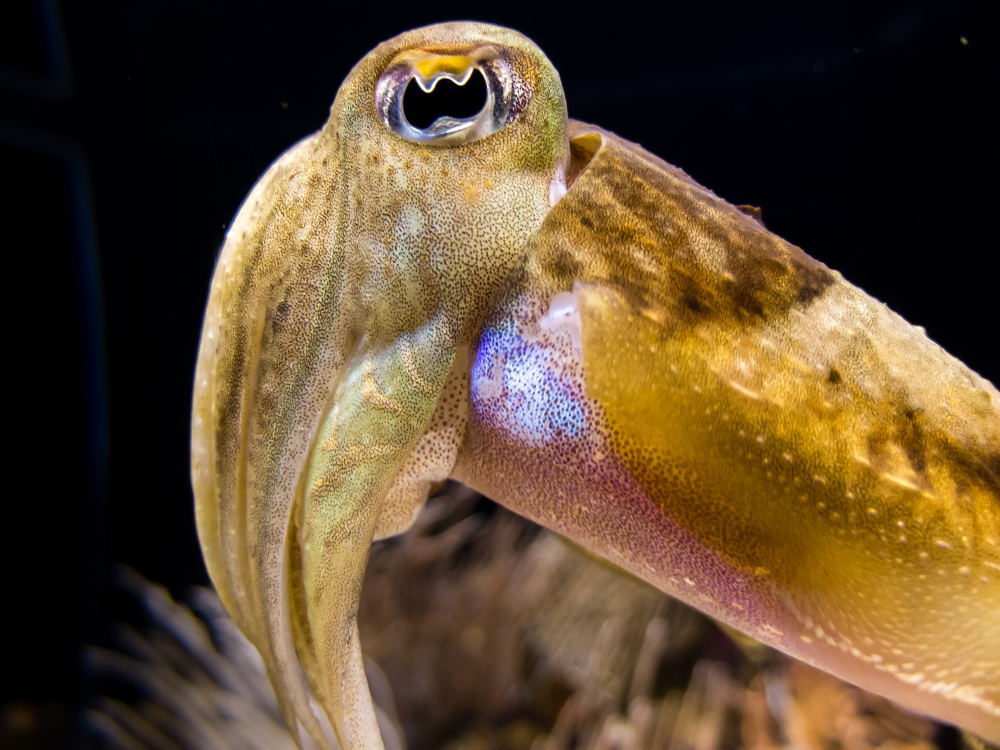
Cuttlefish live mostly in shallow water where there's an extreme vertical gradient in light. The Sun means it's bright up top, and dimmer below. The W-shaped pupil reduces glare from the Sun and evens out that gradient, making it easier for cuttlefish to spot approaching predators or prey in the darker parts of their field of vision.
“Computation of a retinal illumination map shows that the pronounced vertical intensity gradient (i.e., brighter above; dimmer below) of a typical cuttlefish habitat scene becomes less pronounced when seen by an eye with a W-shaped pupil,” concluded the authors. “That is, the visual field appears more even. Furthermore, under intense directional illumination (i.e., from the sun), light scattering in the lens or ocular media can severely degrade contrast sensitivity in dimmer parts of the scene.”
The authors suggest the W-shaped pupil might also camouflage the eye and may even improve distance focusing in certain viewing directions. Useful, given where a cuttlefish’s eyes sit on its head. The pupil then reacts to low light by expanding to a full circle, letting as much light in as possible.
A pupil that really puts the W in wacky pupils, then, but it’s far from the only ocular oddball in the animal kingdom. Among terrestrial animals there’s a general trend that foragers have round pupils, ambush predators have vertical pupils, and prey animals have horizontal pupils. Except – what the hell is going on with mongoose eyes?