


 Nature
 PUBLISHED




“I could just gobble them right up!” isn’t an uncommon phrase when it comes to seeing a baby, but some animals take it a bit too literally. Known as filial cannibalism, chowing down on your offspring might seem a bit heartless to us – not to mention counterintuitive when it comes to species survival – but there are a number of reasons why it might happen.
A lack of what they need
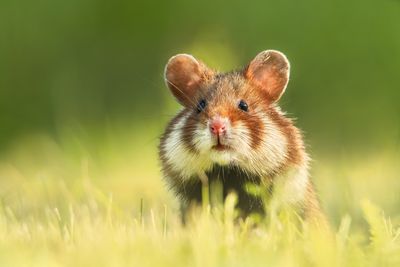
Hamsters look pretty adorable, but even the cutest of creatures can be driven to extremes under particular circumstances. In the case of European hamsters found in the west of the continent, a diet based mostly on maize grown across vast areas led to a deadly deficiency.
In a study attempting to determine how monoculture crops might affect the reproduction of this endangered species, researchers discovered that maize-fed females exhibited high rates of maternal infanticide and cannibalism, even storing their pups ready to eat alongside their stores of regular food.
This, the team determined, was the result of a lack of vitamin B3 or niacin. In humans, this deficiency causes a disease called pellagra, in part characterized by damage to the nervous system that can then lead to changes in behavior.
The study authors concluded it was a similar situation in the European hamsters and, when given vitamin B3 supplementation, the normally chill critters thankfully returned to not snacking on their babies.
Getting back in the game
Speaking of satisfying needs, male blennies' desire to get themselves back on the market can see them ditch their caregiving duties in favor of spitting out, or even eating, the eggs in their brood.
Researchers studying the barred-chin blenny found that when males are around eggs, their levels of a group of reproduction-related hormones called androgens hit a low. As a result, they can’t start courting again, which stops them from helping to make any more clutches – not great from an evolutionary, “I need to pass on my genes,” point of view.
Not always willing to wait for the eggs to hatch in order to restart the process, when clutches are small, male blennies chomp down on them – or spit them out of the nest if their stomachs get full – in order to get rid of them all.
After that, their androgen levels shoot back up, and it’s a win-win situation for them: they don’t have to waste energy caring for a small number of eggs and they can start courting female blennies again to hopefully produce a bigger clutch.
A low chance of survival
Keepers at the Smithsonian’s National Zoo ended up hand-rearing a sloth bear cub back in 2014 after its mother “ingested” two of its siblings. The reason? The mother bear might have thought her children wouldn’t survive.
The first of the cubs was stillborn and when vets took a look at the rescued cub, it was found to have an infection. "She was ill, with an elevated white blood cell count," Tony Barthel, a mammal curator at the zoo, told National Geographic. "We don't know if this was the case with her other two cubs, but my assumption is they were not well."
Pregnancy and motherhood are expensive; in the wild, where resources can be scant, eating offspring that might not survive anyway avoids putting anything to waste. But when mother sloth bears don’t gobble down their young, best believe they’re going to protect them.



 1
1