Nature
 PUBLISHED
 2
2


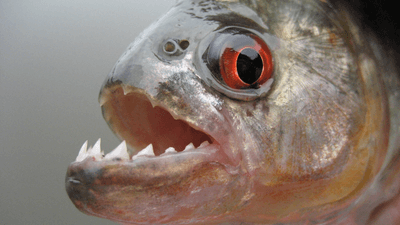


In 2009, researchers described a fossil that shed light on the evolutionary journey that saw piranhas develop their razor-sharp teeth. It belonged to an ancient fish that lived in South America between 8 and 10 million years ago: Megapiranha paranensis.
The fossil was a fragment of jawbone originally retrieved in the 1900s from the Paraná geological formation in Argentina. It wasn’t until the 1980s that it fell into the hands of palaeontologist Alberto Cione of the La Plata Museum, who would become one of the authors of that paper.
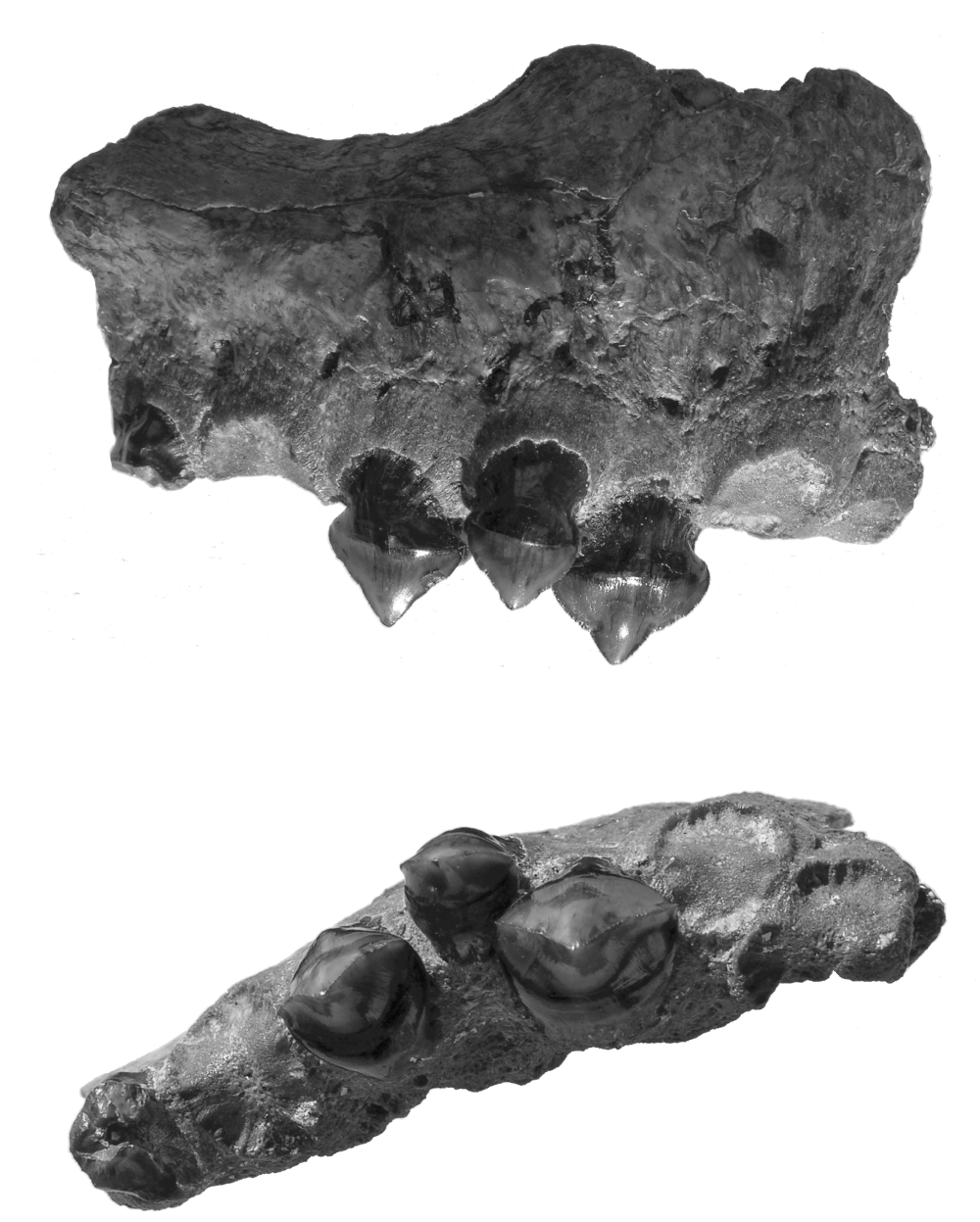
Cione and colleagues identified it as an upper jawbone with three unusually large teeth (though complete it’s thought there would have been seven). Arranged in a zigzag, it looked like an intermediate pattern bridging predatory piranhas to relatives with very different diets.
"In modern piranhas the teeth are arranged in a single file," said Wasila Dahdul, a visiting scientist at the National Evolutionary Synthesis Center in North Carolina, in a release. "But in the relatives of piranhas — which tend to be herbivorous fishes —the teeth are in two rows."
"It almost looks like the teeth are migrating from the second row into the first row," added co-author John Lundberg, curator at the Academy of Natural Sciences in Philadelphia.
Their dentition seems to place Megapiranha between piranhas and pacu, a fish that's Internet famous for its "human teeth". But while pacu and piranha won't eat your enemies, Megapiranha are certainly something you wouldn’t want to swim with.
Sizing up giants
Exactly how big Megapiranha was is difficult to figure out because, to date, we only have fragmentary evidence to build on. That early paper estimated these fish could reach over a meter (3 feet) long and weigh as much as a human.
A later study estimated it was closer to 0.7 meters (2.3 feet) and weighed closer to 10 kilograms (22 pounds). Still big, but it’s an estimate that remains uncertain.
One thing we do know for sure is that these fish packed a serious bite.
A 2012 paper decided to investigate just how fierce the Megapiranha bite would have been. It combined the bite force recorded from two wild black piranhas (Serrasalmus rhombeus) with simulations to reconstruct the bite forces of several extinct and extant predatory fish.
A prehistoric chomp-off
Using several approaches to reconstruct its size and jaw mechanics, it found Megapiranha would have had a bite force between 1,240 and 4,749 newtons. Enough, they say, to crush bone.
At the more conservative end, that means you’d need a great white shark weighing 400 kilograms (63 stone) to match Megapiranha’s bite. When the researchers adjusted their model to account for its specific jaw mechanics, the estimated bite jumped up to that of a 3,000-kilogram (472.4-stone) great white.
Sobering stuff when you remember that’s based on a 10-kilogram Megapiranha. A showdown the researchers demonstrate even Megalodon couldn’t top.
The black piranha also put on a show with the strongest bite force recorded for any bony fish at the time. At 320 newtons, it was nearly three times greater than the bite force of an equivalent-sized American alligator.
This superpower is thought to be the result of their highly efficient jaw mechanics and jaw muscles that make up more than 2 percent of their body weight. Fortunately for us, it's a superpower they mostly use to take bites out of other fish.
We don’t know if the same could be said of Megapiranha…