Nature
 PUBLISHED


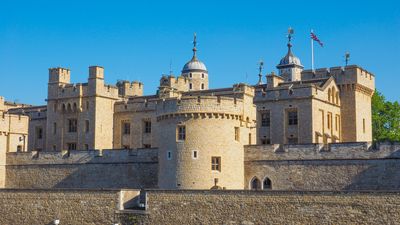


The first zoo in London was not a zoo per se, but rather a royal menagerie that was established at the Tower of London. A whole range of exotic animals were kept at this famous building for over 600 years (not the same animals, of course), where they were exhibited to different audiences and sometimes even studied.
The royal menagerie began during the 13th century, with the reigns of King John and then Henry III, respectively. As far back as Henry I, foreign rulers had gifted exotic animals to the English kings as an act of diplomacy. These remarkable “gifts” included lions, camels, leopards, lynxes, and even a porcupine, which were kept at Woodstock, which was regarded as both a kind of menagerie and a hunting ground.
During King John’s reign, the animals were moved to the Tower of London and their numbers were increased. However, most popular histories on this subject set the true start of the royal menagerie as beginning in 1235, when Henry III received three animals described as “leopards” (though they were probably lions) from the Holy Roman Emperor Frederick II. These animals carried symbolic meaning as they matched the heraldry on the King’s crest.
Then, in 1252, King Haakon IV of Norway sent a “pale” bear (possibly a polar bear) as a gift and later, in 1255, Louis IX of France gave an elephant to the King of England, which had been caught during the Crusades.
Of course, all these animals needed feeding (though the bear was apparently allowed to fish for itself in the Thames while connected to a long rope), and as the menagerie grew, so too did the costs. Unfortunately, the burden of this rather special collection was placed on the sheriffs who had to pay for their food. Similarly, Henry went as far as taxing the people of London to pay for a space to keep the elephant.
As you can imagine, contemporary knowledge was pretty limited at this time, so no one really understood what something like an elephant should eat. As such, they tried to feed it meat and also gave it a gallon of wine to drink each day. This ultimately killed the elephant pretty quickly.
Come visit the animals (terms and conditions apply)
The purpose of the royal menagerie was very much wrapped up with the personal prestige of the monarch. Not only was being gifted such exotic creatures a sign of respect, but exhibiting them could communicate wealth, power, and the extent of their global connections. Visiting nobles or foreign dignitaries were allowed to see the animals, but as time went on the spectacle was opened to broader audiences.
However, this came with a cost. For instance, during the reign of Elizabeth I, the public was allowed to visit the menagerie for free, but only if they brought a cat or dog with them. This wasn’t so that someone in charge could fawn over the furry animals; it was actually a way to feed the lions.
Safety at these exhibitions was also somewhat questionable at this time. In the late 17th century, a woman called Mary Jenkinson was being shown the lions by an acquaintance who apparently looked after them. At one point, Mary attempted to stroke a lion’s paw, but the animal attacked her, grabbing hold of “the middle of the arm with his claws and mouth, and most miserably tore her flesh from the bone”. Doctors attempted to amputate Mary’s arm, but she nevertheless died.
Throughout the 17th and 18th centuries, the menagerie became an increasingly popular tourist attraction in London and a way for the crown to make some additional money. It was at this time that the site started to resemble what we might call an early zoo.
The show comes to an end
By 1822, a professional zoologist had been appointed as Keeper at the Tower. His knowledge of animals and their care allowed the menagerie to expand to house 300 animals from 60 species (including big cats, wolves, bears, elephants, kangaroos, zebras, and numerous species of exotic birds and reptiles, among others).
Many of these animals were collected as Britain’s military control and reach expanded across the world. Then, in 1828, the London Zoological Society opened a zoo at Regent’s Park, which is still in existence today: the famous London Zoo.
At the same time, concerned voices started to raise worries about the menagerie’s animals being held in spaces that were not designed for them. In the end, the Duke of Wellington decided to relocate most of the animals to the zoo at Regent’s Park, while others were sold to traveling circuses. The royal menagerie was finally closed in 1835.

 1
1